At the beginning of Lent I wrote to you regarding a way to think about Lenten observances – not simply as penitential – “I am giving up….” but as more. I wrote:
“Lent isn’t about denial. It is about transformation. It is the season in which we prepare to encounter the mystery of Christ’s passion, death, and resurrection by endeavoring to become more Christ-like ourselves. Transformation is about letting ourselves be filled with God’s presence so that we can be shaped by God’s grace. But we have to make room for God’s grace. We have to empty ourselves to make room for God – and that may mean leaving aside your favorite TV shows, chocolate, or whatever else takes up time, space, and energy in your life. And so, we give up things/habits as a way of beginning the transformation.” Continue reading →
The Ninth Beatitude. In response, Jesus told Thomas, Because you have seen me, you have believed; blessed are those who have not seen and yet have believed. Thomas came to believe because he saw the risen Lord, but Jesus did not praise Thomas’ pathway to faith; rather, he pronounced a blessing upon those who have not seen the risen Jesus yet have believed in him nevertheless. These are those who hear or read the witness to Jesus borne by the disciples and confirmed by the Spirit (15:26–27). This is the second pronunciation of blessing by Jesus in the form of a beatitude in the Fourth Gospel (cf. 13:17: “If you understand this, blessed are you if you do it.”) Continue reading →
“…do not be unbelieving, but believe.” 24 Thomas, called Didymus, one of the Twelve, was not with them when Jesus came. 25 So the other disciples said to him, “We have seen the Lord.” But he said to them, “Unless I see the mark of the nails in his hands and put my finger into the nailmarks and put my hand into his side, I will not believe.” 26 Now a week later his disciples were again inside and Thomas was with them. Jesus came, although the doors were locked, and stood in their midst and said, “Peace be with you.” 27 Then he said to Thomas, “Put your finger here and see my hands, and bring your hand and put it into my side, and do not be unbelieving, but believe.” 28 Thomas answered and said to him, “My Lord and my God!” Continue reading →
“Receive the holy Spirit” 22 And when he had said this, he breathed on them and said to them, “Receive the holy Spirit. 23 Whose sins you forgive are forgiven them, and whose sins you retain are retained.”
The sacred writer had already introduced the giving of the Holy Spirit in John 7 in a scene during the Feast of Tabernacles in which the Spirit is promised at a future time when Jesus was glorified. In the Fourth Gospel it is at the crucifixion that Jesus is glorified in that his willing obedience manifests the nature of God, which is love. It is there on the cross that Jesus deliver the Spirit into the world (19:30), symbolized immediately afterward by the flow of the sacramental symbols of blood and water. Continue reading →
So I send you… an excursus. “Peace be with you. As the Father has sent me, so I send you.” 22 And when he had said this, he breathed on them and said to them, “Receive the holy Spirit. 23 Whose sins you forgive are forgiven them, and whose sins you retain are retained.”
How one already understands and practices their faith forms parts of lens with which one understands these three simple verses. When I quiz Catholics about who is meant with the plural “you” in these verses, the most common answer is “the apostles.” Behind the answer lies the Catholic church ecclesiology (understanding of what it means to be church) and the sacramental understanding of confession/reconciliation. Those in the Protestant and Reformed churches would not agree and (in general) understand the “you” to be all disciples. Continue reading →
19 On the evening of that first day of the week, when the doors were locked, where the disciples were, for fear of the Jews, Jesus came and stood in their midst and said to them, “Peace be with you.” 20 When he had said this, he showed them his hands and his side. The disciples rejoiced when they saw the Lord. 21 (Jesus) said to them again, “Peace be with you. As the Father has sent me, so I send you.” 22 And when he had said this, he breathed on them and said to them, “Receive the holy Spirit. 23 Whose sins you forgive are forgiven them, and whose sins you retain are retained.” 24 Thomas, called Didymus, one of the Twelve, was not with them when Jesus came. 25 So the other disciples said to him, “We have seen the Lord.” But he said to them, “Unless I see the mark of the nails in his hands and put my finger into the nailmarks and put my hand into his side, I will not believe.” Continue reading →
As a liturgical season, Lent is rather straightforward. It is kinda’ easy to write about. There is Ash Wednesday to dramatically mark its beginning, and we all know we are moving relentlessly towards Easter. We count the days even as we mark Lent’s beginning. The Ashes make a visible mark upon us, reminding us that we are dust and to dust we shall return – but that is not the end of the story. We are reminded to repent and believe in the Gospel – but that is not the end goal. We are encouraged to pray, fast, and give alms – but those practices are meant to make room in our lives for God that we too may rise to the newness of life at Eastertide. Continue reading →
There were so many times in Jesus’ ministry that he told his disciples that on the third day he would be raised from death. Today is the third day. The day when the world changed forever. When His best overcame our worst. When He broke the chains of death and now we are free.
Today is that third day when our hearts are healed, our lives rescued, and we can rejoice with Alleluias. Rejoice, I say again, rejoice! It is the third day! Can I get an “Amen?” Continue reading →
Easter is coming
But for many of us, this is not the ultimate reality
There is too much pain and suffering in the world today.
Death has the last word. It would therefore be foolish to say that the life and death of a first century
Jew names Jesus makes a difference.
Why? Might makes right. Power is superior to compassion and despair is stronger than hope.
So I refuse to believe a man can come back from the dead.
Sometimes the most important facts are the hardest to accept.
Resurrection is a false hope.
How can you say an empty tomb changes everything.
Don’t you see “God loves the world” is a lie.
“Money is God” and “The one dies with the most toys wins.”
I will tell you what I tell my children
There is no more to this world that what you can see, hold, and buy.
There is no mystery in everyday life and there is nothing sacred about ordinary things and people
Many of us simply do not believe that God can give life to the dead, bring light from darkness, and create something out of nothing.
But what if the testimony of the woman at the tomb was true? Then
God can give life to the dead, bring light from darkness, and create something out of nothing.
Many of us simply do not believe that There is no mystery in everyday life and there is nothing sacred
about ordinary things and people and There is no more to this world that what you can see, hold, and buy.
I will tell you what I tell my children. “The one dies with the most toys wins.” and “Money is God” is a lie.
Don’t you see an empty tomb changes everything.
A man can come back from the dead.
How can you say Resurrection is a false hope. Sometimes the most important facts are the hardest to accept.
So I refuse to believe despair is stronger than hope. Power is superior to compassion and Might makes right. Why?
The life and death of a first century Jew names Jesus makes a difference.
It would therefore be foolish to say Death has the last word.
There is too much pain and suffering in the world today.
But for many of us, this is not the ultimate reality


 At the beginning of Lent I wrote to you regarding a way to think about Lenten observances – not simply as penitential – “I am giving up….” but as more. I wrote:
 The Ninth Beatitude. In response, Jesus told Thomas, Because you have seen me, you have believed; blessed are those who have not seen and yet have believed. Thomas came to believe because he saw the risen Lord, but Jesus did not praise Thomas’ pathway to faith; rather, he pronounced a blessing upon those who have not seen the risen Jesus yet have believed in him nevertheless. These are those who hear or read the witness to Jesus borne by the disciples and confirmed by the Spirit (15:26–27). This is the second pronunciation of blessing by Jesus in the form of a beatitude in the Fourth Gospel (cf. 13:17: “If you understand this, blessed are you if you do it.”)
 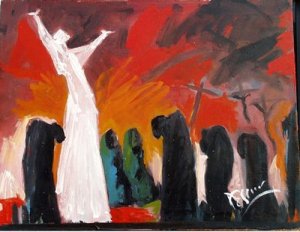 As a liturgical season, Lent is rather straightforward. It is kinda’ easy to write about. There is Ash Wednesday to dramatically mark its beginning, and we all know we are moving relentlessly towards Easter. We count the days even as we mark Lent’s beginning. The Ashes make a visible mark upon us, reminding us that we are dust and to dust we shall return – but that is not the end of the story. We are reminded to repent and believe in the Gospel – but that is not the end goal. We are encouraged to pray, fast, and give alms – but those practices are meant to make room in our lives for God that we too may rise to the newness of life at Eastertide.
 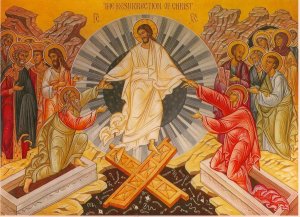 There were so many times in Jesus’ ministry that he told his disciples that on the third day he would be raised from death. Today is the third day. The day when the world changed forever. When His best overcame our worst. When He broke the chains of death and now we are free.

