The Feast of St. Francis of Assisi

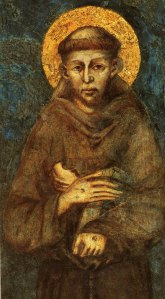
saint-francis-of-assisi-cimabueHappy Feast Day to all Franciscans and those Franciscan at heart!

Over time I have posted a number of articles about the life of St. Francis – one day I even got ambitious and created a page on this blog where all the posts can be found. I thought perhaps the Feast Day would be a good time to let people know.  You can find all the posts collected here.

One day I will also be as motivated and collect all the posts on the Admonitions. Until then please use the WordPress search function to find them among all the other musings. They start on Oct 2, 2012

pax et bonum

St. Francis and the Lord’s Prayer

A Prayer Inspired by the Our Father
(Expositio in Pater Noster)

 O Our Father most holy
Our Creator, Redeemer, Consoler and Savior:

Who are in heaven:
In the angels and the saints,
enlightening them to know, for You, Lord are light;
inflaming them to love, for You, Lord, are love;
dwelling in them and filling them with happiness,
for You, Lord, are Supreme Good, the Eternal Good,
from Whom all good comes
without Whom there is no good.

Holy be Your Name
May knowledge of You become clearer in us
that we may know
the breadth  of Your blessings
the length of Your promises
the height of Your majesty
the depth of Your judgments.

Your kingdom come:
That You may rule in us through Your grace
and enable us to come to Your kingdom
where there is clear vision of You,
the perfect love of You,
blessed companionship with You,
eternal enjoyment of You.

Your will be done on earth as in heaven:
That we may love You
with our whole heart by always thinking of You,
with our whole soul by always desiring You,
with our whole mind by always directing all our intention to You,
and by seeking Your glory in everything,
with all our whole strength by exerting
all our energies and affections of body and soul
in the service of Your love and of noting else;
and we may love our neighbor as ourselves
by drawing them all to Your love with our whole strength,
by rejoicing in the good of others as in our own,
by suffering with others at their misfortunes,
and by giving offense to no one.

Give us this day:
in remembrance, understanding, and reverence
of that love which our Lord Jesus Christ had for us
and of those things that He said and did and suffered for us.

our daily Bread:
Your own beloved Son, our Lord Jesus Christ

Forgive us our trespasses:
through Your ineffable mercy
through the power of the passion of Your beloved Son
and through the merits and the intercessions
of the every blessed Virgin and all Your elect.

As we forgive those who trespass against us:
And what we do not completely forgive,
make us Lord, forgive completely
that we may truly love our enemies because of You
and we may fervently intercede for them before You,
returning no one evil for evil
and we may strive to help everyone in You.

And lead us not into temptation:
hidden or obvious,
sudden or persistent.

But deliver us from evil:
past,
present,
and to come.

Glory to the Father, and to the Son, and to the Holy Spirit
As it was in the beginning, is now and will be forever. Amen.
[1]


[1] St. Francis of Assisi, “A Prayer Inspired by the Our Father” in Francis of Assisi: Early Documents, eds. Regis Armstrong, JA Wayne Hellman, and William J Short (New York: New City Press, 1999) pp. 158-60

 

St. Bonaventure of Bagnoregio

St. Bonaventure holding the tree of the redemp...

Today, July 15th is the Feast Day of St. Bonaventure of Bagnoregio. He was a Franciscan theologian and philosopher, held a Master’s Chair at the University of Paris, was elected Minister General of the Franciscan Order in one of its most contentious times, wrote many spiritual texts, compiled a biography (legenda) of St. Francis at the request of the friars, and many more things. His work Itinerarium mentis in Deum (Journey of the Soul to God) is considered a masterpiece of medieval spiritual practice. You can read more about the saint here.  Happy Feast Day to all Franciscans.

Tales from the barbershop

barber-shopThere was a barber in a small town. One day he’s sitting in his barbershop and a man walks in wearing a pair of sandals, and a long brown robe with a hood. The man sits down in the barber’s chair. “Excuse me,” says the barber. “I was wondering: why are you dressed like that?”
“Well,” says the man. “I’m a Franciscan friar. I’m here to help my brother Franciscans start a soup kitchen in town.”

And the barber says, “The Franciscans? Oh, I love the Franciscans! I love the story of St. Francis of Assisi, and I so love all the work you do for the poor, and for peace, and for the environment. And it’s just great that the Franciscans live so simply! You guys are wonderful! This haircut is free!” Continue reading

What Kind of People Worship Here?

MLKjrOn Monday, we as a nation will celebrate Dr. Martin Luther King, Jr. Day.  I thought it would be good that we, again, listen to the words of Dr. King from his “Letter from a Birmingham Jail.” This excerpt, found in the later part of that marvelous and challenging letter, asks a simple but profound question: “What kind of people worship here?”  Are we a people of the Gospel that comforts the afflicted? Are we a Gospel people who stand with those on the margins? Are we a full Gospel people? Continue reading

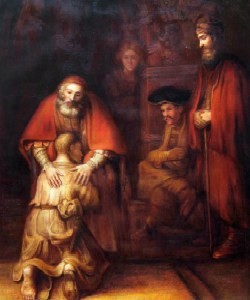
Prodigal Son: coming to ourselves

prodigal-sonFinal Thoughts (from Culpepper, 304-5)

It is no hyperbole to say that this parable is a gem; all of its facets deserve to be considered. It is no simple simile with a single point but a compressed slice of life with complexity and texture. In the following paragraphs, we will take note of various of the parable’s facets, but in preaching the interpreter should probably avoid such a “shotgun” approach and develop only one or two themes for emphasis. Let the parable be one of those beloved texts that always repays a return visit. Continue reading

Why the Incarnation

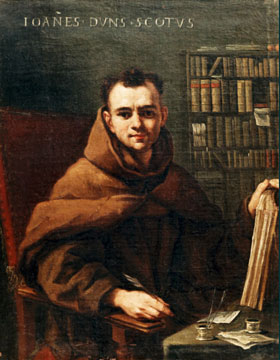
Duns Scotus1On November 8th, the Church and the Franciscan world celebrate the feast of Blessed John Duns Scotus, a friar and medieval theologian/philosopher.  Not a household name, Scotus is best known for his philosophical writings, but it is his theological perspective that has left the most impact.  His theological writings on Mary form the basis for how we understand the Feast of the Immaculate Conception, and his writings on the preeminence of Christ are the basis for the celebration of the Solemnity of Christ the King. Continue reading

Bl. John Duns Scotus

Duns Scotus1November 8th is the feast day of Blessed John Duns Scotus, a Franciscan friar from Scotland noted for his theological and philosophical work in the high-middle ages (late 13th and early 14th centuries). Scotus’ work was in the generation that followed Thomas of Aquinas and Bonaventure. His work was complex and nuanced, and he is generally considered to be one of the three most important philosopher-theologians of his time. He was given the medieval accolade Doctor Subtilis (Subtle Doctor) for his penetrating and subtle manner of thought. Continue reading