
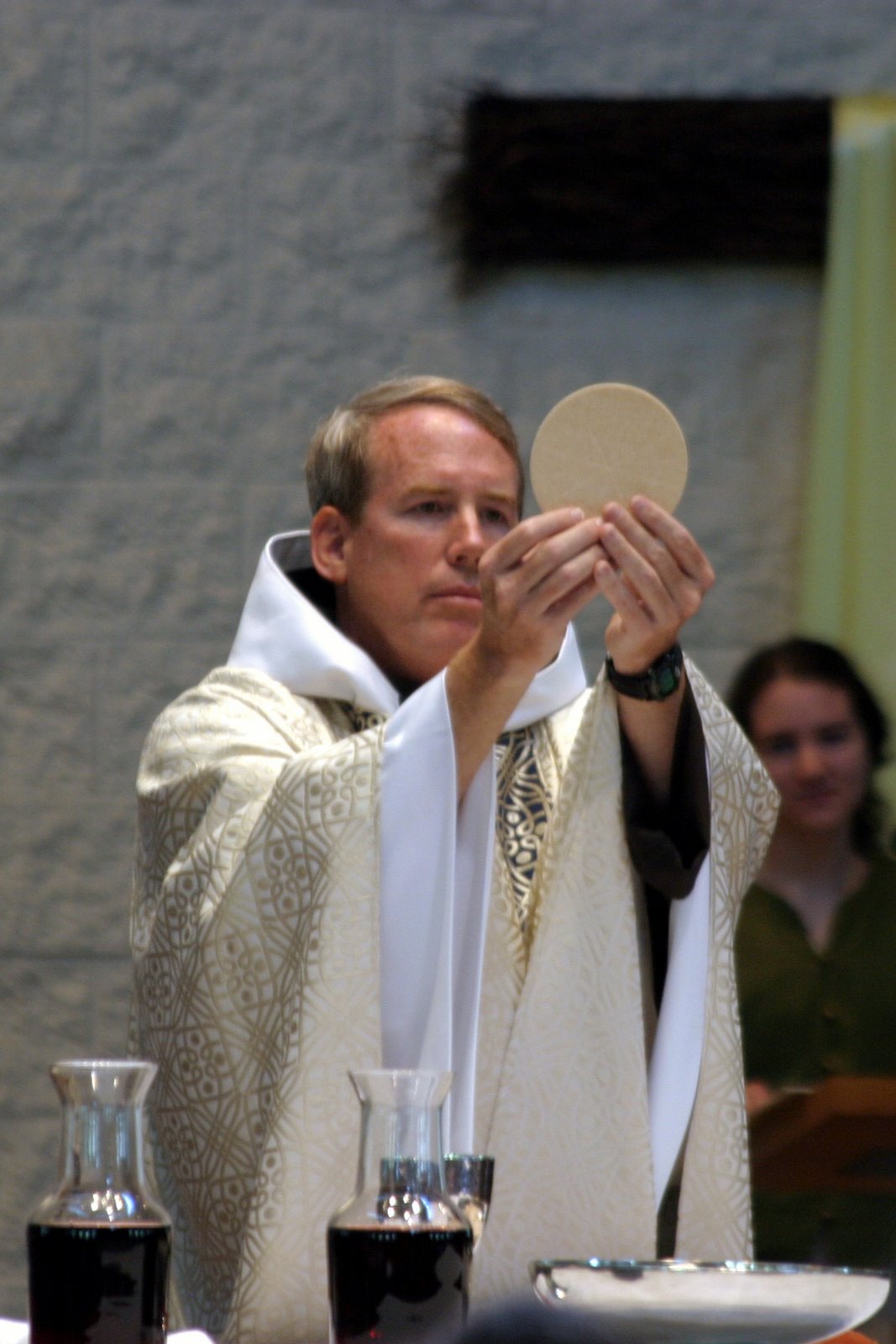
I would wager that most people would guess that in Francis’ own writings he spoke at length about poverty, his love of nature and animals, and other topics for which Francis is so well known in the modern world. Yet, in his own writings, there is perhaps no other topic that he addresses more than the Eucharist. In his Eucharistic writings, Francis expresses a deep view of the continuing Incarnation of Christ in the world, and in that vision is an entire way of life. These writings represent part of the movement of Francis’ mystical life from prayer and devotion in solitude before the cross, to a pattern of communal prayer and devotion in the Mass as well as a devotion to the Eucharist apart from Mass. Continue reading
 Over the last few weeks, we described Francis of Assisi in the role in which he is most popularly recognizable: the lover of nature and animals. Interestingly, this role is not original in the Christian tradition. In a valuable book reviewing the nature stories of Franciscan literature, Edward Armstrong shows that many of Francis’ attitudes have precedents in biblical, early Christian, and medieval ideas about nature. One group of scholars place Francis in the tradition of hermits who retired to wilderness and befriended animals. Others associate him with a theological trend, unfortunately not dominant, which affirms creation as containing intrinsic value. Most see the stories about Francis as having precedents in the already-known lives of saints, although they may have been true of Francis as well.
  People are surprised to learn that the Early Rule of the friars instructed the brothers not to own pets – as well they were not to ride horses. These rules are only partly about poverty; they encouraged friars not to treat animals as objects or possessions. And, in the case of horseback riding, his rule distanced the friars from the proud world of chivalry. Later in his life when sickness compelled him to ride, Francis always preferred a donkey.
 St. Francis of Assisi is the patron saint of Italy, merchants, stowaways, ecology, but most famously, of animals. If one searches the internet, you can easily find all kinds of pious, ecologically insightful, and often amazingly-modern sounding quotes from St. Francis. And they are inevitably without a citation from one of Francis’ writings or at least a later Franciscan source writing about Francis. As I noted in the beginning of this series, Francis has always been reinvented and marketed as needed. Perhaps the one book most responsible for casting Francis as the lover of animals and nature is a collection of stories – many miraculous and all very saintly – that first appeared in 1390 in Tuscany: the Fioretti (The Little Flowers). It should be noted that this is about 160 years after Francis’ death.
 By the spring of 1213, four years after the founding of the “order,” Francis’ reputation had risen to the attention of the Italian aristocracy – not just in Assisi but throughout central Italy. The order was beginning to attract men from the higher social classes. Sons of merchants like Francis, sons of the landed wealthy, sons of ruling households, men with established careers in law, music and the arts, and also ordained priests. They joined the already formed group of men from middle and lower backgrounds in muddling through what it meant to follow Christ in the manner of Francis. G.K. Chesterton’s later definition of the Catholic Church – “here comes everybody” – was being lived out in Francis’ day.
  Over the last several weeks we have been considering what awaited the men who came to join Francis of Assisi and this growing fraternity of believers seeking to follow Christ more fully in the world. We had mentioned there were no rules, regulations, or even a formation program; there was only Francis and the other brothers. But what drew the men to want to “come and see?” Undoubtedly, as today, a complex of reasons, but key among those reasons was Francis of Assisi’s reputation for holiness and miracles.
 While reading the morning news I noticed an article that talked about the role that industrial mobilization has played in combating the coronavirus pandemic. Industries from the pharmaceutical companies, logistic and delivery organizations, manufacturers of syringes/swabs/alcohol pads/etc., refrigeration companies… and the list is quite long. The article compared the response of US industry to that of the mobilization that was such a key role in the Allied victory of World War II. The article implied that US auto companies produced cars one day and tanks the next. Were it that easy.
 The sun has risen on Holy Saturday. The Christian world has remembered and celebrated the events of the Last Supper, all that unfolded in Gethsemane, the trials, the scourging, the via dolorosa, crucifixion, death, burial, and now… we wait. This week someone remarked how lucky I was to be Franciscan friar and that I could take these days for solitude, reflection, and quiet. And indeed, some of my brothers not in parish ministry are able to do that. Many are on retreat. Not so here in the parish.
