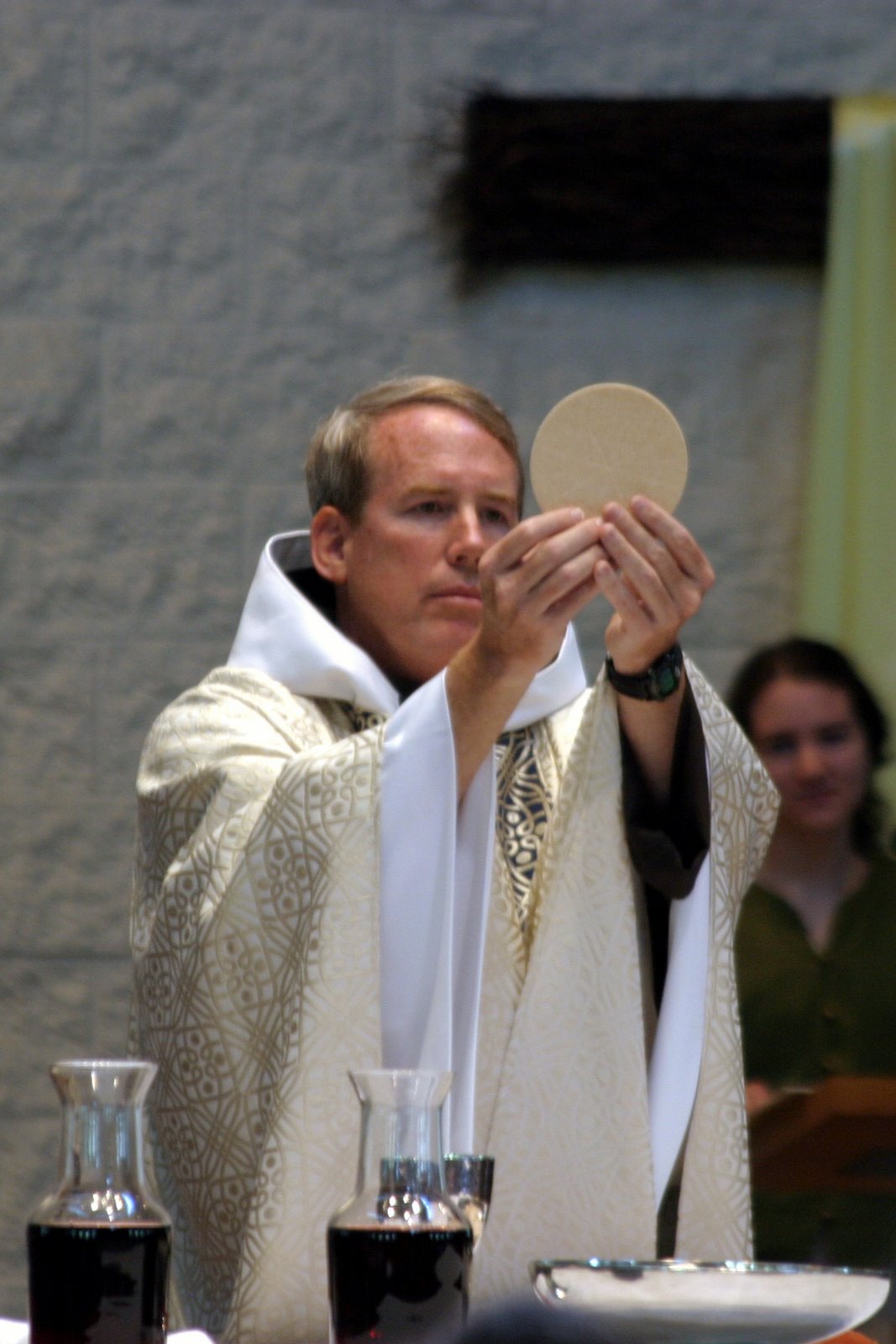
 In our previous installment, speaking of Francis’ unique view of nature, we ended with the idea that Francis “held that the whole world is a sacrament, a sacred thing, a gift; and the sacramental character of the world reminds us of the central sacrament, the Incarnation, continued among us in the seven sacraments of the Church, especially in the Eucharist.” But did Francis have any thoughts specifically on the Eucharist itself?
I would wager that most people would guess that in Francis’ own writings he spoke at length about poverty, his love of nature and animals, and other topics for which Francis is so well known in the modern world. Yet, in his own writings, there is perhaps no other topic that he addresses more than the Eucharist. In his Eucharistic writings, Francis expresses a deep view of the continuing Incarnation of Christ in the world, and in that vision is an entire way of life. These writings represent part of the movement of Francis’ mystical life from prayer and devotion in solitude before the cross, to a pattern of communal prayer and devotion in the Mass as well as a devotion to the Eucharist apart from Mass. Continue reading →

 In the Confieitor, we hold up the things we have done and what we have failed to do. The first reading for today’s Mass is certainly a list of what St. Paul has done for the sake of the Gospel. He has traveled, worked, suffered, been prosecuted, imprisoned, witnessed, held nothing back, did not back down, and took every opportunity to proclaim the Good News. I have no doubt, if asked, that St. Paul could have easily listed what, in his mind, he had failed to do. Continue reading
 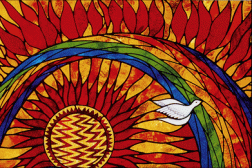 On Pentecost Sunday, the
  Who were these 12 people that Paul encounters in today’s first reading? They were generically referred to as “disciples” in Acts 19:1. Many people assume, based on the following verses, that they were not followers of Jesus, but rather a remnant of the followers of John the Baptist. Not so. Luke is always quite specific in unmistakably identifying John the Baptist’s disciples. These folks are disciples of Jesus, but with a not-yet-complete understanding of the faith.
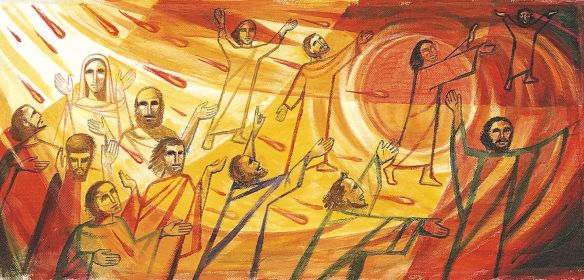 With our celebration of the Ascension complete, as a Church we look forward to the celebration of Pentecost, that great event in which the promise of Jesus begins its fulfillment in the coming of the Advocate, the Counselor, the Spirit of Truth who will lead the disciples in all things (John 16).
 Salvador Dali’s painting “Ascension” is certainly one of the most provocative paintings depicting the Ascension of Our Lord Jesus. The symbolic elements are many, the speculations even more, and the agreement on meaning is still up for grabs. But I sometimes tend to focus on some of the more realistic elements cast among the surrealistic things. While the art experts discuss the finer points of Dali — his life, faith, and his work, I am fascinated by perspective, as well as the hands and feet. The former as though clutching at something; the latter soiled and showing the wear and tear of life on earth.
 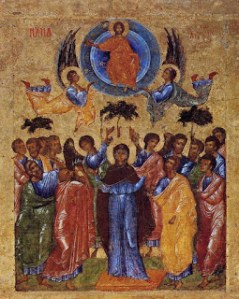 The Ascension of the Lord is a great celebration of the Church. It commemorates the bodily ascension of Jesus into heaven. According to St. Luke it occurred 40 days after the Resurrection (Acts 1:3). It is a feast of great antiquity with liturgies and art of the 4th century already addressing it as a norm of the Church. In the Eastern Church this feast is known in Greek as Analepsis, the “taking up,” and also as the Episozomene, the “salvation from on high,” indicating that by ascending into his glory Christ completed the work of our redemption.
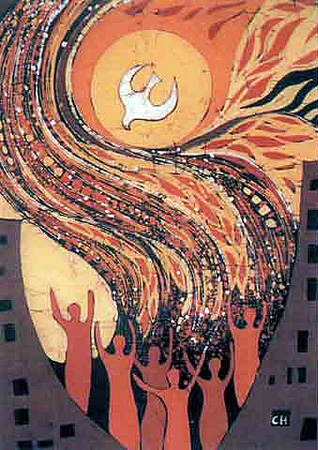 The gospel for
  It is a small part of
  friarmusings