
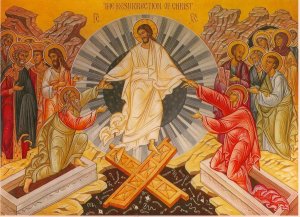
 27 Some Sadducees, those who deny that there is a resurrection, came forward and put this question to him, 28 saying, “Teacher, Moses wrote for us, ‘If someone’s brother dies leaving a wife but no child, his brother must take the wife and raise up descendants for his brother.’ 29 Now there were seven brothers; the first married a woman but died childless. 30 Then the second 31 and the third married her, and likewise all the seven died childless. 32 Finally the woman also died. 33 Now at the resurrection whose wife will that woman be? For all seven had been married to her.” 34 Jesus said to them, “The children of this age marry and remarry; 35 but those who are deemed worthy to attain to the coming age and to the resurrection of the dead neither marry nor are given in marriage. 36 They can no longer die, for they are like angels; and they are the children of God because they are the ones who will rise. 37 That the dead will rise even Moses made known in the passage about the bush, when he called ‘Lord’ the God of Abraham, the God of Isaac, and the God of Jacob; 38 and he is not God of the dead, but of the living, for to him all are alive.” 39 Some of the scribes said in reply, “Teacher, you have answered well.” 40 And they no longer dared to ask him anything. Continue reading
Resurrection: Sadducees
Reply
 9 And Jesus said to him, “Today salvation has come to this house because this man too is a descendant of Abraham. 10 For the Son of Man has come to seek and to save what was lost.”
 A Parable of Reversal? I tell you, the latter [tax collector] went home justified. We might object to God forgiving the tax collector. He doesn’t actually confess any sins. He makes no statement of repentance. He doesn’t offer to change his life. He doesn’t make any reparations for his sins (as the tax collector Zacchaeus does). This appears to be very cheap grace. This parable probably should not be understood as an example story, but is it simply a story of reversal, as the final saying indicates. If the Pharisee is viewed as a villain and the tax collector a hero, besides the historical inaccuracies, the parable loses its power. They have only received what they deserved. There is no need for the reversal in this last verse.
