
 These days there is no shortage of devices to take photographs and videos. If you have a camera, you have a digital record. It is kinda’ nice that it is so easy to build an album of memories: a newborn, the baptism, the first bicycle ride without training wheels, pictures of the school years, shots of dropping that young adult at college, the wedding, and the pictures of the newborn. At every stage there you can watch the person become the person – part from their parents, part from their own independent life. It is a record of the many mantles being passed on as the child takes on the mantle of adult.
A mantle – a loose sleeveless garment worn over other clothes, or so says the dictionary. Figuratively, the cloak symbolizes preeminence or authority, as in accepting the mantle of leadership or responsibility. When Elijah went over to him and threw his cloak over him. Elisha left the oxen, ran after Elijah” we see the beginning of a period of preparation for Elisha’s eventual taking on the full mantle of the prophet, the servant of the Word of God. (2 Kings 2) It makes for quite the picture.
Somewhere in your collection of pictures, I bet there is one of you and your baptismal gown. I love that part of the baptismal liturgy that comes after the pouring of the baptismal waters: You have put on Christ; in Him you have been baptized. See in this white garment, the outward sign of the inner dignity given you. And with the help of family and friends, may you bring that dignity unstained in to everlasting life. It is an Elijah-Elisha moment: the mantle begins to be passed from parent-to-child. The child will follow the parent as they grow. The parent has that mantle to teach, form, mold, and shape the person the child will be. It is a great responsibility, a wondrous undertaking. It is a mantle we all wear in one way or another as we prepare ourselves and the generation that follows.
There are many “mantles.” How is it that we wear that mantle of our faith in our homes, families, places of work, or parish? Perhaps we wear it loosely, and without a great deal of thought, except during the time we spend at church on Sunday. Maybe we wear it boldly…. but comes the time when that mantle of responsibility begins to weigh upon us, then we feel its constraints, its burden, and its demands. Perhaps in that moment we lay it to one side for a moment. It might be the briefest of times when the words around us are cruel, racists, judgmental, or other-than-what-we-deeply-believe. In our silence when we don’t want to rock the boat, upset someone, or bear the brunt of the next wave of prejudicial utterances. It is then that mantle is worn loosely to the point of falling aside.
In our baptism and profession of faith, have been given a responsibility to speak as though a prophet – like Elijah, like St. Paul, like so many before us
- to speak truth to power,
- to speak hope into a situation of despair,
- to be joyful among the world’s tears, or
- to reach out to embrace those in the world deemed un-huggable.
And, yes, there are times when those prophetic moments are the cross when are called to pick up. Just last week, we heard Jesus say: “If anyone wishes to come after me, he must deny himself and take up his cross daily and follow me.” Not just pick it up and endure it, but “follow.”
Sometimes the call comes to us as it did to St. Paul – uninvited, yet compelling. Sometimes, in our enthusiasm, we proclaim: “I will follow you wherever you go.” Sometimes that is what we want to be able to say to Jesus… and yet we are challenged to be honest with ourselves: are there limits to what we will do in following Jesus? Perhaps our answer is “Yes, Lord…. But here’s the thing… once I get my career on track, my family established, my education complete…” And the thing is that we don’t even know what God would ask of us. Maybe it is to get a career on track in order to be witness in the world of business. Or be married and instill within the family deep true Christian values that can withstand the witness of secular values.
The call begins in the waters of baptism with the mantle of faith laid on our shoulders. Here these many years later, it is good to take off our mantle and take a closer look at it. I can pause to consider the mantles of my baptism, my Franciscan vows, my priestly life, the mantle of my role in by family – and so many more. They all combine into one.
But at the core, the question remains, “Is it the mantle of our baptism in Christ?” Or is it a multi-colored cloak in which we have a little of this, a little of that, having pieced together “what works for me.” Having pieced together, what does not take away my options, my choices, my freedom. Isn’t that what St Paul says? We are “called for freedom” …and then interestingly he does not give us list of choices. He describes the freedom of Christ as service to one another through love. “For the whole law is fulfilled in one statement, namely, ‘You shall love your neighbor as yourself.’”
Anslem of Canterbury, some 1000 years ago, wrote that if our idea of freedom is as a matter of choice, however true, it is an impoverished understanding of freedom. To be free is to have no barriers, no obstacles, nothing that burdens you in your journey to God. To be free is to arrive before God and to realize, you have no choice at all. There is only love.
And maybe that is the intense urgency in Jesus’ command to “Follow me” – every delay or side trip – in their own way – is love delayed. “Yes Lord, I will follow…but here’s the thing… once I get this other task started/completed/whatever – then I will more fully love you.”
We are called to follow. We have no idea about the journey to which we are called. But we do know that despite its ups and downs, it will be a journey of love. And so we take up the mantle and we follow the Christ.
It is a mantle of love – it is the white garment that is but the outward sign of the great dignity given us. May we bring that dignity unstained into ever-lasting life. Now won’t that be a picture for the album of our lives?
 It is June in Florida and we have begun our annual vigil to see if our luck holds and again we will dodge a hurricane. Hurricanes are an expected natural disaster endemic to our State. Sadly, perhaps we also have reached a point where we wait for the next unnatural disaster; the next Nickel Mine School, Columbine, Aurora, San Bernardino, Sandy Hook/Newtown, Virginia Tech, Umpqua Community, Boston, Ft. Hood, Navy Yard Washington DC, or Orlando.
  Jesus turns to his host, Simon and says, “So I tell you, her many sins have been forgiven because she has shown great love.” – and later Jesus tells her that her “sins are forgiven.” When I ponder that short verse in the gospel, I have often pondered it as though it were a chicken and egg question. You know, which comes first love or forgiveness? I think the answer is, it depends.
 Many years ago I received a letter. It was a letter that I wished, snow or rain or heat or gloom of night could have stayed that courier from the swift completion of his appointed rounds. It was a heart-breaking letter from my father, letting me know he had inoperable cancer. “Heart-breaking” is one of the expressions we use invoking the heart. We use expressions such as, “I know that by heart,” we do things “to our hearts content,” and we “cross our hearts” to verify we are telling the truth. Some folks “wear their hearts on their sleeves,” at times are burdened with “a heavy heart,” or blessed with a “heart filled with joy.” Sometimes our “hearts are broken.” It is the poetic expressions that are closer to the heart of the Bible.
  You know it is when it hasn’t rained in a long time and then it does. Not a gully washer of a rain, but just a regular rain. You know the roads can get a little slick when the accumulated road oil comes to the surface. Well that is what happened to this truck driver on a country road. Came around this corner and the tires started to slip a little bit, then a lot, and he skidded right to the ditch.
  When I was in seminary, our homiletics professor had lots of advice and pointers for the Sunday homily – I am about to ignore one of the pieces of advice. The professor was pretty adamant about not explaining theology. And I mostly agree with his point – it can make a homily really dry and fill it with language that needs its own explanation. The professor’s final point was that you are likely to give an inaccurate or heretical version of the theology in any case.
  Memory is an interesting thing. There are many physiological and psychological theories around the topic, but lots of folks seem to agree we have memory for facts and memory for context. Sometimes the memories are general and sometimes explicit. We tie memory to specific events, personal experiences, semantic categories and more. Then whatever the memory, we have to “register” the memory, store it and then recall it.
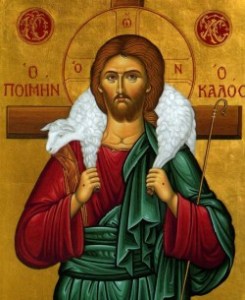
 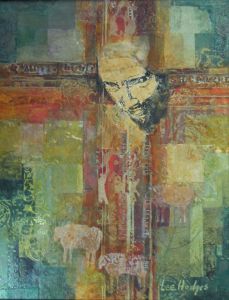 Here on this 4th Sunday in Easter, our diocese and the US Bishops’ conference have asked us to speak about vocations to the priestly life. To echo the voice of the Good Shepherd calling those to a life of dedicated service of the community of God – to follow Christ more closely through life as an ordained priest. And to answer this call in troubled times. A time in our life when the church faces questions about a growing worldwide crisis caused by priests and bishops that has continued to flow onto the headlines of the world’s newspaper for almost 15 years now. It is a time when the question lingers on the periphery “Why would anyone want to become or remain Catholic today?” and its more focused parallel: “Why would a man want to become or remain a priest today?”
 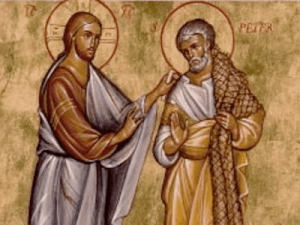 What kind of leader do we want? Certainly a good question here in the midst of an election year with the presidential nominations dominating the news cycle. It is always a good question for the Church. I have lived during the pontificates of seven popes and in my lifetime we have certainly had a wide variety of types and styles of leaders. In our history, we have had 266 of popes. We have had some spectacularly amazing leaders, saints in the making, and we have had some spectacularly horrific leaders, who would have been quite at home in Game of Thrones (so I hear, I actually haven’t seen it…). All took up the Keys of Peter, with the same job description given Peter: feed my sheep; tend my lambs. The Pope is the most visible of leaders in the Church, but not the only ones with that same job description. The simple mandate, “feed my sheep; tend my lambs” applies to priests, pastors, parents, principals, police, and anyone who would lead – anyone who would answer the call to minister in the Holy Name of Jesus.
  Easter is coming
