The language of the Spirit

The description of the first Pentecost in the Acts of the Apostles tells us that when devout Jews from many different nations heard the Spirit-inspired proclamation of the gospel by the disciples, “each one heard them speaking in his own language.” The outpouring of the Spirit of God united this very diverse group of people in a powerful moment of God’s self-revelation.  Such is the power of Spirit.

During one of the first masses I attended in Kenya – well before I really had any clue about Kiswahili – I was sitting near a Kenyan family. Their daughter, probably about seven or eight, was wheelchair bound and was possessed of serious developmental disabilities. After the first few minutes of what turned out to be a very lengthy homily, she became agitated and began to cry out. Her mother just calmly reached out and put her arm around this little girl; she drew her close, caressed her hair and spoke to her very softly. And her little girl became quiet and peaceful. It happened again at a later point in the mass; she became troubled and began to cry. And her mother did the same thing – drew her close and calmed her. Her tenderness with her daughter was truly touching. What is more remarkable is that in Kenya there is a real reluctance to bring such children out in public. And yet there she was – with the family, in church, fully loved.  And not a word was said.

I did not understand the homily that day. But I had been privileged to see a homily between mom and daughter in a language I understood. That mom proclaimed the Easter message of the risen Christ. In her tender care for her daughter, this young mother spoke the language of the Spirit. I am sure that Saint Francis must have been smiling.

Some Catholics are disheartened by what they perceive as the “institutional church.”  Others bemoan the lack of catechetical knowledge of the faith. Others are riled that other parishioners could possibly vote for “that guy.” Others are just not very interested in the practice of faith at this time in their lives. They don’t seem to find inspiration in it; it is not compelling for them. The milieu of people, perspectives, and perceived problems are complex. And what surrounds it all is words – that too often are like a homily in Kiswahili given in Tampa.

But what is not complex is the “language of the Spirit,” the language spoken by that young mother in the church in a Kenyan slum, the language of compassion and of faithful care for the most vulnerable of our world. It is the language that we as Catholics should speak in committed service, of faithful care, of peacemaking in a violent world, of prayerful worship even when our hearts do not know rest.

And sometimes the “language of the Spirit” is in the first words we speak.  When the risen Christ appeared to his disciples on the first Easter night – disciples hiding in fear, the breath of life sucked out of them by the horror of Calvary – Jesus’ first words could have been “Where were you when I needed you most.” Instead, his greeting and his presence instill peace and healing in the midst of fear and turmoil. And then he directs these disciples to open themselves to the gift of the Spirit, the Spirit that enables them to receive and to grant forgiveness. It is only through the power of forgiveness that the air can be cleared and all can breathe in the peace for which we so long and that the Risen One desires to give. As the risen Lord, Jesus gifts his disciples with the Spirit that empowers them to be to the world what He has been. They are sent forth to the world to speak the language of the Spirit, a language of peace, of forgiveness, of generous care and faithful service, of healing and of hope.

May the Holy Spirit fill our innermost being and enable us to speak a word of hope to a world in need

What can be fixed

the-hunger-games-catching-fire-300x180Yesterday was a day off that I actually got to take and enjoy! I went to see the movie “42” (very much enjoyed, highly recommended). I am always interested in the preview of coming attractions before the movie: “because you are here at this movie, you will probably like this upcoming movie.”  Sometimes it is quite enlightening. But, yesterday, not so much.  It was more a preview of the what they hope will be the summer blockbusters. One upcoming movie is the second installment of the Hunger Games trilogy, Catching Fire. I found the original movie intriguing and as a result I read the remaining books in the series.

Continue reading

The Ascension of the Lord – Part 2

Luke 24:46-53

46 And he said to them, “Thus it is written that the Messiah would suffer and rise from the dead on the third day 47 and that repentance, for the forgiveness of sins, would be preached in his name to all the nations, beginning from Jerusalem. 48 You are witnesses of these things. 49 And (behold) I am sending the promise of my Father upon you; but stay in the city until you are clothed with power from on high.” 50  Then he led them (out) as far as Bethany, raised his hands, and blessed them. 51 As he blessed them he parted from them and was taken up to heaven. 52 They did him homage and then returned to Jerusalem with great joy, 53 and they were continually in the temple praising God.

Continue reading

Francis of Assisi – The Word of God

Francis_ClareSmallSeveral weeks ago we described Francis’ love of the Eucharist.  For Francis the Eucharist is the primary way in which he sees Christ’s continuing Incarnation in the world.  It is the sign of the presence of Christ with the Church in his continuing salvific role.  That presence was respected by Francis and was shown by the directions he gave to his own brothers regarding Eucharistic reverence, and that he even directed his missionary brothers to carry pyxes, so if they encountered the Eucharist not properly cared for, they would be able to provide a suitable means to reserve the consecrated hosts.

Continue reading

The Good Shepherd

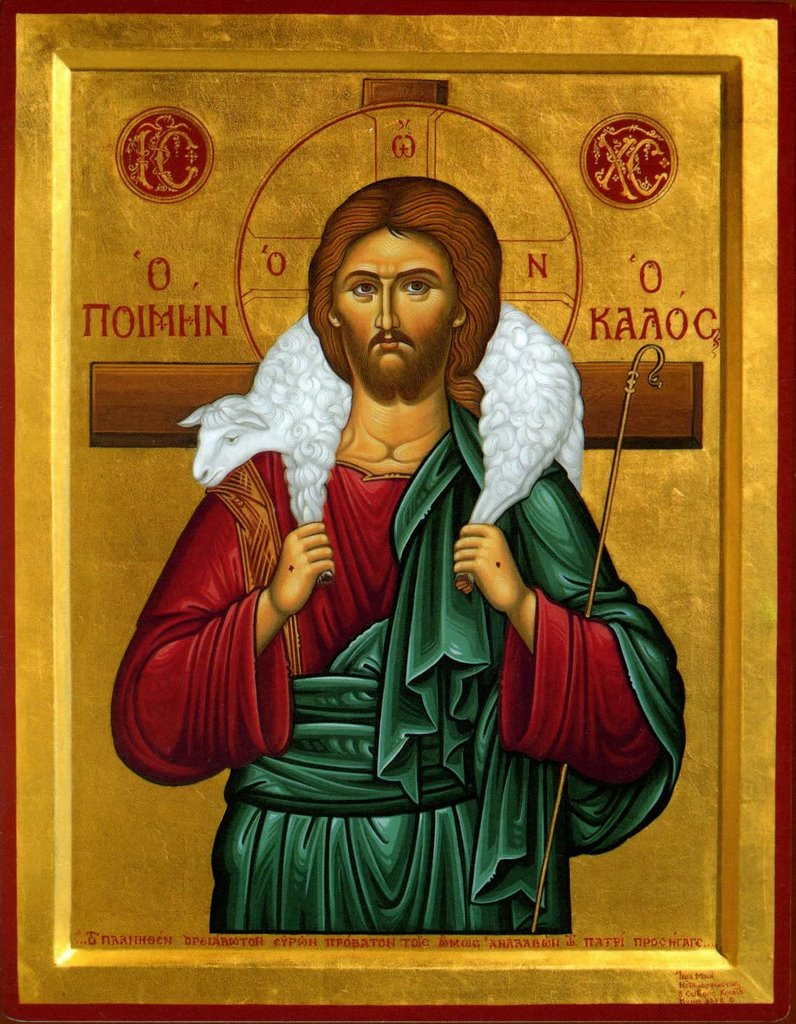
Christ the Good ShepherdThis coming Sunday, the 4th Sunday in Easter, is often referred to as “Good Shepherd Sunday” as the gospel comes from John 10. I thought I would share some notes I have assembled over the years…. as I note when I post such things, credits, footnotes and other such things are incomplete.  Please know the work of many true scholars makes this post possible.

John 10:27-30

27 My sheep hear my voice; I know them, and they follow me. 28 I give them eternal life, and they shall never perish. No one can take them out of my hand. 29 My Father, who has given them to me, is greater than all, and no one can take them out of the Father’s hand. 30 The Father and I are one.”

Continue reading

Pope Francis – reforming from the inside out

As Archbishop of Buenos Aires, there was a clear motif of collaborative ministry with his episcopal peers. It seems that way of ministering is continuing with his episcopal peers from the continents across the globe. Pope Francis continues to be a source of hope. How that hope takes shape, we will see – but for the moment all the signs seem to point us towards Hope

From John Allen: Pope taps eight cardinals to lead reform | National Catholic Reporter.

The second turning

In the first turning, a Christian experiences the transformation from a natural person to a spiritual person. Instead of “self” being the center of life — exploring, cultivating, adoring it — God becomes the center. This miracle is brought forth by the Holy Spirit giving us new life in Christ. It is a necessary, indispensable, basic step. But it is only a first step. The work of the Holy Spirit should not stop here but lead to a second turning in which the spiritual person again becomes natural.

Walter Trobisch

Francis of Assisi: The Eucharist

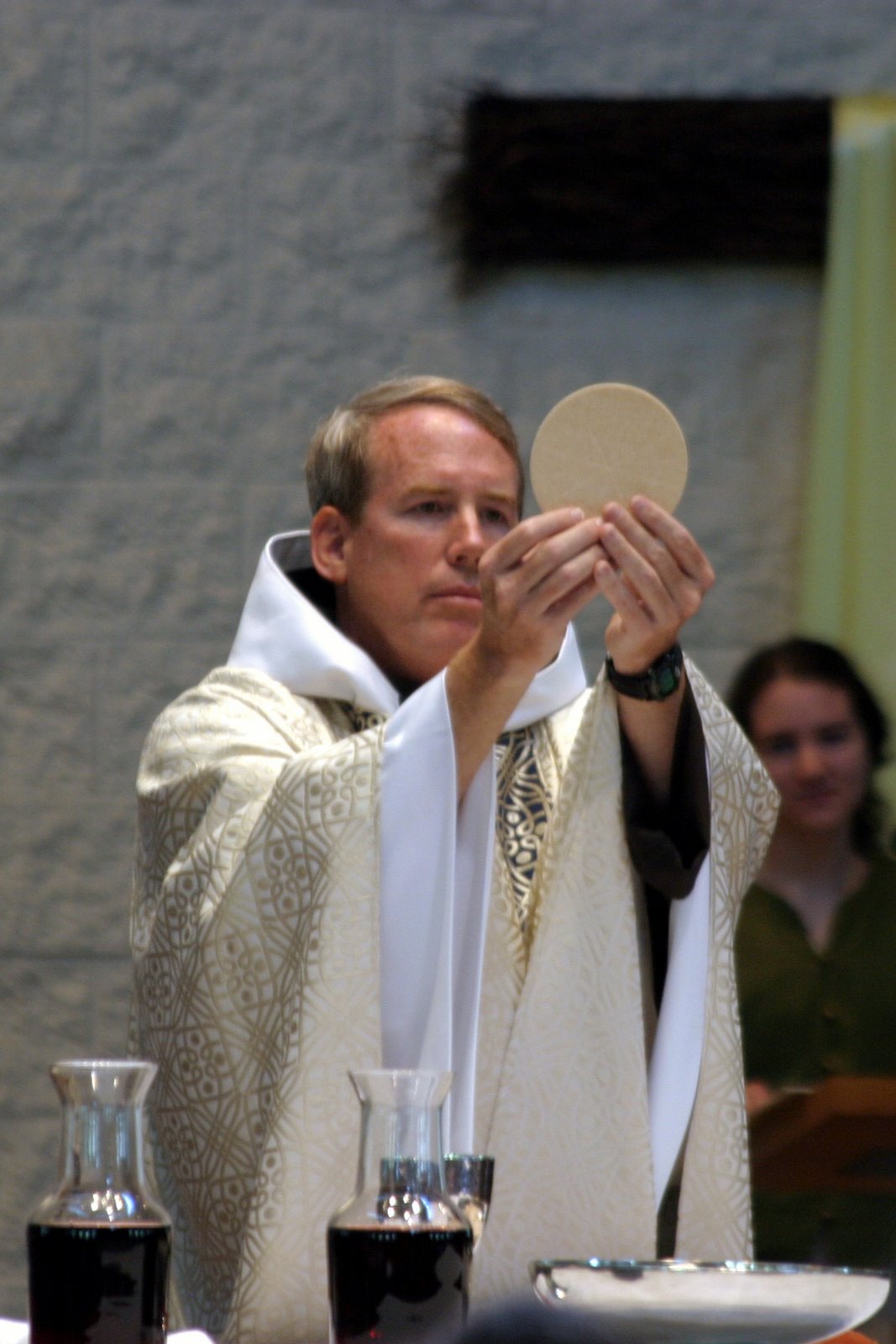
In our previous installment, speaking of Francis’ unique view of nature, we ended with the idea that Francis “held that the whole world is a sacrament, a sacred thing, a gift; and the sacramental character of the world reminds us of the central sacrament, the Incarnation, continued among us in the seven sacraments of the Church, especially in the Eucharist.” But did Francis have any thoughts specifically on the Eucharist itself?

I would wager that most people would guess that in Francis’ own writings he spoke at length about poverty, his love of nature and animals, and other topics for which Francis is so well known in the modern world. Yet, in his own writings, there is perhaps no other topic that he addresses more than the Eucharist.  In his Eucharistic writings, Francis expresses a deep view of the continuing Incarnation of Christ in the world, and in that vision is an entire way of life. These writings represent part of the movement of Francis’ mystical life from prayer and devotion in solitude before the cross, to a pattern of communal prayer and devotion in the Mass as well as a devotion to the Eucharist apart from Mass. Continue reading