 28 After he had said this, he proceeded on his journey up to Jerusalem. 29 As he drew near to Bethphage and Bethany at the place called the Mount of Olives, he sent two of his disciples. 30 He said, “Go into the village opposite you, and as you enter it you will find a colt tethered on which no one has ever sat. Untie it and bring it here. 31 And if anyone should ask you, ‘Why are you untying it?’ you will answer, ‘The Master has need of it.’” 32 So those who had been sent went off and found everything just as he had told them. 33 And as they were untying the colt, its owners said to them, “Why are you untying this colt?” 34 They answered, “The Master has need of it.” 35 So they brought it to Jesus, threw their cloaks over the colt, and helped Jesus to mount. 36 As he rode along, the people were spreading their cloaks on the road; 37 and now as he was approaching the slope of the Mount of Olives, the whole multitude of his disciples began to praise God aloud with joy for all the mighty deeds they had seen. 38 They proclaimed: “Blessed is the king who comes in the name of the Lord. Peace in heaven and glory in the highest.” 39 Some of the Pharisees in the crowd said to him, “Teacher, rebuke your disciples.” 40 He said in reply, “I tell you, if they keep silent, the stones will cry out!” Continue reading →

 Introduction to The Lucan Passion Narrative: The passion narratives provide the climax for each of the four gospels, catching up themes that weave their way through the evangelists’ entire portrayal of Jesus life and bringing them to a dramatic completion. In deft strokes the evangelists tell us of the final hours of Jesus’ life – his last meal with his disciples; his arrest in Gethsemane; his interrogation by the religious leaders; the trial before Pilate; and finally the heart clutching scenes of Jesus’ crucifixion, death and burial. Continue reading
  Every year Christians commemorate the week before Easter Sunday with special traditions and devotions that help them enter into the Passion, death and resurrection of Jesus Christ. It is a special time of the year, culminating in the biggest feast of the Church’s calendar – Easter. Here are the basics of what Catholics look forward to during the week that precedes Easter Sunday.
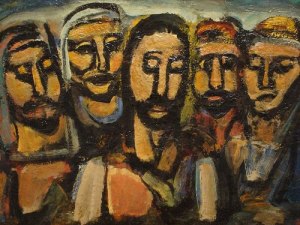 I find that Luke’s treatment of Judas offers an important message. There are some major differences between Luke’s account of Judas and what the other Gospels say about him — and in our day and age, it might be good to hear about Judas — at least Luke’s presentation of Judas.
 A week or so ago, at our Men’s Prayer Group meeting, at the very end of the meeting, I offered a spiritual exercise in the light of that weekend’s Sunday gospel – the Prodigal Son. The exercise was to write a letter to one of the characters in the parable. Here is one of the letters that was sent to me. It is an interesting Lenten reflection for all of us. My
  friarmusings