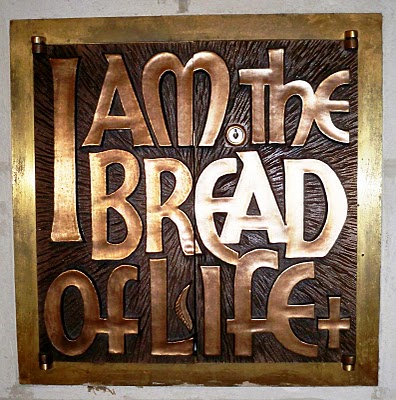
In my youth, I had an uncle. He would visit once or twice a year, and every three years or so one of his visits would be at Christmas. He was an interesting and worldly person who was ever the font of fascinating information, experiences, and knowledge of the world beyond the confines of my neighborhood. He only had one habit that I found annoying. Continue reading
Say and Do: seeking honor
8 As for you, do not be called ‘Rabbi.’ You have but one teacher, and you are all brothers. 9 Call no one on earth your father; you have but one Father in heaven. 10 Do not be called ‘Master’; you have but one master, the Messiah. 11 The greatest among you must be your servant.
12 Whoever exalts himself will be humbled; but whoever humbles himself will be exalted.
By the second century the title “Rabbi” (etymologically “my great one”) was properly used of those who had been trained and formally recognized as scribes (like our “Reverend”), but this technical use probably came in after the time of Jesus: as applied to Jesus (26:25, 49; Mark 9:5; 10:51; 11:21; John 1:49; 3:2 etc.) it was apparently an honorary title, based on his reputation rather than his official status.
In contrast with the scribes’ love of human approbation, Jesus calls on those who follow him to avoid honorific titles. Verses 8–10, while taking up the theme of the scribes’ craving for public respect, are clearly aimed primarily at Jesus’ own disciples (the “scribes” of the kingdom of heaven, 13:52), those for whom he (“the Messiah,” v. 10) is the one true teacher and leader. They highlight a concern for status which, while taken for granted in secular society (20:25) ought not to characterize those who follow Jesus (20:26). Matthew’s inclusion of this warning in his gospel testifies to the fact that the problem had not gone away, as indeed it still has not among Christians today. The three titles singled out were probably all being used in Matthew’s church. It is not difficult for a modern reader to think of similar honorifics in use today, and to discern behind the titles an excessive deference to academic or ecclesiastical qualifications.
In Matthew’s gospel Jesus himself is addressed as “Teacher” only by outsiders, never by his disciples, and the actual Hebrew term “Rabbi” is heard only from the lips of Judas after his apostasy (26:25, 49). But the title is not in itself objectionable, since it is here forbidden not for Jesus himself but for his disciples, and the reason for the ban is to avoid confusion with the only true “teacher” they have, Jesus himself. To recognize him as such is not false adulation but sober fact, but not even the most prominent of his followers is to be placed alongside him in this position of authority. Cf. the comment in 7:28–29 on the unique authority of Jesus the teacher in contrast with “their scribes” who are here under the spotlight. If anyone is entitled to “sit on Moses’ chair,” it is Jesus.
The statement that “you are all brothers” might seem more appropriate after the next verse; here we might have expected “fellow-disciples” as the correlative to “teacher.” But “brothers” is apparently for Jesus a way of expressing equality; it is not for one brother to be set above the others. This usage deserves to be noticed by those who value the biblical view of disciples as brothers and sisters: the term rules out differences of status, for the discourse of Mt 18 (which also made prominent use of the term “brother”) has cast us all together in the role of “little ones.”
The introduction of familial terminology in “you are all brothers” now leads into another family title, which is also open to abuse: “father.” It is found in the OT as a term of respect, usually applied to someone older and/or socially superior to the speaker (e.g. 1 Sam 24:11; 2 Kgs 2:12; 5:13; 6:21). Its use in Judaism for an authoritative teacher is illustrated by the title of the mishnaic tractate ʾAbot, “The Fathers,” a collection of sayings of revered teachers past and present. But Jesus’ special emphasis on the disciple’s relationship with God as the one “heavenly Father” (especially prominent in the Sermon on the Mount) means that it should no longer be thoughtlessly used of other people—except of course in its literal sense. Paul will speak of his evangelistic role as that of a “father” to those whom he has brought to faith (1 Cor 4:15; cf. Phm 10), but there is no NT record of him or any other Christian leader being addressed as “father.”
The third title, “instructor,” occurs only here in the NT, nor is it found in the LXX. Its original sense was “leader” or “guide,” one who shows the way, but it came to be more commonly used for teachers, those who show the way intellectually or spiritually. It may therefore be a virtual synonym of “teacher” in v. 8; perhaps our term “mentor” might convey the same sense. As in v. 8, Jesus is the only person who truly fulfills that role for his followers.
It is surprising that Matthew here portrays Jesus as using “the Messiah” as a third-person title (Mark 9:41 is the only other synoptic example), especially as he has forbidden his disciples to use that term to describe him (16:20) and has previously carefully avoided doing so himself. His disciples were, of course, well aware by now that Jesus did see his mission in messianic terms, and would have understood him here to be speaking of himself, as in v. 8. But the audience is still, according to v. 1, the general public as well as his disciples. We noted above, however, that from v. 8 the primary audience is clearly Jesus’ disciples, and in such a context Matthew has not found the title inappropriate, perhaps because the wording does not actually say that “the Messiah” is Jesus, however obvious this must have been to his disciples at the time, as it would be also to Matthew’s Christian readers.
Further sayings about status, already familiar from Jesus’ teaching in 18:1–5 and 20:26–27, complete the paragraph. Prov 29:23 for an aphorism similar to v. 12. Such sayings occur at several places in the synoptic tradition, v. 12 being closely paralleled twice in Luke in different contexts (Luke 14:11; 18:14). Like “The first will be last and the last first” (19:30; 20:16) these sayings encapsulate Jesus’ repeated assault on pomp and self-importance, and reinforce the portrait of Jesus’ disciples as a community of “little ones” which is important to Matthew.
Notes
Matthew 23:2 the chair of Moses: The earliest known use of “chair of Moses” apparently to describe a literal seat is in the later rabbinic work Pesiq. Rab Kah. 7b, but the context does not make it clear that a synagogue seat is being referred to. For the archeological evidence see L. Y. Rahmani, IEJ 40 (1990) 192–214; Other scholars and archeologist argue that in some synagogues a “chair of Moses” was used to support the Torah scroll, but finds no evidence that the term was used for a teacher’s chair.
Matthew 23:3 they tell you: Mark Allen Powell argues that what the scribes “tell” (Matthew does not say “teach”) is not their teaching but simply the law of Moses which they are authorized to read to what is a largely illiterate populace. In that case, there is no endorsement of scribal teaching here at all. As tempting as that position is, one must note that a dichotomy between words and deeds is foreign to ancient Jewish culture. It is more plausible that scribal teaching is displayed within their ἔργα, “deeds” (better than “example”)
Sources
- Eugene Boring, The Gospel of Matthew in The New Interpreter’s Bible, Vol. VIII (Nashville, TN: Abingdon Press, 1994) 430-33
- Warren Carter, Matthew and the Margins: A Sociopolitical and Religious Reading (Maryknoll, NY: Orbis Book, 2000) 449-56
- T. France, The Gospel of Matthew, The New International Commentary on the New Testament (Grand Rapids, MI: Wm. B. Eerdmans Publication Co., 2007). 859-64.
- Daniel J. Harrington, The Gospel of Matthew, vol. 1 of Sacra Pagina, ed. Daniel J. Harrington (Collegeville, MN: Liturgical Press, 1991) 319-24
- Daniel J. Harrington, “Matthew” in The Collegeville Bible Commentary, eds. Diane Bergant and Robert J. Karris (Collegeville, Minn.: Liturgical Press, 1989) 894
- Craig S. Keener, The Gospel of Matthew: A Socio-Rhetorical Commentary (Grand Rapids, MI: William B. Eerdman’s Publishing, 2009) 535-46
- David Turner and Darrell L. Bock, Cornerstone Biblical Commentary, Vol 11: Matthew and Mark (Carol Stream, IL: Tyndale House Publishers, 2005). 290-91.
Dictionaries
- Gerhard Kittel, Gerhard Friedrich and Geoffrey William Bromiley, Theological Dictionary of the New Testament (Grand Rapids, MI: W.B. Eerdmans, 1995)
- Horst Robert Balz and Gerhard Schneider, Exegetical Dictionary of the New Testament (Grand Rapids, Mich.: Eerdmans, 1990)
Scripture – The New American Bible available on-line at http://www.usccb.org/bible/index.cfm
Bless their hearts
A reposting from All Souls 2016 – Part of the blessing being a parish priest is that you are invited into some of the most intimate moments of a family’s life. There is perhaps none more intimate and intense than the moments when illness passes through uncertain diagnosis, to one which blurs into the final days of a life. It is part of a life of ministry to be into a family whose loved one’s days are numbered. It is a privilege to journey with the family are they prepare for the loss that surely and steadily this way comes. In those times, Hope can seem more tentative, more distant; perhaps hovering on the edge of disappointment. Continue reading
Say and Do: yoke
4 They tie up heavy burdens (hard to carry) and lay them on people’s shoulders, but they will not lift a finger to move them.
By saying and not doing (v. 3) they imposed rules on other people but gave them no help in coping with them. So in contrast with the “kind yoke” and “light burden” of following Jesus (11:30), those who follow the scribes and Pharisees find themselves toiling and heavily loaded (11:28) struggling under the weight of a hugely expanded legal code which enslaves rather than liberates those who follow it. Continue reading
All Saints Day with the saints
During the first 300 year of the Christian church, the people of God endured periods of peace, but also extended periods of persecution. Especially in the local churches, each generation remembered the martyrs and the leaders who exemplified the faith. By the fourth century these women and men were honored in liturgies that commemorated their passing into God’s bright glory. In time, churches were named to honor their memory, sometimes even built on their tombs. And in time relics were collected and honored. Continue reading
Say and Do: don’t
1 Then Jesus spoke to the crowds and to his disciples, 2 saying, “The scribes and the Pharisees have taken their seat on the chair of Moses. 3 Therefore, do and observe all things whatsoever they tell you, but do not follow their example. For they preach but they do not practice Continue reading
Say and Do: context
1 Then Jesus spoke to the crowds and to his disciples, 2 saying, “The scribes and the Pharisees have taken their seat on the chair of Moses. 3 Therefore, do and observe all things whatsoever they tell you, but do not follow their example. For they preach but they do not practice. 4 They tie up heavy burdens (hard to carry) and lay them on people’s shoulders, but they will not lift a finger to move them. 5 All their works are performed to be seen. They widen their phylacteries and lengthen their tassels. 6 They love places of honor at banquets, seats of honor in synagogues, 7 greetings in marketplaces, and the salutation ‘Rabbi.’ 8 As for you, do not be called ‘Rabbi.’ You have but one teacher, and you are all brothers. 9 Call no one on earth your father; you have but one Father in heaven. 10 Do not be called ‘Master’; you have but one master, the Messiah. 11 The greatest among you must be your servant. 12 Whoever exalts himself will be humbled; but whoever humbles himself will be exalted. Continue reading
Commitment
Henry David Thoreau said “Nature abhors a vacuum.” I suspect most of us have heard that bit of wisdom, but that is not the end of Thoreau’s thought. The full quote is “Nature abhors a vacuum, and if I can only walk this life with sufficient carelessness I am sure to be filled.” I was inspired by the full quote to reflect on a gospel several Sundays ago. It is the bane of our modern existence that there seems to be so much to do and so little time to it all. But then, you are never going to do it all, but what you do – is it aligned with God’s desire for you and are you willing to commit to see it through to its good and fruitful end? “But I don’t have time!” comes the reply. Certainly, far less elegant than Thoreau, but I did run across another quote that gave me a chuckle. “‘But I don’t have time’ is the adult equivalent of ‘the dog ate my homework.’ ” We are called to be careful about how we fill up our lives with commitments. Continue reading
Love’s Demands: action
Love Means…. What? Although the Sermon on the Mount has already included an extensive section of Jesus’ teaching to his disciples on love as fundamental to the life of discipleship (5:21–48), in this concluding encounter with his opponents Matthew gives Jesus another opportunity to summarize the core of his teaching (as 7:12). There, the teaching was to his disciples; here, it is to his opponents, in the controversy situation showing his orthodoxy as an advocate of the whole of the Law and the Prophets. Since Matthew here focuses on the argumentative aspect of the scene, he does not develop the theological issues that interest the contemporary interpreter (cf. Luke, who relocates the passage, 10:25–28): (1) the meaning of “love,” (2) the meaning of “neighbor,” and (3) the meaning of Jesus’ responding with two commands.
While Jesus quotes two OT passages (Deuteronomy 6:5; Leviticus 19:18), it is interesting that commentators offer different opinions about the relationship between these two commandments. Here is but a sample:
- Patte (The Gospel According to Matthew) writes: “… these two commandments remain distinct. They should not be identified with each other. Loving God should not be reduced to loving one’s neighbor! Loving God is an act of love distinct from loving one’s neighbor, and vice versa” [p. 314].
- Boring (Matthew, New Interpreters Bible) writes: “To love God is to love one’s neighbor, and vice versa (25:31-46)” [p. 426]
- Hare (Matthew, Interpretation Commentaries): “Truly to love God is to love the neighbor; truly to love the neighbor is to love God (cf. 1 John 4:20-21)” [p. 260].
All hold an insight. On one hand, I think that loving God means something different than just loving one’s neighbor. One can be a very kind, caring, philanthropic person without giving any thoughts or love to God. On the other hand, I don’t think that a believer can love God without loving neighbor and self, because God loves that neighbor too.
There are three basic Greek words for “love:” agapao/agape, phileo/philos, and eros. There is not always agreement among scholars about the distinction between these three choices. Boring, (Matthew The New Interpreters Bible) says that the words are synonymous — that agape is not necessarily a special word for “God-love”. He writes:
When Christians use the word love with reference to God, to the deepest human relationships, and of the stance they are to exercise toward the world, the content of this word is not to be filled in with supposed meaning of a special Greek word, but from an understanding of God’s nature made known in Christ. It is from this revelatory perspective that we come to know love as unmotivated and unmanipulated, unconditional and unlimited. Such love is not a matter of feeling, which cannot be commanded in any case, but of commitment and action. It is at the farthest pole from sentimentality and is related to the OT word for “covenant love” or “steadfast love” (hesed). [p. 425]
While there is merit to stress the nature and actions of God to give understanding to the word “love,” (i.e., it is God’s actions that give the content to agape, rather than a dictionary meaning of agape that defines God’s actions) and recognizing that the meanings of the three Greek works for “love” overlap — that is, they are partially synonymous, still there are different emphases or nuances in these three words. Given a continuum with “selflessness” on one end and “selfishness” on the other, most place agapao/agape towards the selfless end and eros towards the selfish end with phileo/philos in the middle.
Agapao/agape are words that tend to center on actions (not emotions) towards other people. Eros is a word that tends to center on emotional/sexual actions or feelings that please one’s self. Phileo/philos are words that tend to center on actions and feelings that benefit both parties, e.g., friendships. Especially as a verb, agapao refers to “loving (or caring) actions towards other people for their benefit.” It is not primarily a word to describe one’s emotions, e.g., having warm feelings towards.
For a slightly different definition, Hare, (Matthew, Interpretation Commentaries) writes:
In an age when the word ‘love’ is greatly abused, it is important to remember that the primary component of biblical love is not affection but commitment. Warm feelings of gratitude may fill our consciousness as we consider all that God has done for us, but it is not warm feelings that Deut. 6:5 demands of us but rather stubborn, unwavering commitment. Similarly, to love our neighbor, including our enemies, does not mean that we must feel affection for them. To love the neighbor is to imitate God by taking their needs seriously. [p. 260]
Loving God then implies an attachment to God — a commitment that goes beyond personal, inward feelings. The same is implied towards the neighbor. Within the OT context of this commandment (Lv 19:17-18), neighbor referred to “kin”. (However, Lv 19:33-34) extends the love to “aliens” who reside among them.
Sources
- K. Beale and D. A. Carson, Commentary on the New Testament Use of the Old Testament (Grand Rapids, MI; Nottingham, UK: Baker Academic; Apollos, 2007)
- Eugene Boring, The Gospel of Matthew in The New Interpreter’s Bible, Vol. VIII (Nashville, TN: Abingdon Press, 1994)
- Warren Carter, Matthew and the Margins: A Sociopolitical and Religious Reading (Maryknoll, NY: Orbis Book, 2000)
- R.T. France, The Gospel of Matthew in the New International Commentary on the New Testament (Grand Rapids, MI: William B. Eerdman’s Publishing, 2007)
- R.T. France, Matthew: An Introduction and Commentary in the Tyndale New Testament Commentaries, Vol. 1, ed. Leon Morris (Downers Grove, IL: InterVarsity Press, 1989)
- Daniel J. Harrington, The Gospel of Matthew, vol. 1 of Sacra Pagina, ed. Daniel J. Harrington (Collegeville, MN: Liturgical Press, 1991)
- Arland J. Hultgren, The Parables of Jesus: A Commentary (Grand Rapids, MI: William B. Eerdman’s Publishing, 2000)
- Craig S. Keener, The Gospel of Matthew: A Socio-Rhetorical Commentary (Grand Rapids, MI: William B. Eerdman’s Publishing, 2009)
- Turner and D.L. Bock, Matthew and Mark in the Cornerstone Biblical Commentary, vol. 11 (Carol Stream, IL: Tyndale House Publishers, 2005)
Dictionaries
- David Noel Freedman, The Anchor Yale Bible Dictionary (New York: Doubleday, 1996)
- Gerhard Kittel, Gerhard Friedrich and Geoffrey William Bromiley, Theological Dictionary of the New Testament (Grand Rapids, MI: W.B. Eerdmans, 1995)
- Horst Robert Balz and Gerhard Schneider, Exegetical Dictionary of the New Testament (Grand Rapids, Mich.: Eerdmans, 1990)
Scripture: The New American Bible available on-line at http://www.usccb.org/bible/index.cfm
Love’s Demand: testing
34 When the Pharisees heard that he had silenced the Sadducees, they gathered together, 35 and one of them (a scholar of the law) tested him by asking, 36 “Teacher, which commandment in the law is the greatest?” 37 He said to him, “You shall love the Lord, your God, with all your heart, with all your soul, and with all your mind. 38 This is the greatest and the first commandment. 39 The second is like it: You shall love your neighbor as yourself. 40 The whole law and the prophets depend on these two commandments.” Continue reading