St. Anthony of Padua – part 4

anthony-padua2Miracles and Traditions of St. Anthony. St. Anthony Bread is a term used for offerings made in thanksgiving to God for blessings received through the prayers of St. Anthony. Sometimes the alms are given for the education of priests. In some places parents also make a gift for the poor after placing a newborn child under the protection of St. Anthony. It is a practice in some churches to bless small loaves of bread on the feast of St. Anthony and give them to those who want them.

Different legends or stories account for the donation of what is called St. Anthony Bread. By at least one account it goes back to 1263, when it is said a child drowned near the Basilica of St. Anthony, which was still being built. His mother promised that if the child was restored to her she would give for the poor an amount of corn equal to the child’s weight. Her prayer and promise were rewarded with the boy’s return to life. Continue reading

St. Anthony of Padua – part 3

tn_anthony-padua1Public Preacher, Franciscan Teacher. Anthony’s superior, St. Francis, was cautious about education such as his protégé possessed. He had seen too many theologians taking pride in their sophisticated knowledge leading to an abandonment of their commitment to a life of real poverty. In Anthony, however, he found a kindred spirit for his vision, who was also able to provide the teaching needed by young members of the order who might seek ordination. Francis wrote in 1224, “It pleases me that you should teach the friars sacred theology, provided that in such studies they do not destroy the spirit of holy prayer and devotedness, as contained in the Rule.” He thereby entrusted the pursuit of studies for any of his friars to the care of Brother Anthony. From then on his skills were used to the utmost by the Church. Occasionally he took another post, as a teacher, for instance, at the universities of Montpellier and Toulouse in southern France, but it was as a preacher that Anthony revealed his supreme gift. Continue reading

St. Anthony of Padua – part 2

tn_anthony-padua1Before He Was Anthony of Padua.  Anthony of Padua was born Fernando Martins de Bulhões on August 15, 1195 in Lisbon, Portugal. His was in a very rich family of the nobility who wanted him to become educated, and they arranged for him to be instructed at the local cathedral school. Against the wishes of his family, however, at the age of 15 he entered the community of Canons Regular at the Abbey of St. Vincent on the outskirts of Lisbon. Monastery life was hardly peaceful for young Fernando, nor conducive to prayer and study, as his old friends came to visit frequently and engaged in vehement political discussions. Continue reading

St. Anthony of Padua – part 1

tn_anthony-padua1For more than 100 years, Sacred Heart Catholic Church (in downtown Tampa, FL) had been under the pastoral guidance of the Jesuits. When we Franciscans arrived at Sacred Heart in 2005, we were quite surprised to find that one of the clerestory windows (the ones up high in the nave vault) was Saint Anthony of Padua, a Franciscan contemporary of St. Francis of Assisi.  In fact, we Franciscans still have a brief letter, in Francis’ own hand, written to Anthony. Most people know St. Anthony of Padua as the patron saint of lost and stolen articles, but have you ever wondered why he is that particular patron saint? Continue reading

Bread of Life: grumbling

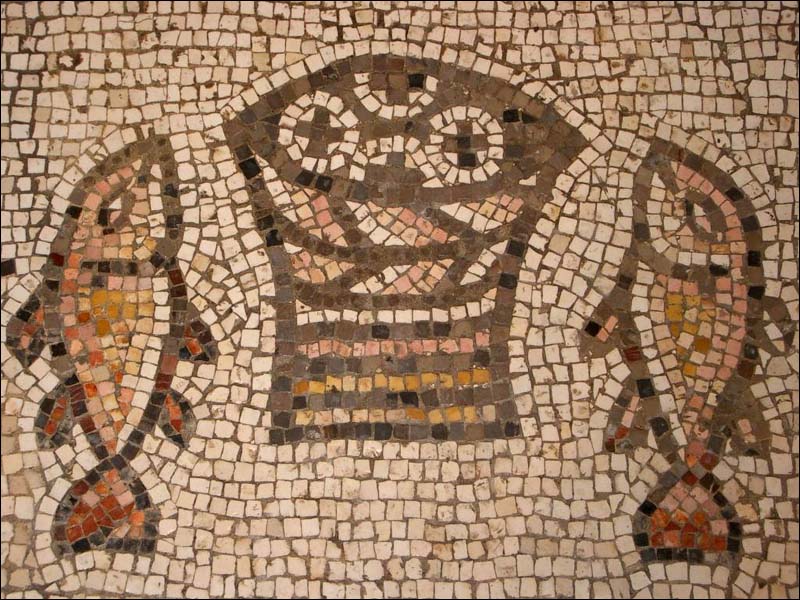
bread-fish-mosaic41 The Jews murmured about him because he said, “I am the bread that came down from heaven,” 42 and they said, “Is this not Jesus, the son of Joseph? Do we not know his father and mother? Then how can he say, ‘I have come down from heaven’?” 43 Jesus answered and said to them, “Stop murmuring among yourselves. 44 No one can come to me unless the Father who sent me draw him, and I will raise him on the last day. 45 It is written in the prophets: ‘They shall all be taught by God.’ Everyone who listens to my Father and learns from him comes to me. 46 Not that anyone has seen the Father except the one who is from God; he has seen the Father. 47Amen, amen, I say to you, whoever believes has eternal life. 48 I am the bread of life. 49 Your ancestors ate the manna in the desert, but they died; 50 this is the bread that comes down from heaven so that one may eat it and not die.

These verses precede the Gospel text and serve to remind the reader that Jesus’ discourse is controversial and has raised grumblings among the people.

Continue reading

Living Bread: context

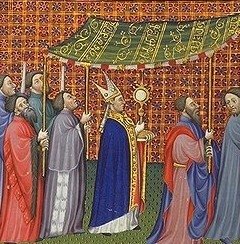
Corpus Christi processionOn this coming Sunday, the Church will celebrate Corpus Christi. At its core the solemnity is a celebration of the Tradition and belief in the Eucharist as the Real Presence of the Body and Blood of Jesus Christ. In the early church there was no perceived need for a unique celebration. Celebration of the Tradition and belief was part of the Holy Thursday liturgy. But that all changed in the 12th century. You can read more about how the feast came to have its feast day here. Continue reading

God is love

Years ago, while a Franciscan novice, my fellow friars and I attended a gathering of all the Franciscan novices, men and women, who lived in the Eastern United States. During our week-long gathering, each group was responsible for leading morning or evening prayer, or animating the Eucharistic celebration. One morning, a group of Franciscan sisters was responsible for morning prayer. Just before we were to begin, the leader of prayer explained that we would not being using the traditional words associated with the sign of the Cross. Rather, we would say “In the Name of the Creator, the Redeemer, and the Sanctifier.” She explained this was a way to remove the gender bias from the opening of prayer and so to make all feel welcomed. Continue reading

The Dance of Love

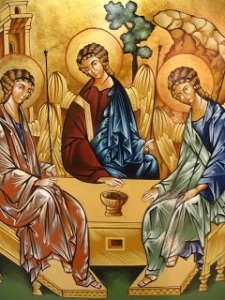
We have all kinds of solemnities, feast days, and other special days in the church year. We commemorate happenings in the life of Christ: Mary’s visit from Gabriel announcing the miraculous child she was to bring into the world. We celebrate the arrival of the Three Kings, the Baptism of our Lord, the Transfiguration when the glory of Christ is revealed, and on Palm Sunday, we celebrate Jesus riding triumphantly into Jerusalem amidst palms and cheers. We celebrate the empty tomb and Resurrection of Easter, the glorious Ascension, the explosive coming of God’s spirit to the church at Pentecost—and then we have Holy Trinity Sunday. And suddenly it is like we have moved from these great events in the life of Christ, and now— tadah!! We are celebrating a…a…a church doctrine. Continue reading

Trinity Sunday: God so loved the world

Syuzanna Avetisyan - somewhere on Google+God so loved the world… For God so loved the world that he gave his only Son, so that everyone who believes in him might not perish but might have eternal life. Verse 16 provides the link between the two parts of the discourse. It sums up vv. 14-15 by reiterating the salvific dimensions of Jesus’ death, but moves the argument forward with its reference to God’s love. God gave Jesus to the world because God loves the world. Continue reading

Trinity Sunday: the offer of new life

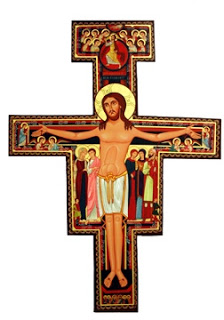
SanDamianoCrossThe Monologue. At v. 11, the text shifts from a dialogue to a monologue. The dialogue between Jesus and Nicodemus alternated between Jesus’ offer of new birth (vv. 3, 5-8) and Nicodemus’s resistance (vv. 4, 9). The shift to the monologue allows Jesus’ voice to silence the voice of resistance. Jesus’ discourse runs through v. 21 and divides into two parts. Verses 11-15 interpret Jesus’ offer of new birth through his death, resurrection, and ascension, and vv. 16-21 focus on the theme of judgment.

We know. Jesus begins the discourse by speaking in the first-person plural. English translations of v. 11 mask the Greek word order. The translation “we speak of what we know ” flows in English, but the sentence literally reads, “what we know we say” (oidamen laloumen). This word order is important because it means that the beginning of Jesus’ discourse and Nicodemus’s opening words to Jesus (v. 3) are the same: “we know…. “ It is possible to read Jesus’ words as a continuation of the irony of v. 10; Jesus parodies Nicodemus’s assertion of his knowledge. Continue reading