
 The Dialogue Continues… Nicodemus is oblivious to the two levels of meaning. He focuses on one meaning of “born anōthen” (“again”) and protests that what Jesus calls for is physiologically impossible (3:4). As in v. 2, Nicodemus’s categories of what is possible intrude into the conversation. On the level that Nicodemus understands Jesus’ words, Nicodemus’s protest is correct. It is impossible for a grown man to reenter his mother’s womb and be born a second time. Nicodemus’s protest is ironic, however, because his words are correct and incontestable on one level, but that level stands in conflict and tension with what Jesus intends by the expression “to be born anōthen.” Jesus’ words speak of a radical new birth, generated from above, but Nicodemus’s language and imagination do not stretch enough to include that offer. Continue reading
Trinity Sunday: water and spirit
Reply


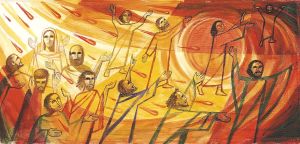 Pentecost Sunday is a day on which we are reminded that the Holy Spirit was promised and has been given. We celebrate the fulfillment of a promise by Jesus that the Advocate, the Paraclete, the one sent by Jesus would come to remind us of all that Jesus taught, to be with us, and to bring to us the power of God. We celebrate this day with three readings – each one of which is filled with mention of the Spirit. The first reading is the account from Acts 2 so familiar to every Christian, 50 days after the Resurrection. We imagine it as a very public event in which the power of the Spirit came with the roar of a great wind, as though tongues of fire, and suddenly the disciples can speak in a way that people from everywhere can understand them. It is as though what happened at the Tower of Babel is undone and finally the world can be united. The Spirit-filled disciples are to be the agents that restore unity to the world.
  They things slow down as a parish approaches summer. That has not been my experience. I am writing this column before things even more busy. There are lots of meetings about one thing or another. Some are meetings that are looking at the “year in review” – some are planning for September 2017 and beyond. Some are planning summer events for the parish. And some are part of life as a Franciscan Friar.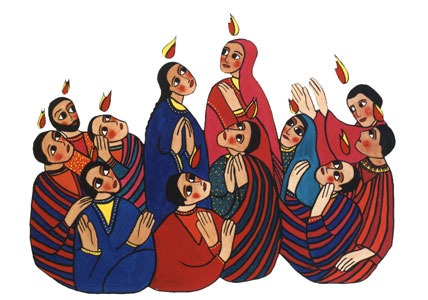
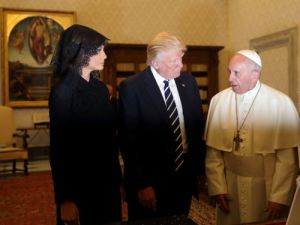 When President Donald Trump recently visited Pope Francis, part of the world’s attention was on Melania and Ivanka Trump as they wore black dresses and veils while meeting the Holy Father. The Holy See does not impose a compulsory dress code, but does suggest a protocol for state visits and hearings with the Pope, both for men and women. In the case of the latter, the protocol requires a long black dress with a high neckline, long sleeves, and a black veil. For historical reasons, however, some Catholic queens or consorts of kings have traditionally been exempted from using black. This is the so-called “privilège du blanc” (privilege of white), a special prerogative granted under the Pope’s criteria.
  friarmusings