Most Sacred Heart of Jesus

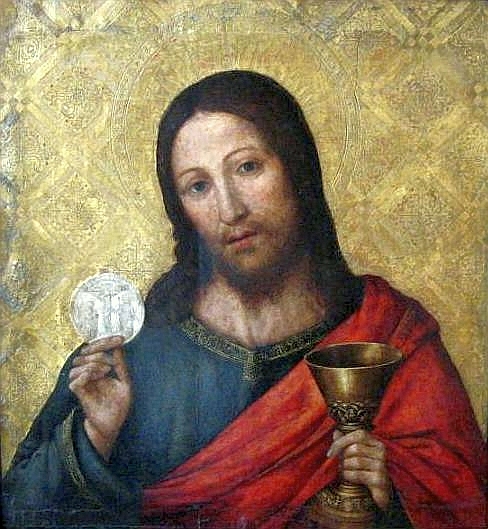
In 1905, at the dedication of our current church, our parish was renamed “Sacred Heart” and consecrated to the Sacred Heart of Jesus. The Sacred Heart of Jesus is a devotional with long and historic provenance within Christianity, and in modern times has been established as a Solemnity for the universal Church.

The Solemnity of the Most Sacred Heart of Jesus is a celebration that falls 19 days after Pentecost, on a Friday. The liturgical feast was first celebrated in Rennes, France. The liturgy was approved by the local bishop at the behest of St. John Eudes, who celebrated the Mass at the major seminary in Rennes on August 31, 1670. You’ll notice that the first celebration was not situated in the days following Pentecost. St. John Eudes composed a Mass and a set of prayers for outside the Mass (referred to as an “Office”) that were quickly adopted in other places in France.  Continue reading
Fear and Trust: choosing

30 Even all the hairs of your head are counted.31So do not be afraid; you are worth more than many sparrows.

Somethings are impossible to count: the stars in the heavens, the grains of sand on the shore, and the hairs on your head (baldness aside!) The impossibility of counting the hairs of the head is proverbial (Ps 40:12; 69:4), but even the impossible is not impossible to God who made them. The Creator’s intimate knowledge of those he has made is expressed movingly in other imagery in Ps 139:1–18. Equally proverbial is the saying “not a hair of his head will fall to the ground” to express a person’s total security (1 Sam 14:45; 2 Sam 14:11; 1 Kgs 1:52; cf Dan 3:27, Luke 21:18; Acts 27:34.22) The Father who knows the number of each disciple’s hairs will make sure none of them are lost. Continue reading

Fear and Trust: the cost

29 Are not two sparrows sold for a small coin? Yet not one of them falls to the ground without your Father’s knowledge.

This section does not try to sketch a misleading picture of a God. Sparrows fall to earth and disciples of Jesus are slain, and Jesus never says that it hardly matters. “What these sayings assert is that God is indeed God, that he is above success and failure, help and isolation, weal and woe, holding them in hands that Jesus says are the hands of the Father.” (Schweizter, as found in France, 404) Continue reading

Fear and Trust: the rooftops

26 “Therefore do not be afraid of them. Nothing is concealed that will not be revealed, nor secret that will not be known. 27 What I say to you in the darkness, speak in the light; what you hear whispered, proclaim on the housetops

These verses have their parallel in Luke 12:2 and, some would say, in Mark 4:22. I would disagree with the Markan parallel. While the words are similar, the topic in Mark is not missionary endeavors, but rather why Jesus teaches in parable and leave some listeners “in the dark,” so to speak. Perhaps one might offer that the Markan context is that what must remain secret for a time will ultimately be revealed. But in Matthew’s use (and Luke’s) there is no nuance. The disciples are to proclaim the good news so that all can hear. In the setting of a Palestinian village, the housetop (rooftop) is a very visible platform from which to proclaim the Good News to the people in the streets nearby. Continue reading

Fear and Trust: context

26 “Therefore do not be afraid of them. Nothing is concealed that will not be revealed, nor secret that will not be known. 27 What I say to you in the darkness, speak in the light; what you hear whispered, proclaim on the housetops.28 And do not be afraid of those who kill the body but cannot kill the soul; rather, be afraid of the one who can destroy both soul and body in Gehenna.29 Are not two sparrows sold for a small coin? Yet not one of them falls to the ground without your Father’s knowledge.30 Even all the hairs of your head are counted.31 So do not be afraid; you are worth more than many sparrows.32 Everyone who acknowledges me before others I will acknowledge before my heavenly Father.33 But whoever denies me before others, I will deny before my heavenly Father.”  (Mt 10:26-33) Continue reading

Holding back

When I was a midshipman at the United States Naval Academy (last century!) I encountered a new phrase: “if the minimum weren’t good enough, it wouldn’t be the minimum.” There a bit of logic to it, but…. can’t say it is the most inspiring bit of prose ever recorded. Yet, there was a sense in which tradition enshrined the saying. The person who graduated with the lowest GPA (2.5 was the minimum) was referred as the “Anchor Man.”  At the end of the graduation he was paraded around on his classmates shoulders and we were all expected to give him a dollar.  Strange tradition, that. He had done the minimum – and who knows he may have worked twice as hard as the rest of us…. Continue reading

The Bread of Life: other thoughts

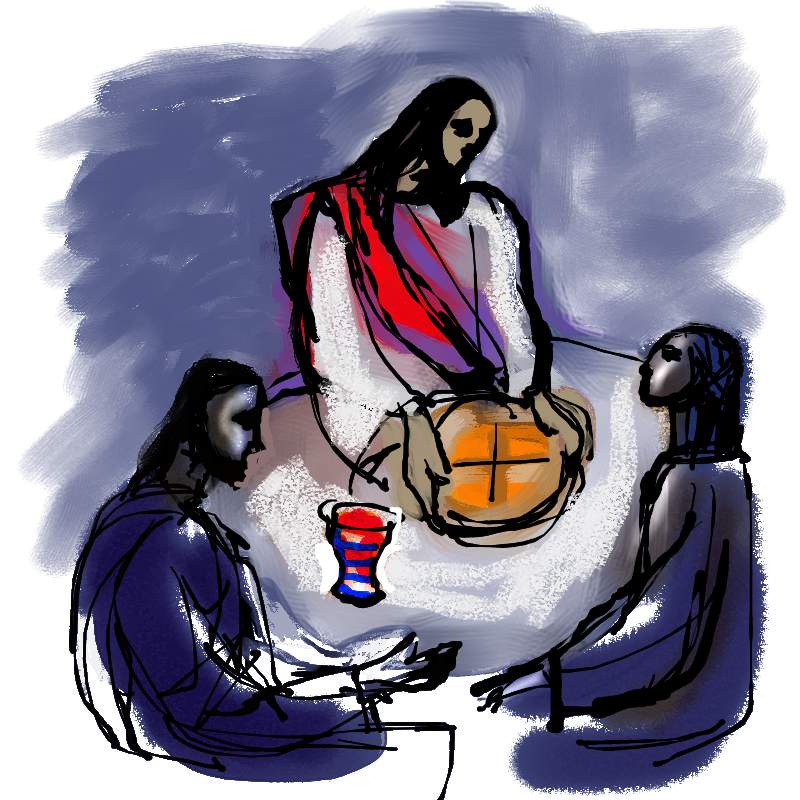
emaus02Where the principal focus of the previous section is the bread of life as the divine revelation given to men by and in Jesus, John 6:51 adds a clearly Eucharistic theme – ‘I am the living bread come down from heaven; whoever eats this bread will live forever; and the bread that I will give is my flesh for the life of the world.’ While some argue the words are metaphor, the Jews clearly understand. Jesus is referring to eating of his flesh. He recounts this action verb several other times between vv. 51-58, while adding the drinking of his blood to the command. This is no metaphor for accepting his revelation, already adequately expressed. Continue reading

Corpus Christi – metaphor and Eucharist

Christ_with_the_HostThe Eucharist. This section is written at two levels. At one level it is an on-going commentary on the verb “to eat” (cf. v. 31) summoning up a rich tradition of Eucharistic language: “bread,” “food,” “flesh,” “blood,” “to eat,” “to drink,” “will give,” “for your sakes.” The discourse, from v. 25 down to v. 59, presents Jesus as the true bread from heaven, replacing the former bread from heaven, the manna of the Law. The believer must accept the revelation of God that will take place in broken flesh and spilled blood (vv. 53-54), a never-failing nourishment (v. 35) that the Son of Man will give (v. 27). Continue reading

Bread of Life: the world

synagogue-fresco-exodus

His Life for the Life of the World. 51 I am the living bread that came down from heaven; whoever eats this bread will live forever; and the bread that I will give is my flesh for the life of the world.”

Jesus now associates the separation of flesh and blood in a violent death as the moment of total giving of himself. Jesus, the Son of Man, will give of his whole self for the life of the world (6:51c) by means of a violent encounter between himself and his enemies (1:5, 11; 2:18-20; 3:14; 5:16-18) in which his body will be broken and his blood will be poured out (6:53-54). This is the ongoing presence of Jesus in the gathered klasmata (vv. 12-13), the enduring gift that the Son of Man will give, the food that will not perish (v. 27) but will forever satisfy all hunger and thirst (v. 35). Continue reading