 May your final days of Advent be wonderful and blessed and maybe your Christmas be filled the light of Christ, Emmanuel, God with us!
As for me…. taking a break from blogging (with an exception here and there). See you next year!

May your final days of Advent be wonderful and blessed and maybe your Christmas be filled the light of Christ, Emmanuel, God with us!
As for me…. taking a break from blogging (with an exception here and there). See you next year!
A little bit of fun this morning….
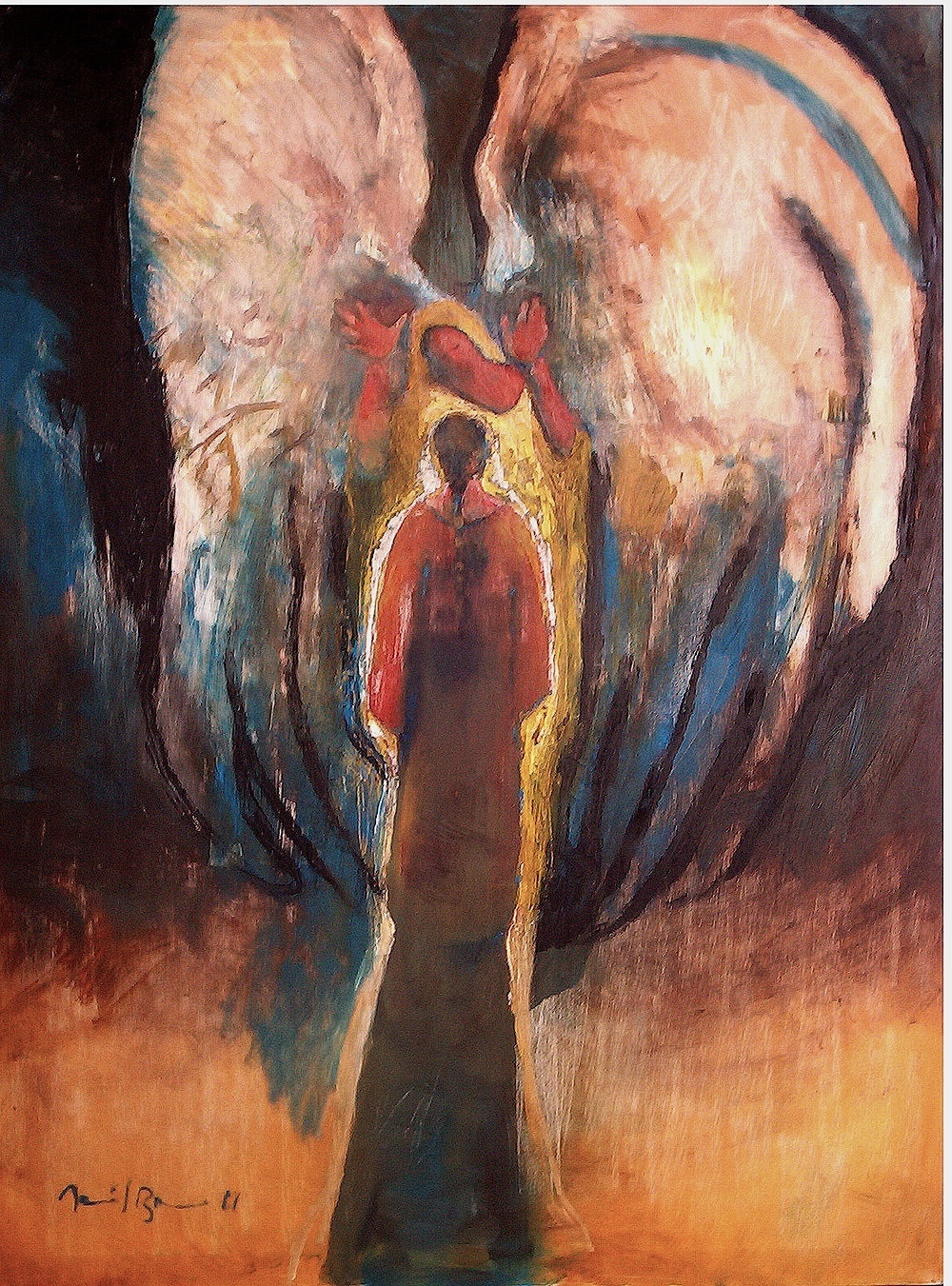 In response to this angelic announcement, Mary asks a question reminiscent of Zechariah’s query, “How can this be?” She had not had sexual relations with a man. Ultimately, the purpose of Mary’s question (v.34)—which leads to Gabriel’s answer (v.35) and the giving of a sign (v.36) and word of reassurance (v.37)—is to emphasize that all of this is God’s doing.
Gabriel’s response emphasizes that the baby would be born by the power of God. Like the presence of God in the cloud at the transfiguration (9:34), the Holy Spirit would come upon her and overshadow her. The child, therefore, would be God’s child, and he would be called the Son of God. As with all the annunciations in Scripture and in ancient biographical accounts, the purpose of the annunciation is to declare something vital about the identity of the child. The Lukan account repeatedly affirms that Mary’s son would be called “Son of the Most High” (v. 32a), son of David (v. 32b), and finally the title by which he would be most widely recognized, “Son of God” (v. 35). Continue reading
Confluence. Luke’s narrative style is on display as he deftly moves from the “annunciation” concerning John the Baptist to the one concerning the salvation of all humanity. There is a confluence of temporal and chronological markers, and the reappearance of Gabriel. The “sixth month” recalls v.24, and seems to imply that Elizabeth has only now come out of seclusion. This prepares for the sharing of the news of her pregnancy in v.36 and her subsequent welcome of Mary (vv.39–45). Yet geographically and socio-religiously we move away from the center (Jerusalem and the Temple) to the margins of the nations (Nazareth in Galilee). Gabriel, God’s messenger, is the connector, pointing to the God’s Word active in the world. Continue reading
Similar, yet… In many respects our gospel (Luke 1:26-38) is similar to the annunciation of the birth of John. The angel Gabriel appears to announce the birth of the child, and the annunciation follows the pattern of birth annunciations in the OT: The angel says, “Do not be afraid,” calls the recipient of the vision by name, assures him or her of God’s favor, announces the birth of the child, discloses the name of the child to be born, and reveals the future role of the child in language drawn from the Scriptures. After their respective announcements, Zechariah and Mary each ask a question, a sign is given, and the scene closes with a departure. The similarity of structure and content between the two scenes invites the reader to consider the differences between them all the more closely. For example, the first announcement came as an answer to fervent prayer; the second was completely unanticipated. John would be born to parents past the age of child bearing, but the miracle of Jesus’ birth would be even greater. Jesus would be born to a virgin. The announcement of Jesus’ future role also shows that at every point Jesus would be even greater than his forerunner. Watch how these nuances are developed in the course of the details of this scene. Note this narrative comparison also punctuates the beginning of Mark’s gospel which has no infancy narrative: John the Baptist is not the Christ, not Elijah, not the prophet to come, and not worthy to loosen the strap of the sandal of the one who is to come. Continue reading
Luke 1:26-38 26 In the sixth month, the angel Gabriel was sent from God to a town of Galilee called Nazareth, 27 to a virgin betrothed to a man named Joseph, of the house of David, and the virgin’s name was Mary. 28 And coming to her, he said, “Hail, favored one! The Lord is with you.” 29 But she was greatly troubled at what was said and pondered what sort of greeting this might be. 30 Then the angel said to her, “Do not be afraid, Mary, for you have found favor with God. 31 Behold, you will conceive in your womb and bear a son, and you shall name him Jesus. 32 He will be great and will be called Son of the Most High, and the Lord God will give him the throne of David his father, 33 and he will rule over the house of Jacob forever, and of his kingdom there will be no end.” Continue reading
 I feel sorry for the Levites, the scribes and the Pharisees that were sent from Jerusalem to investigate all the commotion and buzz surrounding John, the one baptizing out in the wilderness at the Jordan River. Israel has a history of people coming along and claiming to be the Messiah – the people get caught up in the fervor and are just sure that this is the One to Come who will lead the army that throws off the yoke of the occupying army and re-establish the throne of David. The cycle is this: a self-professed Messiah appears, all the world runs to him, the revolution starts, foreign armies come and crush the rebellion, and in the end, it was a false Messiah. So, you can see why the Jerusalem authorities send investigators down to the Jordan river to ask John: who are you, what are your intentions. The religious authorities in Jerusalem have a responsibility to acclaim the Messiah when he comes, but there is this legacy of false messiah, misplaced hope, and people needlessly dying – all for naught. So…. They seek out John – once again wondering if the promise of the Messiah is true. Continue reading
 The last time this happened was 2006. We had to know it would roll around again. We could have seen it coming, given it some thought, been better prepared. After all this is Advent, a time when we are encouraged to stay alert! Still, it is almost here. And the inevitable questions will be coming.
It was 2006 when the fourth Sunday of Advent fell on December 24. And yes, that means Christmas Day falls on a Monday. I can already hear the wheels turning in some folk’s brain…maybe this means we can get a Christmas two-fer! I’m waiting for an email from one of the faithful asking about the possibilities of attending one Mass and “getting credit” for two. They’ll ask if they attended a Mass on Sunday the 24, say the 4 pm Christmas Eve Mass, since it was technically still Sunday, and we have a Sunday evening Mass normally at 5:30 pm, couldn’t that count as a fulfilling the obligation for both the fourth Sunday of Advent and Christmas? Answer: no. Does the Church really expect people to come to Mass two days in a row? Answer: yes. Aren’t fourth Advent and Christmas really celebrating the same thing? Answer: no. Continue reading
 The questioners from Jerusalem were in a difficult position. So far all they had elicited from John had been a string of denials; they had no positive statement to put in their report. Yet John was preaching, drawing crowds in the wilderness, and baptizing. They must have something to say about him. So they turn the matter over to John. Instead of making another suggestion they ask him what he thinks about himself. They must have some answer to take back to those who had sent them. Continue reading
John’s testimony to Jesus will lead others to faith, but it is also offered as evidence in a trial. John’s interrogators in this passage are not curious passersby, but are a delegation sent by official Judaism (vv. 19, 22). The expression “the Jews” (hoi Ioudaioi, v. 19) occurs repeatedly in the Fourth Gospel and has a wide range of meanings. Its most common usage, as in v.19, is as a synonym for the Jewish religious establishment, which is the source of most of the opposition to Jesus’ ministry in John. Here it likely refers to representative from Jerusalem leadership who quite naturally are going to make inquiries about what may well be a new religious movement – especially if there are messianic claims. There was a history of such movements and claims leading to religious disappointment and political ruin. Once John the Baptist acquired a following, the questions were sure to come. The first one was simple and straight forward. Continue reading
 friarmusings