
The prophet Micah closes his book with a prayer that is both simple and deeply moving: “Shepherd your people with your staff, the flock of your inheritance, that dwells apart in a woodland, in the midst of Carmel. Let them feed in Bashan and Gilead, as in the days of old.”(Micah 7:14)
At first glance, these ancient place names Carmel, Bashan, and Gilead may seem like little more than points on a map. But to the people of Israel they stirred the imagination. Carmel was known for its beauty and fertile slopes. Bashan was famous for its rich pasturelands where flocks could graze in abundance. Gilead was remembered for its healing balm and its lush countryside. Together they formed a picture of life as God intended it: a flock that was safe, well-fed, and flourishing under the care of its shepherd.
What is remarkable is that Micah prays these words after a long book filled with warnings, injustice, and the consequences of Israel’s unfaithfulness. After exposing the people’s failures, the prophet does not end with condemnation. He ends with hope. His prayer is not, “Lord, punish your people.” It is, “Lord, shepherd your people.” That difference tells us something profound about the heart of God.
Throughout Scripture, the image of the shepherd is one of God’s favorite ways of revealing himself. The shepherd does not simply own the sheep; he knows them, protects them, searches for them when they wander, and leads them to places where they can flourish. God’s deepest desire has never been merely to correct his people, but to guide them into the fullness of life.
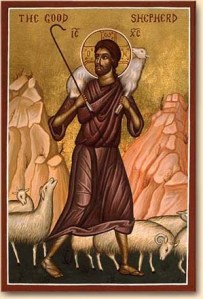
As Christians, we cannot hear Micah’s words without thinking of Jesus, who called himself the Good Shepherd. He came not only to rescue the lost sheep but also to lead them into abundant life. He knows the paths that lead to peace, even when we insist on wandering into places that leave us weary and hungry.
Perhaps that is why this ancient prayer still speaks so powerfully today. Many people feel as though they are wandering through a woodland—surrounded by uncertainty, noise, loneliness, or fear. We long for solid ground, for green pastures, for a place where our souls can rest.
Micah reminds us that God’s answer is not first a place but a person. The answer is the Shepherd.
The Christian life is not simply about finding our own way through the forest. It is about learning to recognize the Shepherd’s voice and trusting him to lead us. When we do, he brings us to places of nourishment we could never have found on our own. Not only the rich pastures of Bashan or the beauty of Carmel, but the deeper pastures of faith, hope, mercy, and peace.
In the end, Micah’s prayer becomes our own: “Shepherd your people.” It is a prayer our world still needs. It is a prayer our families need. It is a prayer each of us can whisper every morning. And it is a prayer the Good Shepherd delights to answer.
Image credit: iStock | BogdanV | photo ID:1651309580 | downloaded July 20-2026
 This coming Sunday marks the
