
Brian Stoffregen insightfully noted that “Our gospel text is not one you find on many refrigerator doors or on greeting cards.” The image of Jesus in these text is upsetting to one who only seeks the meek and mild Jesus. Having begun with an exhortation to courage in the face of tribulation, continuing with a warning against avarice in the face of fear, Jesus now raises the issue of judgment. The people are called to conversion before it is too late. Continue reading
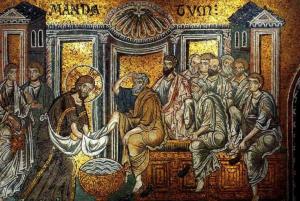
What divides: context
49 “I have come to set the earth on fire, and how I wish it were already blazing! 50 There is a baptism with which I must be baptized, and how great is my anguish until it is accomplished! 51 Do you think that I have come to establish peace on the earth? No, I tell you, but rather division. 52 From now on a household of five will be divided, three against two and two against three; 53 a father will be divided against his son and a son against his father, a mother against her daughter and a daughter against her mother, a mother-in-law against her daughter-in-law and a daughter-in-law against her mother-in-law.” Continue reading
Who and How We Serve
“By faith…” Abraham went out from a land not his own to a place he and Sarah were to inherit. And in that long journey they continued to move forward, against all odds and sense, but always in faith. That journey was not only of faith, but also of service. Three weeks ago our first reading was an example of how Abraham and Sarah welcomed three travelers with hospitality – and this but adds to the accounts of Abraham’s service – to his family and clan, to Lot and his family, to the King of Salem, and so many others. The story of Abraham’s life is a story told in the outlines of faith and in the outlines of service as discipleship. Continue reading
What equals 9?
The Saturday post is generally my pastor’s column in the parish bulletin. This week’s is about the church air conditioning (or lack of it…). You are welcomed to have a read – check it out here. But otherwise, perhaps a reposting of some older musings would do?
One of the interesting things about “blogging” is what happens off-line. WordPress has a feature for “comments” and it is a controllable feature. You can allow all comments and then remove inappropriate ones as you see fit. But then that means you have to monitor; sometimes manners and charity are not hallmarks of text and comments left behind. It takes time. Not willing to dedicate time to the supervising task? The blog administrator can not allow any comments at all. That takes no additional time to oversee. There is at least one “middle way.” You can allow comments but require that all comments be approved before they are posted on one’s blog. That takes some time, but you have the luxury of getting to such things when you have time. Continue reading
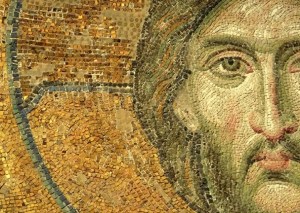
Serving the in between: reflection
The disciples of Jesus are to be ready to open to the Master “immediately when he comes.” The answer to Peter’s question (v. 41) directs the discourse toward the Christian leaders especially. The overriding image of authority in this text is one of service. Something that Jesus applies in a special way to the Twelve as leaders of a restored Israel. Where the servants are to stand in readiness for the return of the master, the stewards are responsible for their own work as well as that of the community as a whole. The care of what has been entrusted foreshadows the parable of the sums of money (19:11–27). The sayings on the distribution of responsibilities or gifts in the concluding verse of the section are clearly pertinent for those in authority, but they have a wider application for all on whom spiritual and temporal gifts have been bestowed. Continue reading
Serving the in between: responsibility
Failing in faithfulness. 45 But if that servant says to himself, ‘My master is delayed in coming,’ and begins to beat the menservants and the maidservants, to eat and drink and get drunk, 46 then that servant’s master will come on an unexpected day and at an unknown hour and will punish him severely and assign him a place with the unfaithful.
Jesus rounds off this section with a warning of the certainty of punishment for those who fail to do their duty (v.47). Verse 45 turns to consider the punishment to come for those who are not “faithful and prudent” while the master is away. If the master’s absence tempts the servant to say in his heart, “My master is delayed in coming,” he will be punished severely. But we should recall that Luke has established repeatedly that Jesus knows what is in a person’s heart—2:35; 5:22; 7:39ff.; 9:47; 24:38; Acts 1:24). Continue reading
Serving the in between: listening
Who must listen? 41 Then Peter said, “Lord, is this parable meant for us or for everyone?” Peter perhaps speaks for all the apostles when he asks about the parable. Peter’s question may be meant to raise the question of the privileges and responsibilities of the apostolate. It certainly has relevance to the work of the ministry, a topic that would have been important to Luke’s readers. Both the disciples and the crowd of thousands are introduced in 12:1. In 12:13–14 Jesus responds to a man from the crowd. The sayings introduced in v. 22 are directed to the disciples; therefore, Peter’s question in v. 41 asks for clarification regarding the intended audience, but Jesus answers with another parable. Jesus does not answer directly, but draws attention to the responsibility of all servants, stressing that the greater the privilege the greater the responsibility (v.48) Continue reading
Serving the in between: readiness
35 “Gird your loins and light your lamps 36 and be like servants who await their master’s return from a wedding, ready to open immediately when he comes and knocks. 37 Blessed are those servants whom the master finds vigilant on his arrival. Amen, I say to you, he will gird himself, have them recline at table, and proceed to wait on them. 38 And should he come in the second or third watch and find them prepared in this way, blessed are those servants. Continue reading
Serving the in between: context
35 “Gird your loins and light your lamps 36 and be like servants who await their master’s return from a wedding, ready to open immediately when he comes and knocks. 37 Blessed are those servants whom the master finds vigilant on his arrival. Amen, I say to you, he will gird himself, have them recline at table, and proceed to wait on them. 38 And should he come in the second or third watch and find them prepared in this way, blessed are those servants. 39 Be sure of this: if the master of the house had known the hour when the thief was coming, he would not have let his house be broken into. 40 You also must be prepared, for at an hour you do not expect, the Son of Man will come.” Continue reading
Storehouse of memories
I am away from the parish doing an appeal for Franciscan Mission Service. I thought it good to leave you with some words from another time reflecting on our Sunday readings.
Inheritance and riches being stored up – certainly two strong images from this Sunday’s gospel. Themes not uncommon in the gospels. St. Luke also tells the story of the man who comes to Jesus and asks, “Good teacher, what must I do to inherit eternal life?” After learning from the man that he had followed all the commandments Jesus tells him, “There is still one thing left for you: sell all that you have and distribute it to the poor, and you will have a treasure in heaven. (Luke 18) It is a recurring message from Jesus that wealth, riches – in themselves not bad – just have a way of getting in the way of the true inheritance. The man goes away sad – he just can’t let go of his wealth, can’t let go of the one thing that keeps him from following Jesus. He is likely a good person – both in his own mind and in the thoughts of others – yet there is a hidden, unseen greed operative in his life. A covert greed that has become, as St. Paul says, an idolatry keeping him away from true and right worship. Continue reading