
 People are surprised to learn that the Early Rule of the friars instructed the brothers not to own pets – as well they were not to ride horses. These rules are only partly about poverty; they encouraged friars not to treat animals as objects or possessions. And, in the case of horseback riding, his rule distanced the friars from the proud world of chivalry. Later in his life when sickness compelled him to ride, Francis always preferred a donkey.
In his own writings, Francis does not adopt images from his experience of nature, rather he took those images from Scripture. In the five passages outside the Rules where he mentions animals, only once does he go beyond the imagery from Scripture, and it is to hold up animals as an example of obedience to God. Continue reading

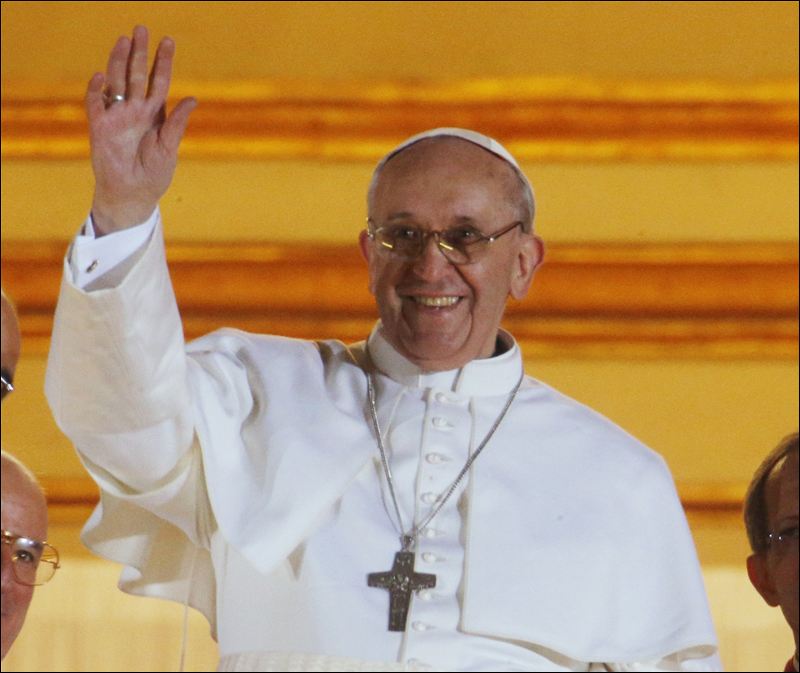
 St. Francis of Assisi is the patron saint of Italy, merchants, stowaways, ecology, but most famously, of animals. If one searches the internet, you can easily find all kinds of pious, ecologically insightful, and often amazingly-modern sounding quotes from St. Francis. And they are inevitably without a citation from one of Francis’ writings or at least a later Franciscan source writing about Francis. As I noted in the beginning of this series, Francis has always been reinvented and marketed as needed. Perhaps the one book most responsible for casting Francis as the lover of animals and nature is a collection of stories – many miraculous and all very saintly – that first appeared in 1390 in Tuscany: the Fioretti (The Little Flowers). But can we say about St. Francis, the patron saint of animals?
  By the spring of 1213, four years after the founding of the “order,” Francis’ reputation had risen to the attention of the Italian aristocracy – not just in Assisi but throughout central Italy. The order was beginning to attract men from the higher social classes. Sons of merchants like Francis, sons of the landed wealthy, sons of ruling households, men with established careers in law, music and the arts, and also ordained priests. They joined the already formed group of men from middle and lower backgrounds in muddling through what it meant to follow Christ in the manner of Francis. G.K. Chesterton’s later definition of the Catholic Church – “here comes everybody” – was being lived out in Francis’ day.
 As we noted in last week’s article, Francis expected his brothers to learn by imitation – and to understand that as Francis sought to imitate Christ, so too should the brothers. But in reality, the first generation of Assisi-area brothers simply did what Francis did: daily prayer, work at a local leprosarium, go to local churches to participate in Eucharist, eat, pray again, witness to the local Umbrian people near Assisi, and live a life in community. You have to remember this was all new. Prior to this “Franciscan moment” the spiritual journey of medieval people consisted of being a monk or cloistered nun behind the walls of the monastery, being a priest and living close to the sacraments and the Scriptures, or being a lay person and hoping the other groups were praying for you. And then along comes this different, new, intriguing way of being spiritual in the world. And it was not set down in writing; it did not come with instructions. But sometimes is borrowed from the past.
  One aspect of Francis’ changing life that has attracted recent attention is the movement of Francis from solitary figure, living a quasi-hermetical life for four to five years, now beginning to live in a growing community of brothers – all of whom are looking to Francis for spiritual and communal leadership. There was something attractive about Francis, his way of following the gospel, and perhaps the recent “commissioning” by Pope Innocent III gave a certain cache of legitimacy to this way of being Christian in the world. Eventually many people came to join the Franciscan movement, which soon enough became a religio and eventually an ordo, but those demarcations are eight to ten years in the future ahead of the Spring of 1209.
 friarmusings