What about this generation?

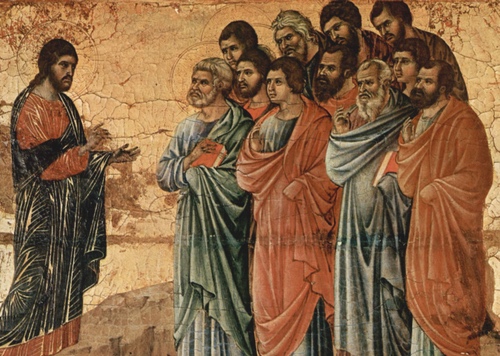
In today’s Gospel, Jesus compares His generation to children in the marketplace. No matter what song is played, they refuse to respond. So Jesus offers them a new song: a lament.

John the Baptist came in austerity fasting, wearing rough clothing, calling for repentance – a bit of the wilderness wild man. Yet in verses just prior to our reading, Jesus has praised John the Baptist and pointed to him as the greatest of those born of women. But the people have hesitated. They can not decide or commit to John’s call for repentance so they go to another extreme. They claim he is possessed and thus can be ignored.

The austere wild man too much? Jesus comes to the people where they are. He came eating and drinking, sharing table fellowship with tax collectors and sinners. Surely, the wandering preacher from Nazareth can’t be of God if He is eating with “them.” They claim Jesus is just a glutton and a drunkard. 

In other words, no matter what God offered, be it stern warning or gracious welcome, many refused to listen. Jesus’ words are indeed a lament. 

Continue reading

Something a little different

My usual Saturday 6 am post is a reflection on some aspect of the gospel reading after a week of posts and commentary on the reading itself. Since tomorrow’s Sunday celebration is the Exaltation of the Cross (instead of the 25th Sunday in Ordinary Time), I thought I might do something a little and explore the question I have been asked over the years by folks: Why did Jesus have to die?

At one time or another I think every believing Christian has asked that question. It is a question that is central to Christian theology and  has been thought about since the earliest days of the Church. It has also been written about by the Church patriarchs who have offered a range of perspectives often overlapping but emphasizing different aspects. 

Continue reading

Filling up what is lacking

Today is the Feast Day of Saint Fidelis of Sigmaringen, a Capuchin Franciscan friar, who was martyred during the Catholic Counter Reformation in 1622 (some 100 years after the start of the Protestant Reformation). Fidelis had been evangelizing in Graubünden, now a canton of eastern Switzerland, which at the time was a stronghold of Calvinism. He was meeting with a great deal of success in receiving people into full communion with the Catholic Church. While journeying on a local road he encountered soldiers under the command of the local Calvin leadership. They demanded Fidelis (Latin for “faithful”) renounce Catholicism, which he refused to do. The soldiers then murdered him. The Protestant minister who had participated in Fidelis’ martyrdom was converted by this circumstance, made a public renunciation of Calvinism and was received into the Catholic Church Continue reading

The Expectations Build

This coming Sunday is the 3rd Sunday of Ordinary Time and we continue our study of the beginning of the public ministry of Jesus at the synagogue in his home town of Nazareth.

He came to Nazareth, where he had grown up, and went according to his custom into the synagogue on the sabbath day. He stood up to read 17 and was handed a scroll of the prophet Isaiah. He unrolled the scroll and found the passage where it was written: The Gospel of Mark has a similar account but records it later in Jesus’ public ministry near the end of the ministry in Galilee (Mark 6:1-6a). Luke reports the account at the beginning of Jesus’ ministry. In doing so, Luke highlights the initial admiration (Luke 4:22) and subsequent rejection of Jesus (Luke 4:28-29) and presents it as a foreshadowing of the whole future ministry of Jesus. Continue reading

What did Jesus wear?

jesus-and-disciplesThere has always been research, commentary, etc. on what Jesus looked like. From the inheritance of Christian art in the West, we often see/imagine a man with long hair parted in the middle and a long beard – often with fair skin, light brown hair and blue eyes. It is historically far more likely that he looked like a typical Galilean of his time. But that is another topic. How about what did Jesus wear? Were we subject to the same “branding and imagery” on long robes and the like? One link to another which led me to a website with which I was not familiar: The Conversation. It is described as a network of not-for-profit media outlets that publish news stories on the Internet that are written by academics and researchers. Its funded comes from its university members, government and other grant awarding bodies, corporate partners, and reader donations. I can’t tell you a lot more than that, but I did run across and interesting article: What Did Jesus Wear? I found it interesting, so enjoy. Continue reading
Your script

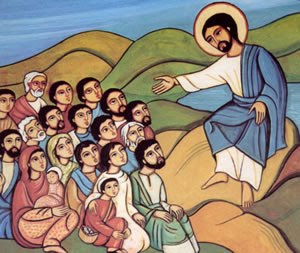
jesus-and-disciplesAfter entering a boat, Jesus made the crossing, and came into his own town. And there people brought to him a paralytic lying on a stretcher. When Jesus saw their faith, he said to the paralytic, “Courage, child, your sins are forgiven.” At that, some of the scribes said to themselves, “This man is blaspheming.” Jesus knew what they were thinking, and said, “Why do you harbor evil thoughts? Which is easier, to say, ‘Your sins are forgiven,’ or to say, ‘Rise and walk’? But that you may know that the Son of Man has authority on earth to forgive sins”– he then said to the paralytic, “Rise, pick up your stretcher, and go home.” He rose and went home. When the crowds saw this they were struck with awe and glorified God who had given such authority to men. (Matthew 9:1-8)

Continue reading

A new Moses

sermon-on-the-mountThe gospel for this Monday in the 10th week of Ordinary Time is the familiar Sermon on the Mount from the Gospel of Matthew. If you would like to read a commentary on the Sermon, you can find it here. But in this post I would like to place these passages in a larger flow of the Matthean narrative. If you could only choose one word to describe the Sacred Writer’s “project” the word “fulfillment” would be a good choice.

Continue reading

Your choice

The Pharisees are having a rough time in the daily gospels this week. Jesus makes no bones about who he is: “I AM”

Jesus said to them, “Amen, amen, I say to you,
before Abraham came to be, I AM.”
So they picked up stones to throw at him (John 8:58)

The Pharisees got the message. They made a choice. A friend of mine describes the basic encounter of faith this way: Continue reading

Mountain of Temptation

Jesus was baptized by John the Baptist in the Jordan river and then “Jesus was led up by the Spirit into the wilderness to be tempted by the devil” (Matthew 4:1). Both the Gospels of Mark and Luke have a similar narrative, placing Jesus at the Jordan River immediately before his temptation in the wilderness. While Christian tradition often describes Jesus’ temptation as occurring in a “desert,” the Greek word eremos primarily means a location that is isolated, uninhabited and unfit for pasture. Continue reading

The Road to Emmaus

In Luke’ narrative there is no account of the Resurrection; there in only the empty tomb – which is not the source of faith for people in Luke’s rendering of the gospel. Rather, in Luke’s gospel it is the empty tomb and the encounter with the person of the Risen Jesus. The empty tomb is what Jesus had said would happen “on the third day.”  The event of its discovery points back to Jesus’ word.  A word mostly fully realized later in the ‘breaking of the bread.”

Luke 24:13 Now that very day two of them were going to a village seven miles from Jerusalem called Emmaus,14 and they were conversing about all the things that had occurred.15 And it happened that while they were conversing and debating, Jesus himself drew near and walked with them,16 but their eyes were prevented from recognizing him.17 He asked them, “What are you discussing as you walk along?” They stopped, looking downcast.18 One of them, named Cleopas, said to him in reply, “Are you the only visitor to Jerusalem who does not know of the things that have taken place there in these days?”19 And he replied to them, “What sort of things?” They said to him, “The things that happened to Jesus the Nazarene, who was a prophet mighty in deed and word before God and all the people,20 how our chief priests and rulers both handed him over to a sentence of death and crucified him.21 But we were hoping that he would be the one to redeem Israel; and besides all this, it is now the third day since this took place. Continue reading