
This coming Sunday is the 5th Sunday of Easter in Lectionary Cycle A. In posts over the last two days we considered possible understandings of the manner in which Jesus would return to prepare his disciples followed by the explanation the disciples sought. Jesus’ statement in v.7 (If you know me, then you will also know my Father. From now on you do know him and have seen him.”) is cast in the light of a deep human desire: to see and know God. Jesus tells the disciples – in knowing me, in seeing me, in my words, and in my deeds, you have seen and come to know the Father. Continue reading
Show us the Father
Reply
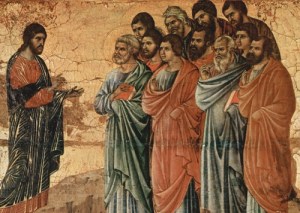 Sometimes, another just says it succinctly and to the point. Bishop Robert Barron does that so well commenting on
  I will not leave you…I will come to you. The second promise of continuing presence is Jesus’ promise of his own return (vv. 18-20). “Orphan” (orphanos) was a common metaphor to describe disciples left without their master but the use of the metaphor here has a special poignancy in the light of the familial and domestic imagery that runs throughout Jesus’ words to his own (e.g., 13:33; 14:2-3, 10-14; 15:9-11; 16:21-24, 27). Jesus’ promise that he will not leave the disciples orphaned recalls his use of the address “little children” in 13:33 and is an assurance that the intimacy of that familial relationship is not undercut by Jesus’ departure. His promise to return (v. 18b) thus immediately counters any possible perception of Jesus’ death as his abandonment of his own.
 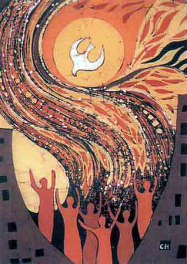 “If you love me, you will keep my commandments. 16 And I will ask the Father, and he will give you another Advocate to be with you always, 17 the Spirit of truth, which the world cannot accept, because it neither sees nor knows it. But you know it, because it remains with you, and will be in you.
  friarmusings