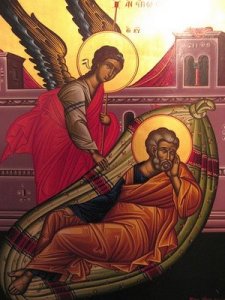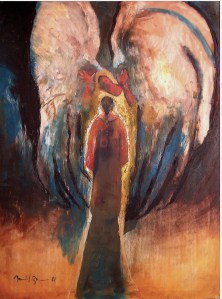
In the sequence of first readings for weekday Masses, we have just made a huge leap from Jacob (Gen 28) to the end of the story of Joseph and his brothers (Gen 41). A quick synopsis of the story would include: his brothers, all older, were jealous of Joseph and colluded to sell him into slavery in Egypt. Long story, short, Joseph eventually thrives and serves as a chancellor to Pharaoh himself. A famine hit Israel and Joseph’s brothers came to buy grain. That all serves as background to our first reading today. Continue reading
Tag Archives: Joseph
Playing Favorites
In today’s first reading we encounter the story of Joseph, son of Jacob (also called Israel). The reading opens: “Israel loved Joseph best of all his sons, for he was the child of his old age; and he had made him a long tunic. When his brothers saw that their father loved him best of all his sons, they hated him so much that they would not even greet him.” (Gen 37:3-4) And so the problem begins. Actually, the problem just becomes exasperated. There is a single verse that provides more context: “When Joseph was seventeen years old, he was tending the flocks with his brothers; he was an assistant to the sons of his father’s wives Bilhah and Zilpah, and he brought his father bad reports about them.” (Gen 37:2) Continue reading
All in a dream
Today’s gospel is the traditional reading for the 4th Sunday of Advent (year A) but here in Year C, it is placed to tell part of the story that just precedes the birth of Christ. These familiar episodes set the stage for one of the Bible’s best-known passages, the story of Christmas. This reading aligns well with the readings of the seven days of Advent that immediately precede Christmas. Not only do the readings for the daily Masses just before Christmas include the beginnings of the Gospel infancy narratives (Matthew 1 on Dec. 17-18; Luke 1 on Dec. 19-24), but we again get to hear the traditional “O Antiphons,” at Mass. It all begins to answer the question of Advent: who is coming? The reading contribute to the larger answer: Jesus Christ, son of Mary, adopted son of Joseph, son of David, named Jesus, the one who will save his people from their sins, and Emmanuel…God with us. Continue reading
A promise is a promise
Each year the Fourth Sunday of Advent always tells part of the story that just precedes the birth of Christ. In this year, 2020, come Sunday we will hear the story from Mary’s experience. These familiar episodes set the stage for one of the Bible’s best-known passages, the story of Christmas. In today’s readings, we hear the story from Joseph’s experience.

As part of his dream, the words of the angel of the Lord to Joseph are explained: “All this took place to fulfill what the Lord had said through the prophet: Behold, the virgin shall be with child and bear a son, and they shall name him Emmanuel, which means ‘God is with us.’” (Mt 1:22-23) The prophet of whom the evangelist speaks is Isaiah. The specific narrative is the prophet’s interactions with King Ahaz of Judah (Isaiah 7:10-14)
Complicated and Messy
When I was younger, I liked complicated and messy – especially things that were puzzles to explore, solve, unravel, and provided creative moments in which new, imaginative solutions might emerge. But alas, I am no longer as young as I once was. I feel a part within me that longs for quiet, uncomplicated, resolved, still interesting, but not so messy and complicated as before. Continue reading
The depths of dreams
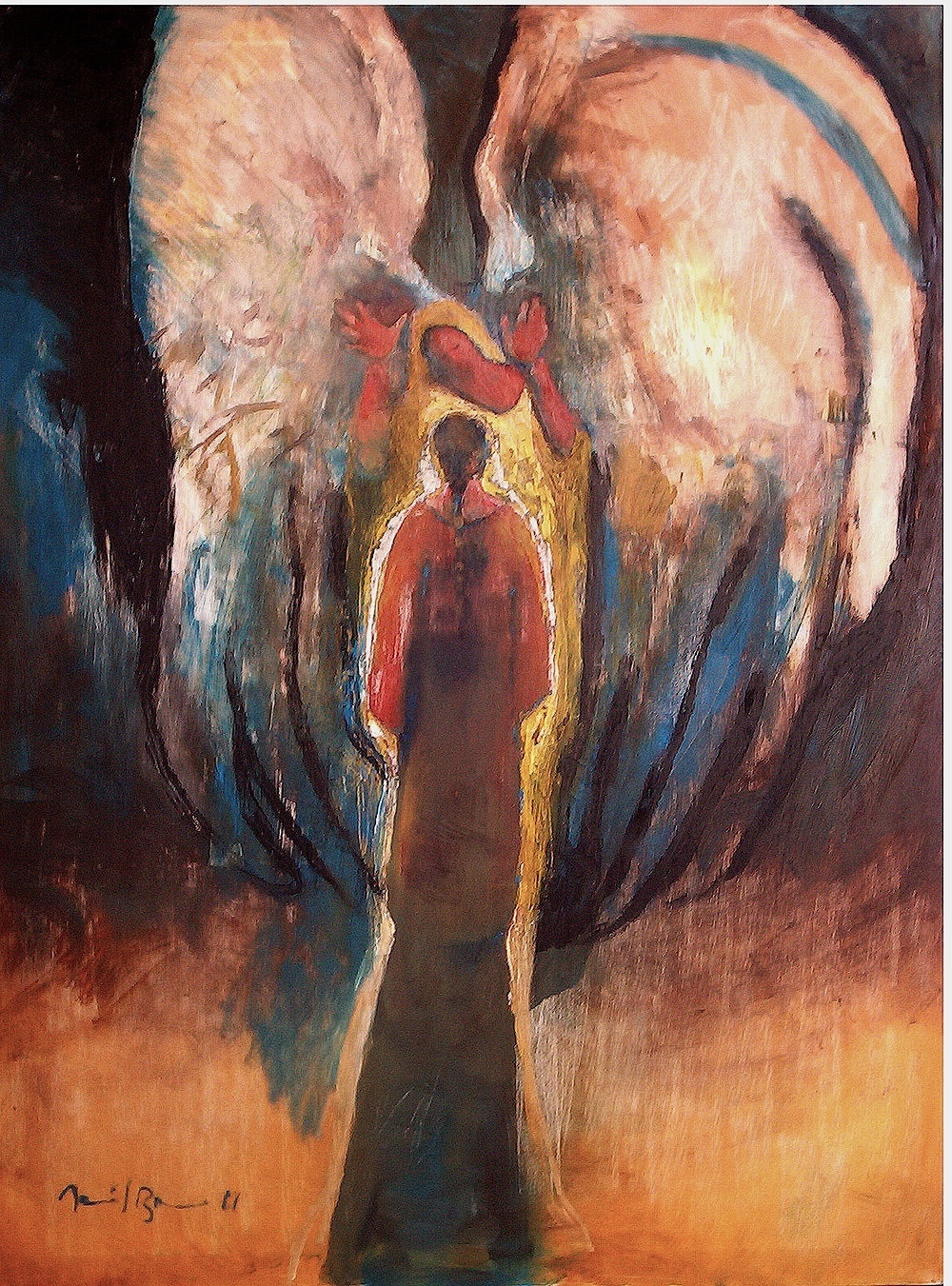
Next Sunday is the 4th Sunday in Advent in Year A. You can read a complete commentary on the Sunday Gospel here.
18 Now this is how the birth of Jesus Christ came about. When his mother Mary was betrothed to Joseph, but before they lived together, she was found with child through the holy Spirit. 19 Joseph her husband, since he was a righteous man, yet unwilling to expose her to shame, decided to divorce her quietly. 20 Such was his intention when, behold, the angel of the Lord appeared to him in a dream and said, “Joseph, son of David, do not be afraid to take Mary your wife into your home. For it is through the holy Spirit that this child has been conceived in her. 21 She will bear a son and you are to name him Jesus, because he will save his people from their sins.” 22 All this took place to fulfill what the Lord had said through the prophet: 23 “Behold, the virgin shall be with child and bear a son, and they shall name him Emmanuel,” which means “God is with us.” 24 When Joseph awoke, he did as the angel of the Lord had commanded him and took his wife into his home. 25 He had no relations with her until she bore a son, and he named him Jesus. (Matthew 1:18-24)
Annunciations
Similar, yet… In many respects our gospel (Luke 1:26-38) is similar to the annunciation of the birth of John. The angel Gabriel appears to announce the birth of the child, and the annunciation follows the pattern of birth annunciations in the OT: The angel says, “Do not be afraid,” calls the recipient of the vision by name, assures him or her of God’s favor, announces the birth of the child, discloses the name of the child to be born, and reveals the future role of the child in language drawn from the Scriptures. After their respective announcements, Zechariah and Mary each ask a question, a sign is given, and the scene closes with a departure. The similarity of structure and content between the two scenes invites the reader to consider the differences between them all the more closely. For example, the first announcement came as an answer to fervent prayer; the second was completely unanticipated. John would be born to parents past the age of child bearing, but the miracle of Jesus’ birth would be even greater. Jesus would be born to a virgin. The announcement of Jesus’ future role also shows that at every point Jesus would be even greater than his forerunner. Watch how these nuances are developed in the course of the details of this scene. Note this narrative comparison also punctuates the beginning of Mark’s gospel which has no infancy narrative: John the Baptist is not the Christ, not Elijah, not the prophet to come, and not worthy to loosen the strap of the sandal of the one who is to come. Continue reading
Angelic moments
“…Mary was betrothed to Joseph, but before they lived together, she was found with child through the Holy Spirit.” (Matthew 1:18) And of course, we know the rest of the story… the angel comes and tells Joseph what is expected of him – to take Mary and the child into his home – to be husband and father. “When Joseph awoke, he did as the angel of the Lord had commanded him” (Matthew 1:24). Great! Problem solved and now we can turn the page to Matthew 2 because in that chapter Jesus is born, the magi visit and we are all set for Christmas. Continue reading
Emmanuel: my son
Joseph and Jesus. Matthew’s gospel does not describe the birth of Jesus, but explains his origin (the virgin conception) and his name in relation to a specific Old Testament prophecy. The passage concentrates entirely on the experiences of Joseph rather than those of Mary. Even the miraculous conception of Jesus is related only as its discovery affected Joseph. This remarkable concentration, compared with the complete silence on Joseph elsewhere, indicates Matthew’s concern to establish Jesus’ legal lineage through Joseph, i.e. to explain how the preceding genealogy applies to Jesus the son of Mary. Continue reading
Annunciations
Similar, yet… In many respects our gospel (Luke 1:26-38) is similar to the annunciation of the birth of John. The angel Gabriel appears to announce the birth of the child, and the annunciation follows the pattern of birth annunciations in the OT: The angel says, “Do not be afraid,” calls the recipient of the vision by name, assures him or her of God’s favor, announces the birth of the child, discloses the name of the child to be born, and reveals the future role of the child in language drawn from the Scriptures. After their respective announcements, Zechariah and Mary each ask a question, a sign is given, and the scene closes with a departure. The similarity of structure and content between the two scenes invites the reader to consider the differences between them all the more closely. For example, the first announcement came as an answer to fervent prayer; the second was completely unanticipated. John would be born to parents past the age of child bearing, but the miracle of Jesus’ birth would be even greater. Jesus would be born to a virgin. The announcement of Jesus’ future role also shows that at every point Jesus would be even greater than his forerunner. Watch how these nuances are developed in the course of the details of this scene. Note this narrative comparison also punctuates the beginning of Mark’s gospel which has no infancy narrative: John the Baptist is not the Christ, not Elijah, not the prophet to come, and not worthy to loosen the strap of the sandal of the one who is to come. Continue reading