Explore this video about the meaning of the word “sin” in the Hebrew Scriptures as well as the New Testament. The authors of the video (The Bible Project) cast the most fundamental meaning of the word as a “failure to be truly human.”

Explore this video about the meaning of the word “sin” in the Hebrew Scriptures as well as the New Testament. The authors of the video (The Bible Project) cast the most fundamental meaning of the word as a “failure to be truly human.”
 From the readings of this day’s Mass: “Do you not know that if you present yourselves to someone as obedient slaves, you are slaves of the one you obey, either of sin, which leads to death, or of obedience, which leads to righteousness?”
I think it would interesting if everyone could sit on “the other side of the screen” for the Catholic sacrament of Reconciliation; could sit where the priest sits and hear what he hears. And it is a wish not rooted in any one particular confession, one moment of sin, a moment of redemption, but rooted in what “the big picture” has to say about one part of our human condition. Continue reading
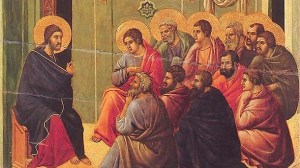 If he refuses to listen to them, tell the church. If he refuses to listen even to the church, then treat him as you would a Gentile or a tax collector.
We now come to the last resort, which the earlier approaches have been designed to avoid. To “tell the church” must presumably require a public statement when the community is gathered (rather than a whispering campaign). Such publicity must be avoided where possible, but may prove to be inevitable if the problem is to be solved. The object of the gathering is not to pronounce judgment but to strengthen the pastoral appeal, in the hope that the offender may yet “listen” (akouo). The offender, faced by the disapproval of the whole local disciple community, ought surely to recognize that this was not just a personal grievance on the part of the initiator. Anyone who is not willing to accept such united testimony may then properly be regarded as no longer a fit member of the community. “You” (singular, referring to the individual who raised the issue, not, at least explicitly, to the community as a whole) should then treat them as “a Gentile and a tax-collector.” Continue reading
Sin, of whatever form, is not to be tolerated within the disciple community, but is to be dealt with when it is noticed. But what is at stake is winning over the brother or sisters. The pastoral purpose of the approach is underlined by the verb “win,” which shows that the concern is not mainly with the safety and/or reputation of the whole community but with the spiritual welfare of the individual. “Win” suggests that the person was in danger of being lost, and has now been regained; it reflects the preceding image of the shepherd’s delight in getting his sheep back (v.12). Continue reading
15 “If your brother sins (against you), go and tell him his fault between you and him alone. If he listens to you, you have won over your brother.16 If he does not listen, take one or two others along with you, so that ‘every fact may be established on the testimony of two or three witnesses.’17 If he refuses to listen to them, tell the church. If he refuses to listen even to the church, then treat him as you would a Gentile or a tax collector.18 Amen, I say to you, whatever you bind on earth shall be bound in heaven, and whatever you loose on earth shall be loosed in heaven.19 Again, (amen,) I say to you, if two of you agree on earth about anything for which they are to pray, it shall be granted to them by my heavenly Father.20 For where two or three are gathered together in my name, there am I in the midst of them.” Continue reading
Matthew 18:15–20 15 “If your brother sins (against you), go and tell him his fault between you and him alone. If he listens to you, you have won over your brother.16 If he does not listen, take one or two others along with you, so that ‘every fact may be established on the testimony of two or three witnesses.’17 If he refuses to listen to them, tell the church. If he refuses to listen even to the church, then treat him as you would a Gentile or a tax collector.18 Amen, I say to you, whatever you bind on earth shall be bound in heaven, and whatever you loose on earth shall be loosed in heaven.19 Again, (amen,) I say to you, if two of you agree on earth about anything for which they are to pray, it shall be granted to them by my heavenly Father.20 For where two or three are gathered together in my name, there am I in the midst of them.” Continue reading
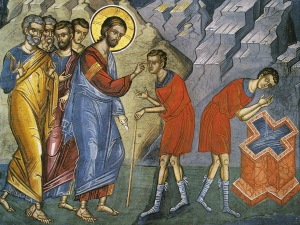 Sin in the Gospel according to John. John seems to understand sin in a way that accents a singular aspect in a way that deserves mention. Words for “sin” occur often in our text: hamartano = “to sin” (9:2, 3; elsewhere in John: 5:14 & 8:11); hamartia = “sin” (9:34, 41); hamartolos = “sinner” (9:16, 24, 25, 31 — all the occurrences in John). The question is does John’s discussion match the discussion of hamartia in the other gospels?
In our passage, the concept of sin will be quickly introduced via the disciples’ question in v.2 : “Rabbi, who sinned, this man or his parents, that he was born blind?” This reflects traditional Jewish speculation on the relationship of illness and sin (cf. 5:14). In 1st century Palestine, people commonly assumed that disease and disorders on both the personal and national level were due to sin, as summarized in the rabbinic saying from around 300 CE that “there is no death without sin and there is no suffering without iniquity” (b. shabbat 55a). Continue reading
Sin in the Gospel according to John. John seems to understand sin in a way that accents a singular aspect in a way that deserves mention. Words for “sin” occur often in our text: hamartano = “to sin” (9:2, 3; elsewhere in John: 5:14 & 8:11); hamartia = “sin” (9:34, 41); hamartolos = “sinner” (9:16, 24, 25, 31 — all the occurrences in John). The question is does John’s discussion match the discussion of hamartia in the other gospels?
In our passage, the concept of sin will be quickly introduced via the disciples’ question in v.2 : “Rabbi, who sinned, this man or his parents, that he was born blind?” This reflects traditional Jewish speculation on the relationship of illness and sin (cf. 5:14). In 1st century Palestine, people commonly assumed that disease and disorders on both the personal and national level were due to sin, as summarized in the rabbinic saying from around 300 CE that “there is no death without sin and there is no suffering without iniquity” (b. shabbat 55a). Continue reading
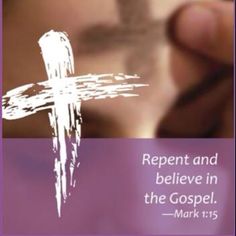 One of the things that challenge scripture scholars is where to put the punctuation. The Greek and Hebrew manuscripts don’t include such things. Consider a part of the first reading for Tuesday, March 3rd.
Though your sins be like scarlet,
they may become white as snow;
Though they be crimson red,
they may become white as wool.
If you are willing, and obey,
you shall eat the good things of the land (Is 1:18-19) Continue reading
 Sin, of whatever form, is not to be tolerated within the disciple community, but is to be dealt with when it is noticed. But what is at stake is winning over the brother or sisters. The pastoral purpose of the approach is underlined by the verb “win,” which shows that the concern is not mainly with the safety and/or reputation of the whole community but with the spiritual welfare of the individual. “Win” suggests that the person was in danger of being lost, and has now been regained; it reflects the preceding image of the shepherd’s delight in getting his sheep back (v.12). Continue reading
 friarmusings