
The God revealed in Scripture doesn’t just love, he is love. As a triune God—Father, Son, and Spirit—he has always been and always will be an others-centered, self-giving, communal being. God so loved us, loved the world that he sent his only Son, Jesus, who fully embodies the love of God. That love was demonstrated most clearly when he gave his life on behalf of humanity. When people learn to trust Jesus’ love for them, they join in God’s community of life and love, and their very nature is transformed to live a life of love with him. In today’s video offering from the amazing folks at The Bible Project, you can explore the biblical meaning of love.
 From
From  Each year the Fourth Sunday of Advent always tells part of the story that just precedes the birth of Christ. In this year, 2020, come Sunday we will hear the story from
  The
The 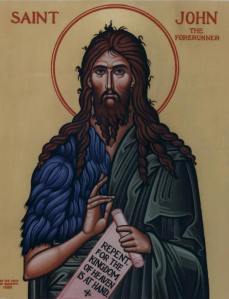 We are familiar with the story of John the Baptist as the herald of the coming Messiah – it is the story that introduces and highlights the Advent season. But Advent’s proclamation of Christmas is not the end of John’s story. He remained a man faithful to God’s calling.
 We often forget that the season of Advent speaks to the betwixt and between of the Birth of Jesus and his Second Coming. So, we shouldn’t be surprised that our first reading is from the firebrand, no-holds-barred prophet Zephaniah. He makes no bones about it. Judgment is coming upon Jerusalem. The Lord will be cleaning house: “And you shall no longer exalt yourself on my holy mountain. But I will leave as a remnant in your midst a people humble and lowly.” (Zeph 3:11-12) All seems a little unfair, don’t you think? For Jerusalem to be sure, but us too. Not exactly joyful here just a new days after Gaudete Sunday.
 friarmusings