
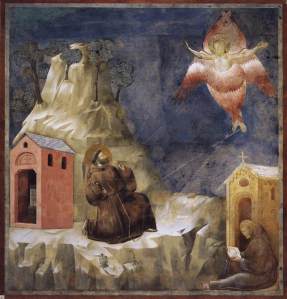
 After Francis’ withdrawal from active ministerial leadership of the friars, he witnessed an inevitable evolution of the religious order, which had grown to over 5,000 brothers in 1223 from the humble beginnings in 1209 of Francis and four companions. The evolution of the Order, necessary on a number of levels, also began to change the life of the fraternity. Francis worried that the Spirit of prayer was being compromised and that the necessities of ministry were leading the brothers to increasing ties to material possessions. He lived and suffered in a “Time of Doubt,” as described in the previous article. Continue reading
The Stigmata
Reply

 Each Sunday at Mass, we profess our faith. We proclaim what we believe via the Creed. A creed is a brief statement of faith used to list important truths, to clarify doctrinal points and to distinguish truth from error. The word creed comes from the Latin word credo, meaning, “I believe.” The Bible contains a number of creed-like passages. The Jews still recite a creed known as the Shema that comes from
 Christmas 2019. I think most pastors and their vicars, if asked, would remember back to the days when attendance at church overflowed the pews, into the aisles, and perhaps out the door. We Catholics, a largely silent and patient bunch, are given to sitting quietly awaiting the start of liturgy. Long ago silent reverence for “God’s house” was drilled into our consciousness and obedience. We would fidget, bu quietly. Remember the expression, “as quiet as a church mouse? They were the noise makers. But even we had our own special stirrings and sounds of life – especially on the solemnities and feast days.
 If you open the index to your Bible, you will find the Books 1st and 2nd Chronicles follow The Book of the Prophet Samuel (1st and 2nd) and Kings (1st and 2nd). These volumes recount the history of Israel and Judah from the period at the end of the age of Judges (of whom Samuel was the last), through the establishment of the monarchy, up until the end of the kingdoms as the last remnant moved to exile in Babylon. Interestingly, the same period of time is covered in Chronicles. The Greek title of the book, paraleipomena, means “things omitted,” or “passed over” (i.e., in the accounts found in Samuel and Kings). The Books of Chronicles, however, are much more than a supplement to Samuel and Kings; a comparison of the two histories discloses striking differences of scope and purpose. One should not think of Chronicles as a history of filling in the blanks. Biblical history is primarily interpretative, and its purpose was to disclose the action of the living God in human affairs rather than compiles the facts as we would consider an endeavor of history.
 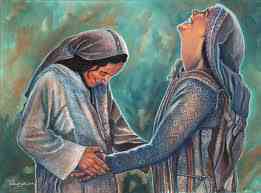 As mentioned in a previous post, this coming Sunday is the
  Today across the Church universal and especially among the Franciscan communities, we celebrate the Feast of St. Clare of Assisi. It is a very appropriate
  August 11th, is the feast of St. Clare of Assisi. Clare was born July 16, 1194 as Chiara Offreduccio the eldest daughter of Favorino Scifi, Count of Sasso-Rosso and his wife Ortolana. There are many legends of how Clare and Francis met, but it is clear that Clare would have know about Francis and his movement of brothers seeking to embrace Holy Poverty.
 The
The  friarmusings