
This coming Sunday is the 2nd Sunday of Lent in Lectionary Cycle C taken from the Gospel of Luke 9:28-32 describing the Transfiguration of Jesus. The Transfiguration event is also described in Mt 17:1-9 and Mk 9:2-10 – readings that are traditionally proclaimed on the 2nd Sunday of Lent in their own respective liturgical years as well as on the Feast of the Transfiguration each August 6th.
The Lenten use of the reading, following the story of Jesus being tempted in the desert by the devil, breaks up the flow of Luke narrative. Perhaps a summary of what has transpired since the 5th Sunday of Ordinary Time can bring us into context: Continue reading
 He is one of the most controversial of the Renaissance popes, and his Italianized Valencian surname, Borgia, became a byword for libertinism and nepotism, which are traditionally considered as characterizing his papacy. It has been noted that this was one pope for whom there are no apologists.
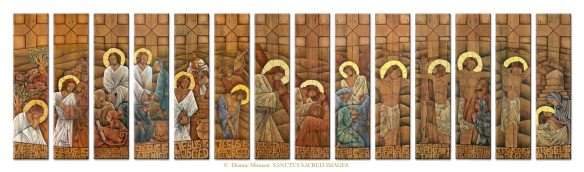 The Traditional Stations of the Cross have long been celebrated in many forms with the 14 Stations familiar to us a relatively recent form. Several of the stations arise from long-held traditions among the Christians of the Holy Land, but they are not necessarily Scriptural. In 1991, Pope John Paul II instituted a form of the Stations that are based solely on Scripture. This too forms a wonderful means of reflecting upon the events of the Holy Week which put the love of Christ in the forefront of our hearts and minds.
  friarmusings