The first reading today is from the Book of Revelation and contains one of the seven letters to the Churches of Asia Minor. Part of the reading is often quoted in homilies and exhortations:
“To the angel of the Church in Laodicea, write this: … “I know your works; I know that you are neither cold nor hot. I wish you were either cold or hot. So, because you are lukewarm, neither hot nor cold, I will spit you out of my mouth. For you say, ‘I am rich and affluent and have no need of anything,’”
Laodicea is located in the Lycus Valley of modern-day Turkey. In its time it was positioned at the junction of major Roman trade routes connecting the Aegean coast to the interior of the area. Laodicea became one of the richest cities in the Roman province of Asia, renowned for its massive banking operations and gold reserves and hence you can understand the warning: “For you say, ‘I am rich and affluent and have no need of anything.” On a historical note: following a devastating earthquake around 60 AD, the citizens were so wealthy that they famously refused financial disaster relief from Emperor Nero, rebuilding the city entirely with their own funds.
But by locating on the junction of trade routes, it also located in a place where there was no natural water source unlike its neighbors Colossae, which enjoyed cold, refreshing mountain streams, and Hierapolis, famous for its hot, therapeutic thermal springs. Engineers piped water into Laodicea from miles away using stone aqueducts, causing the water to arrive lukewarm and heavily calcified with minerals, which often made visitors nauseated. And now you can understand the references to lukewarm and being spit from the mouth.
The warnings were clear: the citizens must fight against spiritual apathy and arrogant self-sufficiency unaware they were spiritually wretched, pitiful, poor, blind, and naked. But how did it all turn out?
Despite its harsh rebuke in Revelation, the Christian community in Laodicea survived and grew into a prominent church center of Byzantine Christianity. During the 4th century, the city hosted the influential Council of Laodicea, which issued 60 foundational canons that shaped church discipline, liturgy, and early debates over the biblical canon. In an interesting factoid, one canon banned clergy from entering taverns. But the Council also addressed more serious issues, specifically invocation of angels which was becoming an idolatry.
Located in a seismically active zone, Laodicea suffered severe earthquakes in the 5th and 7th centuries which led to several rebuilding efforts. Following a major 7th-century earthquake and later conflicts between the Byzantine Empire and Seljuk Turks in the 11th to 13th centuries, the city was gradually abandoned. Archeological excavation began in the 1830s but soon stopped only beginning again in the 1960s for a few years, and finally becoming an ongoing endeavor in 2002. The major church of the ancient city was discovered in 2010 using ground-penetrating radar. This early 4th-century basilica was built shortly after Emperor Constantine legalized Christianity and covered an entire city block.
Interestingly, Laodicea remained a titular see of the Roman Catholic Church even today, although the city is only an archaeological dig. and the bishop’s seat has been vacant since 1968. The Catholic Church assigns titular sees, historic dioceses that no longer have a functioning local Catholic community, to preserve ancient Christian history and give bishops without a territorial diocese a canonical title. Titular sees are assigned to bishops serving in specialized roles where they do not govern their own independent diocese. Common examples include Vatican Officials such as Cardinals, archbishops, and bishops working in the Roman Curia (the central administration of the Holy See) and Papal Diplomats, i.e., Apostolic nuncios who represent the Pope to foreign governments and local churches around the world.
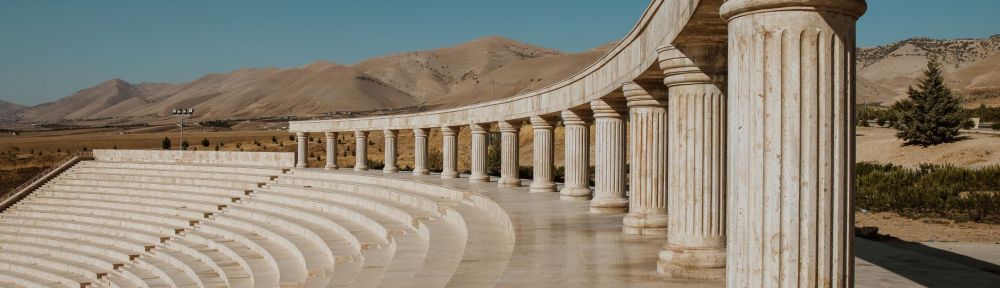
Image credit: Pexels via WordPress
Discover more from friarmusings
Subscribe to get the latest posts sent to your email.

