

 “I came so that they might have life and have it more abundantly.” (John 10:10) Most people know that verse and are drawn to the idea of an abundant life. What would that look like to you? If we don’t have an idea of what it looks like, how will we know when we have it?
Once upon a time in Kenya, an Englishman visiting the central highlands, and discovered a beautiful river. Not too far downstream he came upon the chief of the Kikuyu people enjoying a moment of fishing. The chief had a great spot in the shade, the fishing line was tied around his big toe, and the chief seemed like he was napping more than fishing. Continue reading
 The readings for
  One of the “silver linings” in the pandemic is that it has increased people’s mindfulness about thanking others. Reports have indicated that people are sending digital and postal service cards and letters to thank folks. That is now that things have settled out a bit. In the early days when the “sheltering in place” orders came out our fears and anxieties were too much in the forefront of our minds. My point is that we can look to our own recent experience to understand the transition from the early days of Covid-19 to days of sheltered in place and new normal. As we no longer “strain against the way things are” we find a certain degree of freedom, and then our minds wander to the essentials. And saying “thank you” is right there at the top of the list.
  Gardens are a necessity. Vineyards are a sign of abundance beyond the necessary. As terrible a gardener as I am, I can get a crop of vegetables in several weeks’ time. Not so with a vineyard. Vineyards take a long time and hard work to develop. Try googling “starting a vineyard;” the results might surprise you. After you buy the land (and not just any location will do), it costs $20,000 a year per acre to cultivate a vineyard, and there is no cash flow for 3 to 5 years while you wait for the grapes to be good enough for the harvest. There is a lot of patient, intensive work and commitment. Vegetable gardens are near-term cash crop; you can change it up every year. Vineyards are a long-term investment with one fruit produced for one’s lifetime.
  Exile comes in many forms and manners. To be in exile means to be away from one’s home (city, state or even country), while either being explicitly refused permission to return or being threatened with imprisonment or death upon return. It can happen to individuals, e.g. Napoleon’s exile on Saint Helena. It can happen to nations, e.g. after the partitioning of Poland in the 1800s, many Polish people moved to France and the United States. Here is the United States, many Native American peoples were exiled from their land to reservations. In Biblical narrative, exile plays a huge role in the life of the people of Israel.
  I heard someone once refer to us as a “tourist church.” At one level that is certainly a compliment to the grandeur of the church structure, its architecture, and art. When you enter the church, there is no doubt that you are “in church.” At another level, given our proximity to the downtown hotels and the Port of Tampa, we have tourists and all manner of visitors – and you know what – they are all most welcome. If a “tourist church” means that we are known for welcoming the visitor, the stranger, the alien, and the tourist – that is a good thing.
  Guest column from Sacred Heart’s Chairman of the Parish Advisory Counsel, Mr. James Rossman.
 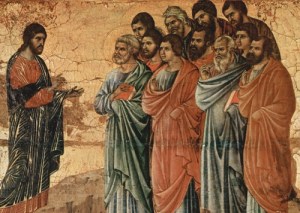 Sometimes, another just says it succinctly and to the point. Bishop Robert Barron does that so well commenting on
  Take a moment and look back over the last 10 weekdays (or so) and consider the first reading for daily Mass. (If you look at
  At the beginning of this time of pandemic, it was interesting to read stories of people on an extended wilderness sojourn as they returned to their normal life. In the several weeks away, they discovered there was nothing normal about the world they had left. They returned to find covid-19, masks, social distancing, sheltering at home, and a world reporting and tracking pandemic.
  friarmusings