

 23 Jesus answered and said to him, “Whoever loves me will keep my word, and my Father will love him, and we will come to him and make our dwelling with him. 24 Whoever does not love me does not keep my words; yet the word you hear is not mine but that of the Father who sent me. 25“I have told you this while I am with you. 26 The Advocate, the holy Spirit that the Father will send in my name—he will teach you everything and remind you of all that (I) told you. 27 Peace I leave with you; my peace I give to you. Not as the world gives do I give it to you. Do not let your hearts be troubled or afraid. 28 You heard me tell you, ‘I am going away and I will come back to you.’ If you loved me, you would rejoice that I am going to the Father; for the Father is greater than I. 29 And now I have told you this before it happens, so that when it happens you may believe.
(John 14:23-29)
Introduction. Our passage today is taken from the “Farewell Discourse” of Jesus contained in five chapters of John (13:1-17:56). In other words, we have but a few verses which are an integral part of a much larger passage. Accordingly, the Discourse can be outlined in a number of ways, though three main parts are fairly clear: Continue reading
 As I have loved you, so you also should love one another (John 13:34)
 It is said that you can tell a lot about a person by their hands. The common wisdom is that a person’s self-image is revealed in the manner in which they shake hands. One of the oft-told stories in my family is when my then college-aged niece brought home a young man to meet the family and her grandmother. We were all greeted by the “dead-fish handshake,” a weak hello, and eyes cast to one side. The family advice was uniform: dump him. My niece thought we were all a bit judgmental. Perhaps, but let’s just say it was an occasion where experience met prudence. The handshake told us almost everything we needed to know. Several weeks later, our niece came to the same assessment.
 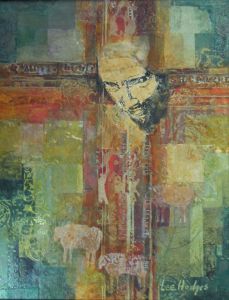 Here on this 4th Sunday in Easter, our diocese and the US Bishops’ conference have asked us to speak about vocations to the priestly life. To echo the voice of the Good Shepherd calling those to a life of dedicated service of the community of God – to follow Christ more closely through life as an ordained priest. And to answer this call in troubled times. A time in our life when the church faces questions about a growing worldwide crisis caused by priests and bishops that has continued to flow onto the headlines of the world’s newspaper for almost 15 years now. It is a time when the question lingers on the periphery “Why would anyone want to become or remain Catholic today?” and its more focused parallel: “Why would a man want to become or remain a priest today?”
 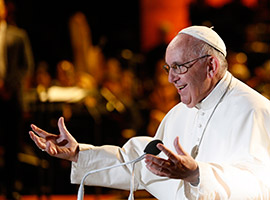 Two days ago, the 256-page, 60,000-word papal exhortation, The Joy of Love, was released to the waiting world. Since then, I have been asked for comments, quotes, opinions, and insight. Here is about all that I can respond: “Thanks for asking, but I haven’t had the chance to read it.” … or think about it, or pray about it, or muse about its content. So, have I read Pope Francis’ exhortation? Not yet.
 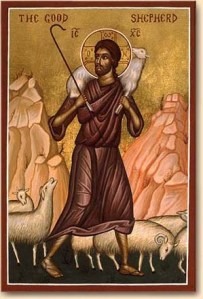 Being Given. In v.29 it is clear that it is the Father who has given the sheep to Jesus. This small part of one verse, when reflected upon can be a quite challenging revelation. We are part of Jesus’ flock because of what God has done, not because of anything we have done, (cf. “You did not choose me but I chose you””15:16a). Can we refuse to be God’s gift to Jesus? Jesus is clear that “the Jews” to whom he is speaking do not belong to his sheep. Why not? Clearly they have heard Jesus words – yet they refuse to listen and follow. What is the word they refuse to hear? It simply this: “God has given you to Jesus.”
