
 There are three events that seem to highlight the “period of crisis” in Francis life during the period from late 1205 until the summer of 1206:
- Francis’ experiences at the abandoned San Damiano chapel – especially his prayers before the cross
- Francis’ “leaving the world” as he turns away from his family towards the Church and an unknown path with God.
- Francis and the leper (or lepers)
There is no consensus on the order of the events – and there is some question about later embellishments of the event – and even questions about whether some accounts indicating a single event is actually a compilation of a series of experiences. But then the 13th century writers were not trying to capture “history” they were trying to tell their understanding of the “meaning” of the life of St. Francis of Assisi. Continue reading
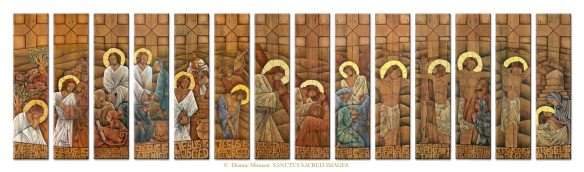 When Holy Land pilgrims returned home, they often brought back a bit of Palestine. In addition to relics, the pilgrims also brought back the desire to re-create scenes from the Holy Land in order to share their experiences with those unable to visit the holy places firsthand. When the Holy Land was closed to western visitors, European replicas of the sacred sites became increasingly popular. Outside of Jerusalem, the tradition of walking the via sacra in commemoration of Christ’s passion, death, and burial with “stations” is mentioned as early as the twelfth century and all of the references point to an outdoor celebration. There was no standard celebration of the via sacra. Depending on the location there were as few as seven and as many as 42 stations. Interestingly, in the beginning, the customary route apparently was the reverse of ours, starting with Calvary and ending at Pilate’s house – and included many other stops that are no longer considered part of the Via Dolorosa (“Sorrowful Way”).
 In
In 
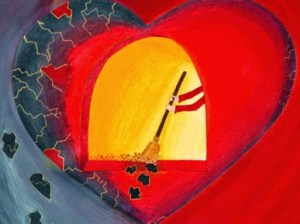 Back in the day when I was working in the world and spending way too much time on airplanes accumulating way too many frequent-flyer miles, it seemed to me business travelers did three things on longer flights: sleep, work, or read Stephen’ Covey’s “The 7 Habits of Highly Effective People.” The book argues that one should align universal and timeless principles with one’s values. Covey sees principles as external natural laws, while values remain internal and subjective. Covey asserts that values govern people’s behavior, but principles ultimately determine the consequences. If sales volume is a measure of the usefulness of this self-help book, then 25+ million copies sold says something. Maybe there are some possibilities for a parallel book about the best practices and habits for Catholics. Might be a Lenten best seller! “The 7 Habits of a Clean Heart.”
 Much of Francis’ youth had been spent as an apprentice in his father’s cloth business by day and as playboy by night – a time that the older Francis refers to as “When I was in sin.” At the same time, the intrigue and rivalry of imperial and papal politics swirled around Assisi. When Francis was 16-years old, the popolo, as the merchant and new generation of leaders were called, rose up in revolt against the nobles of Assisi (1198 AD). The last remnant of feudal governance was replaced by the “commune” of the city-state of Assisi. Loyalty to the Emperor was replaced by nominal loyalty to the Papal State. The noble families of Assisi – likely including the family of the young woman who would become St. Clare of Assisi – fled to Perugia, the age-old enemy of Assisi, across the Spoleto Valley. While the people of Assisi thought it to be the definitive victory, it was but a lull in the conflict.
 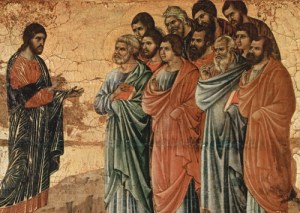 The reading from today’s gospel (with a few extra verses) and St. Francis of Assisi’s answer to the question.
