
 Today is the Feast of St. Patrick which has optional readings you can find here.
The scene in the gospel is familiar – “oh sure, I’ve heard this before, Jesus is calling his disciples to be fishers of men” – perhaps too familiar. As with most scriptures, there is more than meets the eye.
The account begins with a wide-angle view with Jesus in a natural amphitheater with a large crowd. Having Simon Peter take him in the boat just a little offshore, Jesus can take in the breadth of the crowd as he teaches. There among in the crowd are people who have heard of the great things he has done in Nazareth and Capernaum, as well as Pharisees, scribes and officials from Jerusalem. There too are the ones who will become his disciples and follow him.
 Today’s
  Today’s readings are a combination of the well-known (the Gospel) and the “what’s-going-on” (Ezekiel). The former is the familiar story of the man, afflicted for 38 years, who encounters Jesus, is healed and has hope restored. The latter is a grand vision of living waters flowing from the Temple into all the land bring abundance and life.
 I subscribe/follow several sources of news and information on thing tech. More big picture than detailed technical. This week the CEOs of Airbnb and Facebook offered their insights about the post-pandemic future. It has been my experience the press release/announcement is splashy event with all the rest playing itself out over time. But in the interim their pronouncements about the future are increasingly red-carpet events and there is a tendency to opine about things not exactly “in their wheelhouse.” [Note: idiomatic use of “wheelhouse” – the field in which a person excels; one’s strongest interest or ability; Oxford English Dictionary … in case you were wondering.]
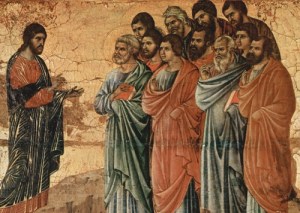 In
In  You might know that Pope Francis daily celebrates Mass at the chapel where he lives, Santa Marta. He reflections on the daily readings are available on the Vatican News website’s page,
  The synoptic gospels (Mark, Mathew and Luke) recount the story of Jesus being accused of working for the powers of darkness: ““By the power of Beelzebul, the prince of demons, he drives out demons.” I can remember as a young person being frightened to know the devil was so familiar to the world that he/she had a name: Beelzebul. One of my vivid memories was as child hearing a fiery sermon by a preacher at the Pine Street Pentecostal Church. It was a Sunday night and we were outside listening. Again and again the preacher hoisted up and dropped upon the congregation the name of Beelzebul, the prince of darkness who leered, lingered, and lured the unwary soul onto perdition’s ways.
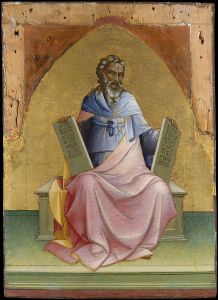 “…whoever obeys and teaches these commandments will be called greatest in the Kingdom of heaven.” (Mt 5:19)
 friarmusings