
 Everyone has their own habits as regards the consumption of news. I often scour CNN, the NY Times, CBS and Fox News – a way of seeing what is being said about the topic of the day – or even one network is even covering something. It is all revealing.
Once I week I check on Crux News, “Taking the Catholic Pulse.” Crux was founded by the Boston Globe, but is now independently owned. It dedicated focus concerns Catholicism in the United States Crux features deep coverage of the Holy See by the long-time Vatican watcher and reporter John L. Allen Jr. – a “go-to” interview by the national networks when things Catholic are headline news. Crux also employs Inés San Martín, as Rome Bureau Chief. San Martin is also a veteran of Vatican and European Catholic reporting.
This week’s article by Allen is interesting and worth the read. It is a reminder the American Catholic view is just one view in global, culturally diverse Catholic Church of more than 1.3 billion members: “Each Catholic culture brews a controversy made to order” Take a moment and have a read.
 In
In  In
In 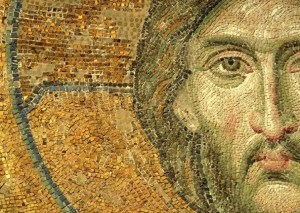 The scene in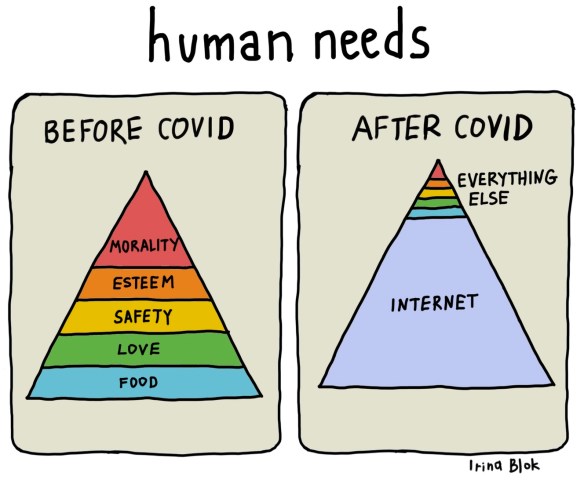
 Today I celebrated the Rite of Committal for a US Marine Corp veteran. Given our proximity to the Quantico National Cemetery, we are called upon several times a week to assist families with the committal of their loved ones – most often retired service members or their spouses. Sadly, we also serve when an active duty member is interned. They are mostly connected to the Marine Corp, but the hallowed grounds honor members from all branches of the military.
  Chaos Theory is often misunderstood, misrepresented, and spoken of by lots of folks who toss around a term to convey the idea of complete randomness of this or that. The study of chaos is branch of mathematics that looks at apparently random states of disorder and irregularities that are actually governed by underlying patterns and deterministic laws. Those patterns and law might not be readily apparent, they are just highly sensitive to initial conditions.
 Several days ago I posted an article about
  friarmusings