
 At 6:02 am this past Monday morning, I received an email from the bishop’s office announcing, “With great joy we announce that His Holiness, Pope Francis, has appointed Most Reverend Bishop Gregory L. Parkes, Bishop of Pensacola-Tallahassee, Florida, as the fifth bishop of the Diocese of St. Petersburg, Florida! Bishop Parkes succeeds the retiring Bishop Robert N. Lynch, who has served as Bishop of St. Petersburg since his installation in 1996.”
Already on that same day people have called and asked, “What is the new Bishop like?” Answer: I don’t know, I have never had the privilege of meeting him. I can tell you that he is 6’8” tall – the tallest bishop in the United States! A former banker, a pastor in the Orlando Diocese, FSU graduate, canon lawyer… and did I mention he is very tall? I believe he is 54 years old (I can’t believe I am older than my bishop! Yikes!).
People have also asked, “What will this mean for the Diocese?” Specifically, I have no idea, but know this – he is not new to the episcopal leadership of a diocese or even a Florida diocese at that. I think that bodes very well for the Diocese. I am sure there will be a period when, like any new leader, he scouts out the landscape of the Diocese, meets his pastoral center staff, comes up to speed on the projects and issues, begins to meet his priests, and the parish council leaders. New Presidents are measured by the first 100 days in office, and I suspect bishops are measured on a scale of years of pastoral leadership. So, what will this mean for the Diocese? Ask me a year from now – I may not have a better answer, but I suspect we will begin to see his style of pastoral leadership emerge.
Here is what I can tell you about these changes – I am a hopeful and optimistic person about such things. Last century, I was a member in the pews of a wonderful little parish in the foothills of the eastern ridges of the Blue Ridge mountains. About a year after I began to worship there, the pastor Fr. Guy was leaving. People were not happy – “How could they do this? What will happen to us?” What happened was Fr. Scott arrived. And you know what – he was just the thing our parish needed.
The area was beginning to change as we became less a country county and more a far suburb of Northern Virginia and Washington, D.C. As the area dynamically grew, Fr. Scott led the charge. He got the new church built after 40 years of fund raising and with our new facilities, new ministries flourished and grew. It was a fun time to be in the parish. And, of course, one day – too soon for most – Fr. Scott announced he was being transferred. People were not happy – “How could they do this? What will happen to us?” What happened was Fr. John arrived and led a busy parish into an era of spiritual growth. Fr. Martin followed him – he was the last Franciscan pastor. Msgr. Cassidy came next, and then Fr. Steve…And every time God provided that once-little parish with the pastor they needed for the times they faced.
As I said, I am an optimist about such things. Bishop Lynch has done a great job; he did what was his to do – it is now time for him to enjoy a slower pace. Bishop Parkes will do what is his to do for the greater glory of God. Please keep them both in our prayers. And may God bless them in their new ministries.

 There have been lots of reports in the news about the choices people are making this Thanksgiving – and I am not referring to the turkey or the ham. Sadly, emotions are running so high regarding the recent elections, some families are choosing not to come together, not to invite certain family members. Others are a little more proactive, announcing there will be no political discussions allowed – and I hope that works, but I think it will still be there hanging in the air. Such is life. It is always about the choices we make.
 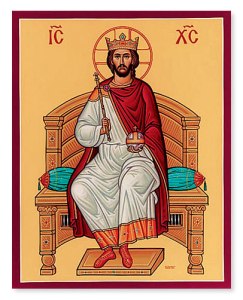 Imagine four persons in a room. The first is a powerful dictator who rules a country. He commands armies, directs the lives of millions, and his wishes become law and are enforced. He possesses a brutal power. Next to him sits a gifted athlete at the pinnacle of his physical prowess. This is one whose speed, strength, and endurance have few equals. His is a graceful power for which he is much admired and envied. The third person is a rock star whose music and charisma electrify sold out arenas. Her words can become the anthem for a generation. Her power is a soulfulness of the muse. The fourth person in the room is a newborn, a baby, lying in its crib, unable to clearly ask for what it needs.
  I think all of us have had the experience of walking into a store just after Labor Day and seeing the displays of merchandise for Halloween. And you say to yourself, “Really?” Needless to say, the Thanksgiving and Christmas displays and advertisements already are up. I saw a television ad the other night that wanted me to know that I could have white or orange Christmas tree lights, multicolored ones, and all the above with an optional remote control. “Really!?!” I guess I should get with it. Maybe it is good to do our own advertising for Advent!
  Several weeks ago I wrote: I believe we are called to live out the deepest meaning of faith, gratitude, and belonging: “And whatever you do, in word or in deed, do everything in the name of the Lord Jesus, giving thanks to God the Father through him.” (Colossians 3:17)
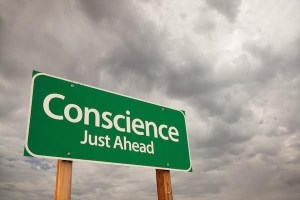 It is a common refrain: the “Vatican” and “bishops” are out of touch with the people of the United States. It rises to the surface whenever the bishops, in their role as teachers of the faith, offer moral guidance – and every four years in our presidential election cycle. Such proclamations often include some veiled reference to Catholics being required to have slavish adherence to every pronouncement. Actually the Church’s position is quite surprising to the “experts” and Catholic alike. I believe the Church’s position on the formation of a moral conscience is one of the better kept secrets of Catholic life.
  In writing these columns over the last several years, it seems to me that several themes are recurring, namely: belonging and gratitude. I think we assume people who are faithful then display a sense of belonging and gratefulness, but it is actually a bit the other way around. People who find an abiding sense of belonging to a worshipping community become people of faith. Similarly, people who intentionally practice gratitude, become more faithful.
  I am often given to repeating St. Bonaventure’s wise council: humility is the guardian and gateway to all the other virtues…and the first evidence of it is gratitude. We can all have moments in which we are profoundly grateful, but are we grateful people? The first is a description of a moment in time, deeply remembered; the second is an intrinsic condition of who you are as a person. It is at the root of your being, it is the lens through which you see the world, and it is the mode by which you engage the world. Even as I write that last sentence, I am thinking, “Gosh, I want to be that person!”
  friarmusings