
 I have been thinking about moments of my first weeks in Kanya. In many ways it was an ongoing torrent of new and different. Some of the moments were “what was that?” Some were well outside my experience and were simply part of learning to enjoy another culture. Part learning that you and Toto are not in Kansas anymore.
Many people ask about the food. In most of the country, the national meal was ugali na sukumawiki. Ugali is a maize/corn meal boiled in water until it has dough like consistency. The traditional method of eating ugali is to gather a lump with your right hand (always the right hand; the left hand has other traditional uses). You roll/squeeze the lump into a ball and use the thumb to make an indent to serve as a spoon/scoop. Then you are ready to dip/scoop from a sauce or stew (Sundays) and a plate of sukumawiki.
 Last week I read that Oxford University’s Jenner Institute had completed Phase II trials for a malaria vaccine that demonstrated a 77% efficacy. Malaria affects 500 million people on the globe; annual deaths due to malaria are as high as 1 million per year. Most are among young children. Previous attempts to develop a vaccine have been hindered by the complexity of the malaria parasite—any of several species in the genus Plasmodium—which invades host cells and whose genome contains thousands of genes.
 Like all experiences, mission has its own stages and cycles, its liminal moments when we are truly betwixt and between worlds, between what we think and how we see the world. Perhaps there are no more potent moments of being “between” than in the beginning of mission, the first moments away from all you knew (or thought you knew), people you cared for and held dear, and all that gave sure anchor to the way in which you engaged the world.

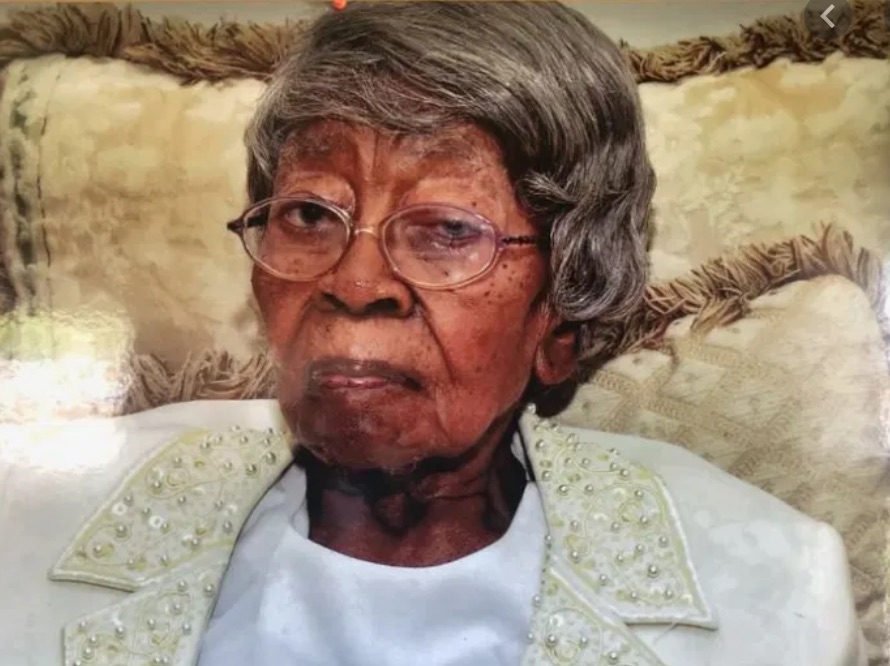 The name “Hester Ford” probably does not ring a bell. She died mid-April (2021) in Charlotte, NC. Theodore Roosevelt was President of the United States when she was born in 1906 (might have been 1905; the records are unclear). The covid-19 pandemic was not her first. She lived through the 1918 influenza pandemic. She lived through two world wars, saw aviation go from marvel to the everyday, witnessed the age of radio then television and then the internet. She witnessed lynchings and Jim Crow. As a black women she knew prejudice and intolerance, but saw the Civil Rights movement begin to make some inroads. She lived long enough to see 21 Presidents – she marveled and was joyous when a Black man was elected President of the United States – something she never expected.
 Clayton Schenkelberg
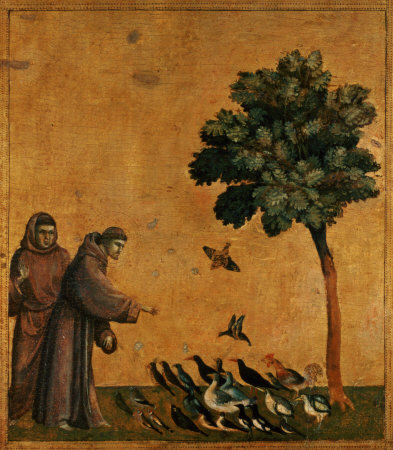 People are surprised to learn that the Early Rule of the friars instructed the brothers not to own pets – as well they were not to ride horses. These rules are only partly about poverty; they encouraged friars not to treat animals as objects or possessions. And, in the case of horseback riding, his rule distanced the friars from the proud world of chivalry. Later in his life when sickness compelled him to ride, Francis always preferred a donkey.
 Sometimes, another just says it succinctly and to the point. Bishop Robert Barron does that so well commenting on
  friarmusings