
 13 Someone in the crowd said to him, “Teacher, tell my brother to share the inheritance with me.”14 He replied to him, “Friend, who appointed me as your judge and arbitrator?”15 Then he said to the crowd, “Take care to guard against all greed, for though one may be rich, one’s life does not consist of possessions.”16 Then he told them a parable. “There was a rich man whose land produced a bountiful harvest.17 He asked himself, ‘What shall I do, for I do not have space to store my harvest?’18 And he said, ‘This is what I shall do: I shall tear down my barns and build larger ones. There I shall store all my grain and other goods19 and I shall say to myself, “Now as for you, you have so many good things stored up for many years, rest, eat, drink, be merry!”20 But God said to him, ‘You fool, this night your life will be demanded of you; and the things you have prepared, to whom will they belong?’21 Thus will it be for the one who stores up treasure for himself but is not rich in what matters to God.” (Luke 12:13-21) Continue reading
Storing Treasures
1
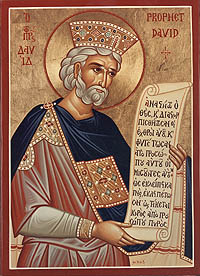 Often when we think of the “Kingdom of Israel” we connect that title with King David who ruled the “12 tribes of Israel” (named after the 12 sons of Jacob – also called Israel) from the throne set in Jerusalem. The kingdom was comprised of an area that presently approximates modern Israel and the other Levantine territories including much of western Jordan, and western Syria. We know that David was followed by his son King Solomon. The kingdom lasted about 100 years. Based on what happened next, most scholars refer to the “Kingdom of Israel and Judah” as the entity over which David and Solomon ruled.
  Back in the day when I was working in the world and spending way too much time on airplanes accumulating way too many frequent-flyer miles, it seemed to me business travelers did three things on longer flights: sleep, work, or read Stephen’ Covey’s “The 7 Habits of Highly Effective People.” The book argues that one should align universal and timeless principles with one’s values. Covey sees principles as external natural laws, while values remain internal and subjective. Covey asserts that values govern people’s behavior, but principles ultimately determine the consequences. If sales volume is measure of the usefulness of this self-help book, then 25+ million copies sold says something. Maybe there are some possibilities for a parallel book about the best practices and habits for Catholics. Might be a Lenten best seller!
  What a difference a day makes. Yesterday (March 18) I woke up with a full day of ministry awaiting. Lots of people calling, emailing – all asking “Are we going to shutdown? Will the Bishop suspend Masses. What’s going to happen now?” Today I awake wondering what I will do with all the time on my hands. Not that there aren’t a lot of things to do, but the rhythm of the day is changed. Changed dramatically. What a difference a day makes.
 At 4:30 pm this evening, of the 177 archdiocese/diocese in the United States, all but 21 had already suspended public masses. I serve in the Diocese of St. Petersburg which is one of the 21. I suspect that tomorrow will be my last public Mass for sometime. That is sad in many respects. I am always called to remember
  In today
  Next Sunday is the
  The Gospel of John is a wonderful text at every level of reading and understanding. It is poetic, it has amazing narratives such as the Samaritan Woman at the Well (
 friarmusings