
 Several years ago, I wrote a series of pastor columns on aspects of what it means to belong to a parish. If you would like to read the whole series, it can be found here: friarmusings.com/belonging
Where to begin? At the beginning is always a good place – and for Catholics the beginning is Baptism. Each time we enter church it is our tradition to mark ourselves with the Sign of the Cross using water from the holy water fonts. It is a moment to recall the words the priest proclaimed at your Baptism: “I claim you for Christ.” From that moment you belong to Christ and are a member of His people. You belong, not in some abstract way, but in a time and place and with a community of people. Continue reading
 Part of our task as faithful Christians and citizens of the world is to engage the deep and probing questions that the great thinkers, wisdom figures, and commentators raise. Perhaps no question is more penetrating, more challenging, and more important than that offered by the amateur philosopher, Tina Turner: “What’s love got to do, got to do with it? What’s love but a second-hand emotion?” It is the question for the ages.

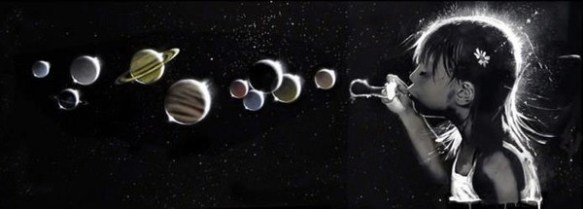 The great thing about being a child is that you can grow up to be a fire truck (my ambition at one point in life), not be concerned with gravity and the laws of physics, and your world in not limited by “that is not just the way things work.” It is a world of imagination and wonder that sometimes befuddles babysitters, teachers, and parents. It consumes lazy summer afternoons, creates space adventures, and can conjure up a most challenging collection of wisdom and insight. Nothing captures it better than my favorite comic strip of all time, “Calvin and Hobbes.” Calvin is a preternaturally bright six-year-old; Hobbes is his stuffed toy who, in Calvin’s imagination becomes into his best friend, the innocently wise Hobbes. To read Calvin and Hobbes is to be infused into wondering and wandering on a cosmic scale; to engage the innate human capacity to be surprised, to imagine, and be absorbed into mystery. No topic in the universe is closed to such capacity – not even the theological arts. Calvin mused how predestination is molded by procrastination, finally concluding, “God put me on this earth to accomplish a certain number of things. Right now, I am so far behind that I will never die.”
  I would wager that most people would guess that in Francis’ own writings he spoke at length about poverty, his love of nature and animals, and other topics for which Francis is so well known in the modern world. Yet, in his own writings, there is perhaps no other topic that he addresses more than the Eucharist. In his Eucharistic writings, Francis expresses a deep view of the continuing Incarnation of Christ in the world, and in that vision is an entire way of life. These writings represent part of the movement of Francis’ mystical life from prayer and devotion in solitude before the cross, to a pattern of communal prayer and devotion in the Mass as well as a devotion to the Eucharist apart from Mass.
  friarmusings