
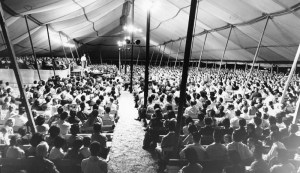
 Jesus began to reproach the towns where most of his mighty deeds had been done, since they had not repented. “Woe to you, Chorazin! Woe to you, Bethsaida!” (Mt 11:20)
The opposition to Jesus’ ministry is beginning to grow. People are pushing back, asking for more signs, accusing Jesus of being in league with Satan, holding back refusing to believe, and all manner of other things. The division Jesus spoke about in yesterday’s gospel are becoming clear and present. In the midst of these encounters comes the ominous words: woe to you. Continue reading

 In the chapters and verses leading up to today’s Gospel, opposition is growing, pushing back against Jesus and his ministry. Some do not like that he has cured people on the Sabbath or that Jesus emphasizes mercy and compassion over rules and regulations. Things get pretty rancorous; some go as far as to accuse Jesus of being in league with Satan. Other just keep asking for another miracle, another sign. And yet others believe. Through all of this, Jesus keeps sowing the seeds of faith.
 In the 2004 movie, The Incredibles – and if you haven’t seen it… well, just stop reading this, go find a copy, and watch a great movie. Anyway, where was I…. there is a scene in the movie when Dash Parr, the super-powered speedster son of Bob Parr (Mr. Incredible) and his wife Helen (Elastigirl), has just been told to hide his incredible speed and let the other kids have a chance at winning so that he can fit in and be normal. When Dash resists the suggestion noting that his speed makes him special, this dialogue ensues:
 I have to admit that I never wondered about the depiction of saints and their halos. It was just the way things were. True, but it is not the way things always were. Ever wonder why halos? Philip Kosloski over at
 The Purpose of the Parables. Verses 10-17 are formally an interlude between the first parable and its explanation, but they are essential to the understanding of the chapter as a whole, as they set out the division between the enlightened disciples and the unresponsive crowd which is the focus both of the structure of the chapter and of much of its contents.
 Fatima: How July 13, 1917 “changed” the Church
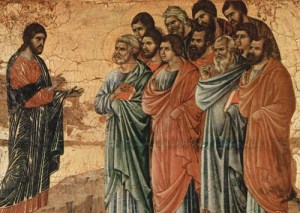 Unlike Mark (Mark 3:13–14) and Luke (Luke 6:12–16), Matthew has no story of Jesus’ appointing the Twelve, he assumes that the formation of the group is already known to the reader. “Jesus summoned his Twelve disciples and gave them authority over unclean spirits to drive them out and to cure every disease and every illness. The names of the Twelve Apostles are these: first, Simon called Peter, and his brother Andrew; James, the son of Zebedee, and his brother John; Philip and Bartholomew, Thomas and Matthew the tax collector; James, the son of Alphaeus, and Thaddeus; Simon the Cananean, and Judas Iscariot who betrayed Jesus.” (Mt 10:1-4)

