 Luke 23:35-43. 33 When they came to the place called the Skull, they crucified him and the criminals there, one on his right, the other on his left. 34 (Then Jesus said, “Father, forgive them, they know not what they do.”) They divided his garments by casting lots. [The above is not part of the Sunday reading, but is generally considered within the narrative.] 35 The people stood by and watched; the rulers, meanwhile, sneered at him and said, “He saved others, let him save himself if he is the chosen one, the Messiah of God.” 36 Even the soldiers jeered at him. As they approached to offer him wine 37 they called out, “If you are King of the Jews, save yourself.” 38 Above him there was an inscription that read, “This is the King of the Jews.” 39 Now one of the criminals hanging there reviled Jesus, saying, “Are you not the Messiah? Save yourself and us.” 40 The other, however, rebuking him, said in reply, “Have you no fear of God, for you are subject to the same condemnation? 41 And indeed, we have been condemned justly, for the sentence we received corresponds to our crimes, but this man has done nothing criminal.” 42 Then he said, “Jesus, remember me when you come into your kingdom.” 43 He replied to him, “Amen, I say to you, today you will be with me in Paradise.”
Those Who Mocked. The people stood by and watched; the rulers, meanwhile, sneered at him and said, “He saved others, let him save himself if he is the chosen one, the Messiah of God.” Luke pictures the majority of the people (laos) don’t mock Jesus (contrary to Mark’s description); they are simply watching. Executions were popular functions and doubtless many attended this one. But it was the rulers, not the people, who mocked (cf. Ps. 22:6–8). The leaders sneer (v. 35; lit. “look down their noses” or “thumbed their noses”) and the soldiers mock (v. 36) and one criminal blasphemes (v. 39). They all say the same thing: “Save yourself” – essentially the same temptations of the devil in Luke 4 – avoid the pain and suffering of the cross. Culpepper notes that “The irony here is that Luke underscores both Jesus’ real identity and the true meaning of his death. Jesus was hailed as the Savior at his birth (2:11); as the Son of Man, he had come to seek and save the lost (19:10). But just as he had taught that those who lost their lives for his sake would save them (9:24), so now he must lost his life so that they might be saved. Continue reading →

 37 For as it was in the days of Noah, so it will be at the coming of the Son of Man. 38 In (those) days before the flood, they were eating and drinking, marrying and giving in marriage, up to the day that Noah entered the ark. 39 They did not know until the flood came and carried them all away. So will it be (also) at the coming of the Son of Man. 40 Two men will be out in the field; one will be taken, and one will be left. 41 Two women will be grinding at the mill; one will be taken, and one will be left. 42 Therefore, stay awake! For you do not know on which day your Lord will come. 43 Be sure of this: if the master of the house had known the hour of night when the thief was coming, he would have stayed awake and not let his house be broken into. 44 So too, you also must be prepared, for at an hour you do not expect, the Son of Man will come. Continue reading
 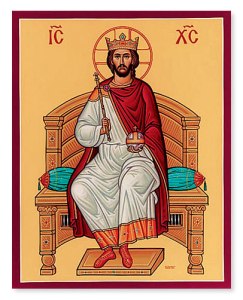 Kings are an interesting concept. When someone tries to impose their will upon us, one of our tried-and-true responses is, “Who died and made you king?” Maybe our American spirit has a bias against unbridled power in the hands of the one. Yet there is something within in us that wants a king when we want a king – you know – the times we feel uncertain, times are turbulent, and we are just a tad frightened.


 Well… the elections are done. Half the country celebrates, while half the country mourns. The Democrats will do a post mortem, regroup and get ready for 2020. The Republicans have the tiger by the tail…and now have to figure out what to do with it… as governance of a divided nation tasks them. Both sides can rightly say, “it ain’t over.”
  I think all of us have had the experience of walking into a store just after Labor Day and seeing the displays of merchandise for Halloween. And you say to yourself, “Really?” Needless to say, the Thanksgiving and Christmas displays and advertisements already are up. I saw a television ad the other night that wanted me to know that I could have white or orange Christmas tree lights, multicolored ones, and all the above with an optional remote control. “Really!?!” I guess I should get with it. Maybe it is good to do our own advertising for Advent!
 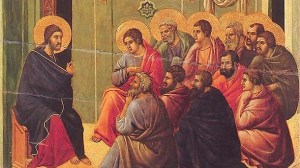 Time and The Divine Plan – A Theology of History. “Teacher, when will this happen? And what sign will there be when all these things are about to happen?” The broad scope of the question in v.7 is significant, since a judgment of Jerusalem that wipes out the temple suggests a time of great catastrophe and a turning point in the nation’s history and identity. Such an event can only signal that God’s plan for the nation is underway. Though Luke’s form of this question is more focused on the temple than the questions in Matthew 24:3 and Mark 13:4, its implications clearly cover the same span.
  friarmusings