Serving: lessons

dishonest-steward13 No servant can serve two masters. He will either hate one and love the other, or be devoted to one and despise the other. You cannot serve God and mammon.”

The teaching portion of uses parallel opposites – trustworthy/dishonest, dishonest wealth/true wealth, small/great, what belongs to another/what belongs to you. Verse 13 forms a conclusion to the parable formed by an: Continue reading →

Juggernaut

steam_locomotiveI have always like words and the origin of words – just fascinating stuff.  Today’s “Word of the Day” from Merriam-Webster is a blend of etymology and things Franciscan. Juggernaut is a massive inexorable force, campaign, movement, or object that crushes whatever is in its path.  So, why is that the definition? That’s where the Franciscan aspect comes in. Continue reading →

Serving: commendable?

’dishonest-steward8 And the master commended that dishonest steward for acting prudently.  “For the children of this world are more prudent in dealing with their own generation than are the children of light. 9 I tell you, make friends for yourselves with dishonest wealth, so that when it fails, you will be welcomed into eternal dwellings. 10 The person who is trustworthy in very small matters is also trustworthy in great ones; and the person who is dishonest in very small matters is also dishonest in great ones. 11 If, therefore, you are not trustworthy with dishonest wealth, who will trust you with true wealth? 12 If you are not trustworthy with what belongs to another, who will give you what is yours?

What is exactly is commendable? Brian Stoffregen has surveyed the scholarly works and offers several models of interpretation for this notoriously difficult parable: Continue reading →

Serving: shrewdness

dishonest-steward1 Then he also said to his disciples, “A rich man had a steward who was reported to him for squandering his property. 2 He summoned him and said, ‘What is this I hear about you? Prepare a full account of your stewardship, because you can no longer be my steward.’ 3 The steward said to himself, ‘What shall I do, now that my master is taking the position of steward away from me? I am not strong enough to dig and I am ashamed to beg. 4 I know what I shall do so that, when I am removed from the stewardship, they may welcome me into their homes.’ 5 He called in his master’s debtors one by one. To the first he said, ‘How much do you owe my master?’ 6 He replied, ‘One hundred measures of olive oil.’ He said to him, ‘Here is your promissory note. Sit down and quickly write one for fifty.’ 7 Then to another he said, ‘And you, how much do you owe?’ He replied, ‘One hundred kors of wheat.’ He said to him, ‘Here is your promissory note; write one for eighty.’ 8 And the master commended that dishonest steward for acting prudently.   Continue reading →

Serving: context

dishonest-steward1 Then he also said to his disciples, “A rich man had a steward who was reported to him for squandering his property. 2 He summoned him and said, ‘What is this I hear about you? Prepare a full account of your stewardship, because you can no longer be my steward.’ 3 The steward said to himself, ‘What shall I do, now that my master is taking the position of steward away from me? I am not strong enough to dig and I am ashamed to beg. 4 I know what I shall do so that, when I am removed from the stewardship, they may welcome me into their homes.’  5 He called in his master’s debtors one by one. To the first he said, ‘How much do you owe my master?’ 6 He replied, ‘One hundred measures of olive oil.’ He said to him, ‘Here is your promissory note. Sit down and quickly write one for fifty.’ 7 Then to another he said, ‘And you, how much do you owe?’ He replied, ‘One hundred kors of wheat.’ He said to him, ‘Here is your promissory note; write one for eighty.’ 8 And the master commended that dishonest steward for acting prudently.   Continue reading →

What we’ve lost

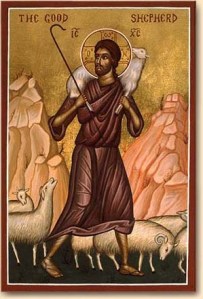
I AM the Good Shepherd3The parable of the Lost Sheep is the gospel message on the 15th anniversary of 9-11, a terrible day of death and destruction. A day on which no one thinks about winners and losers. A day in which we mourn and honor our dead. A day we Franciscans remember our brother Fr. Mychal Judge, OFM – a NYC fire chaplain who lost his life in the line of duty when the first tower fell. Mychal went out searching for the lost, to bring them home to the safety of the flock. Fr. Mychal Judge, truly a good shepherd. Truly a hero – not because he died on 9-11, but because his arms were always open, his eyes ever seeking to be Christ for others. Obedient unto death. Continue reading →
Telling our stories

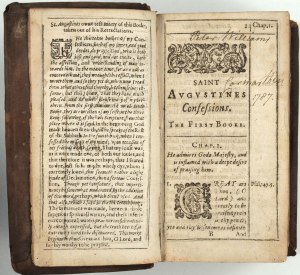
TheConfessionsSt. Augustine of Hippo begins his great work The Confessions with a question: “How shall I call upon my God and my Lord, when by the very act of calling upon him I would be calling himself into myself? Is there any place within me into which my God might come? How can God who made the heaven and earth come into me? Is there any room in me for you, Lord, my God?” (I:2)

As Augustine continues to write you can sense his feeling of frustration or bafflement grow until he asks the ultimate question to God that we all should ask of ourselves: “What are you to me?” Then wonderfully Augustine continues, “Have mercy on me, so that I may tell you.” (I:5) Augustine then proceeds with the rest of The Confessions in which he finds God in the telling of his own story – not in the universe or theological books – but in his own story. Continue reading →

The Lost: reflection

Lost_Luke15Final Thoughts (from Culpepper, 304-5)

It is no hyperbole to say that this parable is a gem; all of its facets deserve to be considered. It is no simple simile with a single point but a compressed slice of life with complexity and texture. In the following paragraphs, we will take note of various of the parable’s facets, but in preaching the interpreter should probably avoid such a “shotgun” approach and develop only one or two themes for emphasis. Let the parable be one of those beloved texts that always repays a return visit. Continue reading →

The Lost: returning

Prodigal_Sons_web17 Coming to his senses he thought, ‘How many of my father’s hired workers have more than enough food to eat, but here am I, dying from hunger.  18 I shall get up and go to my father and I shall say to him, “Father, I have sinned against heaven and against you.  19 I no longer deserve to be called your son; treat me as you would treat one of your hired workers.”  20 So he got up and went back to his father. While he was still a long way off, his father caught sight of him, and was filled with compassion. He ran to his son, embraced him and kissed him.  21 His son said to him, ‘Father, I have sinned against heaven and against you; I no longer deserve to be called your son.’  22 But his father ordered his servants, ‘Quickly bring the finest robe and put it on him; put a ring on his finger and sandals on his feet.  23 Take the fattened calf and slaughter it. Then let us celebrate with a feast, 24 because this son of mine was dead, and has come to life again; he was lost, and has been found.’ Then the celebration began.  Continue reading →

The Lost: going away

Prodigal_Sons_web11 Then he said, “A man had two sons, 12 and the younger son said to his father, ‘Father, give me the share of your estate that should come to me.’ So the father divided the property between them.  13 After a few days, the younger son collected all his belongings and set off to a distant country where he squandered his inheritance on a life of dissipation.  14 When he had freely spent everything, a severe famine struck that country, and he found himself in dire need.  15 So he hired himself out to one of the local citizens who sent him to his farm to tend the swine.  16 And he longed to eat his fill of the pods on which the swine fed, but nobody gave him any.  17 Coming to his senses he thought, ‘How many of my father’s hired workers have more than enough food to eat, but here am I, dying from hunger.  18 I shall get up and go to my father and I shall say to him, “Father, I have sinned against heaven and against you.  19 I no longer deserve to be called your son; treat me as you would treat one of your hired workers Continue reading →