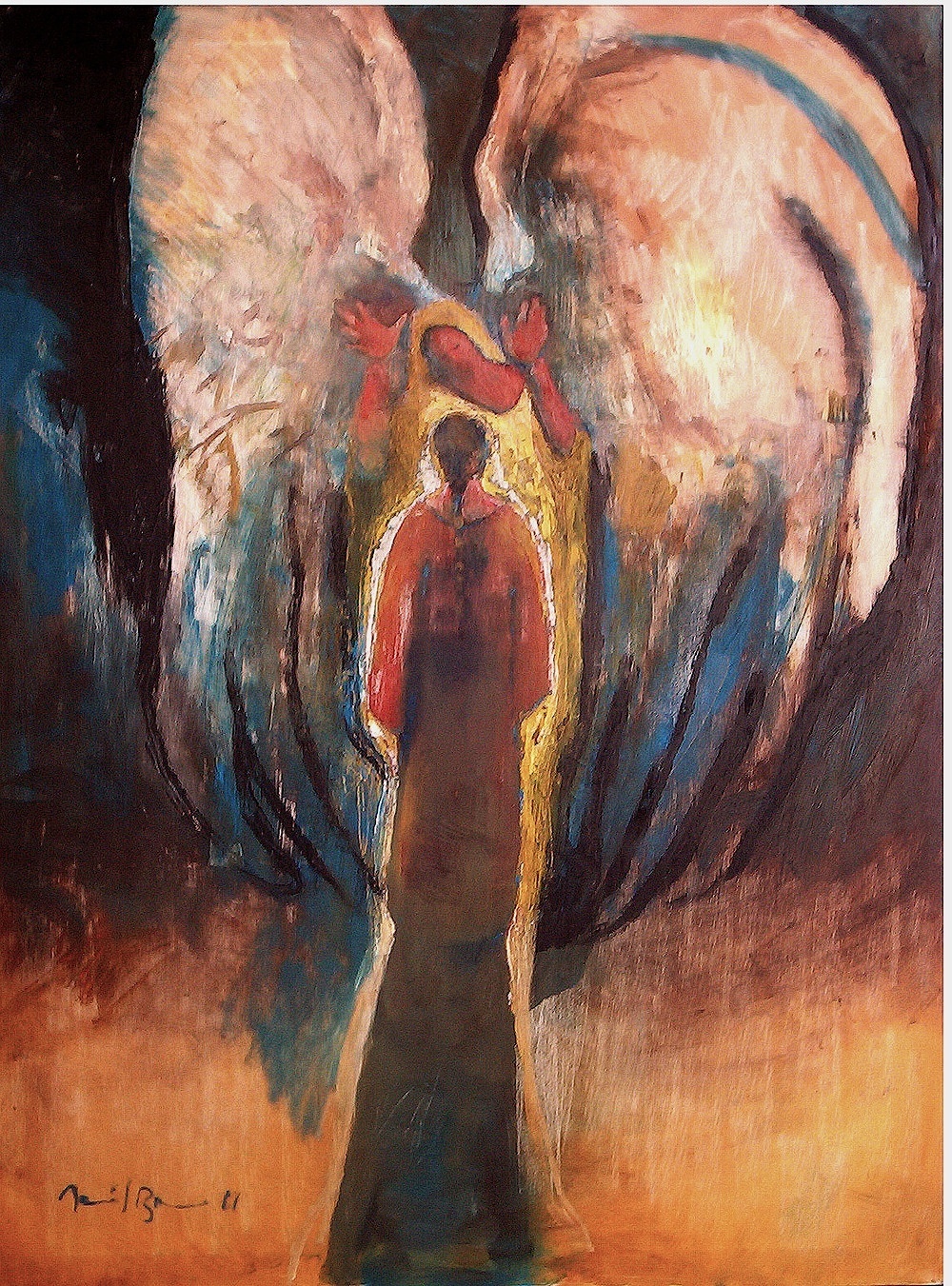
Healing many: leaving

Jesus_healing_Peter_inlaw35 Rising very early before dawn, he left and went off to a deserted place, where he prayed. 36 Simon and those who were with him pursued him 37 and on finding him said, “Everyone is looking for you.” 38 He told them, “Let us go on to the nearby villages that I may preach there also. For this purpose have I come.” 39 So he went into their synagogues, preaching and driving out demons throughout the whole of Galilee. Continue reading →

Healing many: questions

Jesus_healing_Peter_inlawIt is very easy to simply note that Jesus cured Peter’s mother-in-law, be swept along in Mark’s breathless pace, and wonder if there is more to the story. Ched Myers (Binding the Strong Man: A Political reading of Mark’s Story of Jesus, 141) raises this question at the beginning of his comments on Mark 1:21-39:

These “miracle” stories raise important issues of interpretation. Is Jesus simply “curing” the physically sick and the mentally disturbed? If so, why would such a ministry of compassion raise the ire of the local authorities? Continue reading →

Healing many: context

Jesus_healing_Peter_inlaw29 On leaving the synagogue he entered the house of Simon and Andrew with James and John. 30 Simon’s mother-in-law lay sick with a fever. They immediately told him about her. 31 He approached, grasped her hand, and helped her up. Then the fever left her and she waited on them. 32 When it was evening, after sunset, they brought to him all who were ill or possessed by demons. 33 The whole town was gathered at the door. 34 He cured many who were sick with various diseases, and he drove out many demons, not permitting them to speak because they knew him. 35 Rising very early before dawn, he left and went off to a deserted place, where he prayed. 36 Simon and those who were with him pursued him 37 and on finding him said, “Everyone is looking for you.” 38 He told them, “Let us go on to the nearby villages that I may preach there also. For this purpose have I come.” 39 So he went into their synagogues, preaching and driving out demons throughout the whole of Galilee.

The narrative move quite quickly in the Gospel according to Mark. The narrative’s pace and immediacy is one of the most notable attributes of the writing. Lest one think that Mark is simply concatenating stories without a larger vision in mind, it is always good to “step back” and see the larger framework in which the Gospel account exists. Continue reading →

What have you to do with us?

Gasparilla_Flagship_Invading_TampaI got to enjoy a homiletic holiday today; that task of preaching fell to others. Still… the inclination to muse about “what would I have said” lingers.  And things always muse in context. Here in Tampa this weekend the Superbowl takes a back sit to the Gasparilla Pirate Fest. It is a whole week of things “pirate” as the city is invaded by a scurvy, crusty band of brigands if there ever was one. Now you know the local context. Continue reading →

The answer we wait for…

TheAnnunciationAt our local house we friars meet on Tuesday morning to read and share about the upcoming Sunday’s reading. It is our communal “musing” if you will. Sometimes another friar will have a great insight that inspires your own ultimate direction; sometimes it is an image that you take in a completely different direction. Sometimes there is “preacher’s block” and sometimes the ideas are full, free, and flowing. Continue reading →

Building belonging

Belonging_crHow do we build a sense of belonging? Today’s column is the fourth of a six-part series about belonging and engagement as individuals and as a parish. Here is where we are in the discussion: although many people would suggest a range of characteristics as being the most critical to have an engaged parish that is “good soil” in the lives of the faithful who call this their spiritual home – many studies have shown that “belonging” is the critical characteristic. There were nine statements that best described people who are spiritually committed and have a sense of belonging to their parish:

  • My faith is involved in every aspect of my life.
  • Because of my faith, I have meaning and purpose in my life.
  • My faith gives me an inner peace.
  • l am a person who is spiritually committed.
  • I spend time in worship or prayer every day.
  • Because of my faith, I have forgiven people who have hurt me deeply.
  • My faith has called me to develop my given strengths.
  • I will take unpopular stands to defend my faith.
  • I speak words of kindness to those in need of encouragement.

Studies show that 18% of people with a faith/church affiliation are spiritually committed. But in parishes in which there is a strong sense of belonging, almost 39% of individuals are spiritually committed! But what about people not in parishes? Can’t they be spiritually committed? Is belonging really critical? That’s a fair question.

We live in an age when we are more likely to hear: “I’m spiritual, but not religious…” meaning they do not belong or affiliate with any organized church. Commentators tell us that this is the “fastest growing segment” in “post-Christian America.” The conclusion is that churches just weren’t “spiritual enough” and should not be surprised at their declining attendance. Yet, there is a huge industry of books, videos, seminary, programs, and the like all focused on deepening individuals’ spiritual lives. It is hard to imagine a time when there has been more emphasis on individual spiritual growth and commitment than is true today. Yet we increasingly hear, “I’m spiritual, but not religious…” Yet….the same studies note that only 5% of people with no faith/church affiliation are spiritually committed.

But if the nine characteristics above are indeed the measure, then only 5% of people without a sense of belonging to a family of faith can truly say “I’m spiritual, but…” and point to the intrinsic effect it has in their lives. Again, it points to the importance of belonging to a community of faith.

Belonging is when people speak of their communities as “family.” Those churches/communities are places where an individual knows he or she is valued – and not just by parish leadership. Places where a person’s gifts are recognized and nurtured to enable the person to make a meaningful contribution and be part of something greater than themselves. Places where their sense of belonging creates the environment that draws people to want to belong. Places where spiritually committed persons come together to make an engaged parish. How do we build a sense of belonging as a family?

I don’t have an answer for that as of yet, but I do know that there are four outcomes that are the most relevant indicators of a parish’s spiritual commitment/engagement: its parishioners express a fuller satisfaction in life, invite others to join them in worship, give generously of their time serving inside and outside the parish, and make giving to their community of faith a priority. One looks at those outcomes, and it can be said, “That is a good soil church. People who plant themselves there take root and blossom.”

How do we build a sense of belonging as a parish? We need to prepare the soil.

Previous post in the series:

1: Musings about belonging

2: What are you looking for?

3: Do you belong? Are you spiritually committed?

The Ringing of Bells

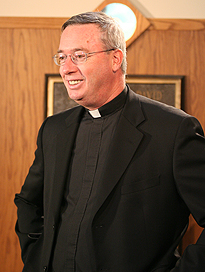
BishopCoyneThe Most Reverend Christopher Coyne was installed as the 10th Bishop of Burlington, Vermont on Thursday.  Here is his homily:
There is an inscription that was found on a bell that hung in the tower of a church in Northern Wisconsin that read:

“To the bath and the table,
To the prayers and the Word,
I call every seeking soul.” Continue reading →

Authority: response

Jesus-in-Capernaum-SynagogueDemonic Knowledge. That the demonic powers possess a certain knowledge of Jesus’ identity is clear from the cry of recognition, “I know who you are, the Holy One of God.” This formula of recognition, however, does not stand alone. It is part of a larger complex of material exhibiting a striking difference between the forms of address employed by the demoniacs and the titles used by ordinary sick individuals. The latter group appeal to Jesus as “Lord” (7:8), “Teacher” (9:17), “Son of David” (10:47–48) or “Master” (10:51). The demoniacs, however, address Jesus as “the Holy One of God” (1:24), “the Son of God” (3:11) or “the Son of the Most High God” (5:7), formulations which identify Jesus as the divine Son of God. The contrast in address is an important characteristic distinguishing ordinary sickness from demonic possession, and reflects the superior knowledge of the demons. Some scholars make the distinction that the recognition-formula is not a confession, but a defensive attempt to gain control of Jesus in accordance with the common concept of that day, that the use of the precise name of an individual or spirit would secure mastery over him. Continue reading →