
1 In the fifteenth year of the reign of Tiberius Caesar, when Pontius Pilate was governor of Judea, and Herod was tetrarch of Galilee, and his brother Philip tetrarch of the region of Ituraea and Trachonitis, and Lysanias was tetrarch of Abilene, 2 during the high priesthood of Annas and Caiaphas, the word of God came to John the son of Zechariah in the desert.
The chronological data of these verses reflects the conventions of Greco-Roman historiography as well as a pattern found in some Jewish prophetic books (Jer 1:1-3; Ezek 1:1-3; Hos 1:1; Isa 1:1). Luke seeks to place his “orderly account” (Lk 1:1) within the context of “world” history. In addition, this writing, addressed to “Most Excellent Theophilus” (Lk 1:3), places the events within the context of the rulers and times (and some historiographic forms) that Theophilus would know. It is likely that he was some type of Roman official. Continue reading
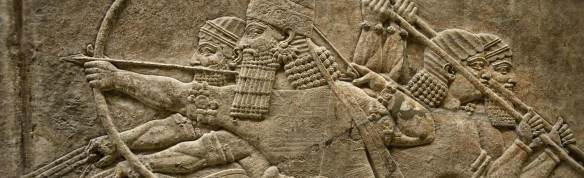
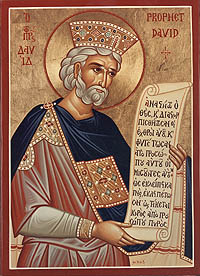 “The kingdom of heaven may be likened to a king…” Kings? Abraham, Isaac, Jacob, Moses, Joshua – some of the great names of Israel’s history. And none of them were king. Yet under the leadership of God, they led Israel from slavery to the freedom of the promised land. Deborah, Gideon, Samson – none of them were kings, yet under the leadership of God, these Judges united Israel to defend itself and its identity against the other nations. To be the qahal Yahweh – the people of God. And the last of the judges was Samuel. It was to Samuel (1 Sam 7) that the people came and said “Now that you are old, and your sons do not follow your example, appoint a king over us, as other nations have, to judge us.” When Samuel prayed about this before the Lord, God said in answer: “Grant the people’s every request. It is not you they reject, they are rejecting me as their king.” And God warned the people of the rights of those other kings:
  This week has been a week in which the first readings are from the
  The readings from daily Mass this week past should have been labeled “King and Prophet week.” Every day the first readings was a narrative about one of the Kings of Israel or Judah, a summary of their reign, and the proclamation of the prophets which came before them with the living Word of God. Prophets like Amos, Isaiah, and Jeremiah; as well as prophets whose names are unfamiliar to us; and prophets whose names were not recorded in Sacred Scripture. Kings that might not be familiar to you, but are a cast of the Good, the Bad, and the Ugly. Two of the best were part of the narrative: Hezekiah and Josiah – kings held in almost the same esteem as King David – godly men who understood their role as leader – to lead the people of God more deeply into the covenant life and promises of God. Two of the worst were recounted: Hoshea the last of the northern kings and Zedekiah, the last of the Kings of Judah. They ruled with iniquity as had most of their predecessors. When they disappeared into exile, the time of Kings passed and all of Israel and Judah followed int exile, the promised land lost.
 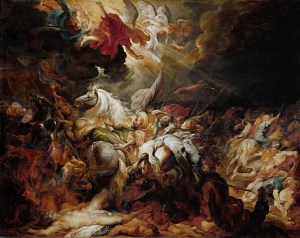 The image is of a painting by Peter Paul Rubens (17th c.), “The Defeat of Sennacherib.” King Sennacherib was the King of Assyria who attempted to conquer Judah and capture Jerusalem in the 7th century BCE. You can read a summary of the encounter with King Hezekiah of Judah in the
  friarmusings