
It seems to me that over the last year in homilies, bible studies and our OCIA classes for the folks entering the Catholic Church on Saturday evening at the Easter Vigil – that I have returned to a consistent theme: the efforts and the extent to which God strives to be present to us. One overarching theme of the Old Testament is a story of God drawing near and the people, hesitant to draw close and even eventually stepping back, keeping God at a distance. “Return to God” – a constant cry of Moses, Joshua, the Judges and Prophets of Israel – the signs of God’s care and compassion are everywhere. God wants to be close to us.
Holy Thursday’s first reading is taken from the story of Exodus. In that book the signs of God’s presence are everywhere: in the miracles done attempting to persuade Pharaoh, the great sign of the Passover, the parting of the Red Sea, leading the people through the wilderness as a pillar of fire by night and a cloud during the day. While encamped at Sinai after the “Golden Calf” incident, God instructed Moses to build the Tent of Meeting – literally a place where God could meet the people. The Tent was with them during the 40 years in the wilderness, and came with them into the Promised Land. Did you know that later the Tent was replaced by the great Temple in Jerusalem. There is a description in First Chronicles of the dedication of this new “Tent of Meeting.” During the dedication the glory of God is seen filling the Temple – the presence of God among people. Throughout the Hebrew Scriptures, God continually showed his people signs pointing to his presence, revealing His desire to be close to them. I could go on and on, but I think you get the point. All the while the people hesitated to draw close; they eventually drift away despite all the signs, the warnings of the prophets, and so much more.
All the while the compassion of God remained: the desire to be close to us.
Continue reading Introduction to The Lucan Passion Narrative: The passion narratives provide the climax for each of the four gospels, catching up themes that weave their way through the evangelists’ entire portrayal of Jesus life and bringing them to a dramatic completion. In deft strokes the evangelists tell us of the final hours of Jesus’ life – his last meal with his disciples; his arrest in Gethsemane; his interrogation by the religious leaders; the trial before Pilate; and finally the heart clutching scenes of Jesus’ crucifixion, death and burial.
  The Promise. Jesus’ words of promise were confirmed with a solemn oath that he would not share the festal cup until the meal was resumed and completed in the consummation. The sober reference “no more” indicates that this is Jesus’ final meal and lends to the situation the character of a farewell. The purpose of his vow of abstinence was to declare that his decision to submit to the will of God in vicarious suffering was irrevocable. Forswearing feasting and wine, Jesus dedicated himself with a resolute will to accept the bitter cup of wrath offered to him by the Father. Yet there is here a clear anticipation of the messianic banquet when the Passover fellowship with his followers will be renewed in the Kingdom of God. Then Jesus will drink the wine “new,” where in this context newness is the mark of the redeemed world and the time of ultimate redemption. The reference to “that day” envisions the parousia and the triumph of the Son of Man (see above on Ch. 13:24–27, 32; cf. 1 Cor. 11:26). Thus, in the context of reflecting upon his violent death on behalf of the many, and just prior to the impending events of the passion, Jesus clearly affirmed his vindication and the establishment of an uninterrupted fellowship between the redeemed community and its Redeemer through the experience of messianic salvation.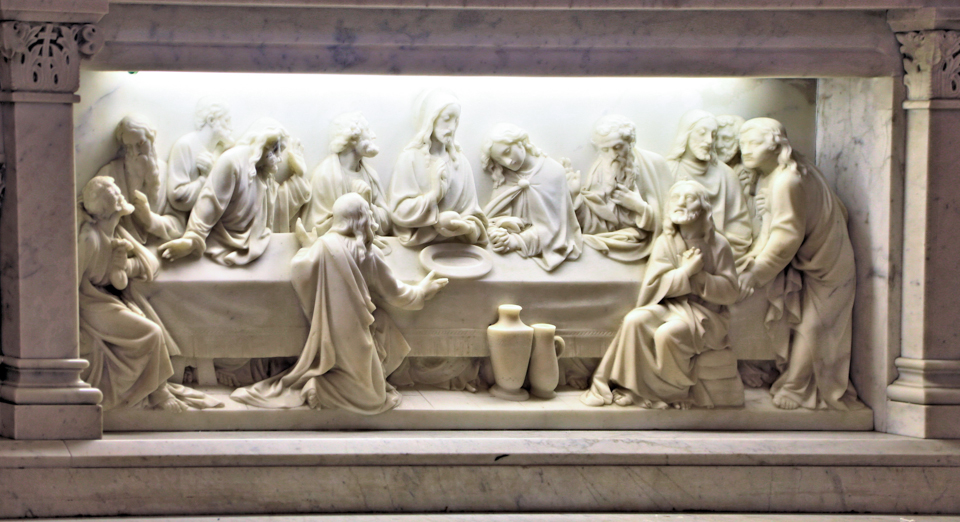
 Introduction to The Lucan Passion Narrative: The passion narratives provide the climax for each of the four gospels, catching up themes that weave their way through the evangelists’ entire portrayal of Jesus life and bringing them to a dramatic completion. In deft strokes the evangelists tell us of the final hours of Jesus’ life – his last meal with his disciples; his arrest in Gethsemane; his interrogation by the religious leaders; the trial before Pilate; and finally the heart clutching scenes of Jesus’ crucifixion, death and burial.
  friarmusings