
What kind of peace do you seek? Merriam-Webster defines “peace” as tranquility, quiet, freedom from disturbance, harmony and similar expressions. Today, let us take a look at what Jesus might mean when he says, “my peace I give to you.”
In today’s Gospel, Jesus speaks some of His most tender and reassuring words: “Peace I leave with you; my peace I give to you.” These words are not merely poetic or comforting—they are a divine promise, spoken on the eve of His Passion, when chaos was about to unfold.
Jesus knew His disciples would be shaken. He knew fear would grip them as He went to the cross. And yet, He says: “Do not let your hearts be troubled or afraid.” Why? Because the peace He offers is not the fragile, fleeting peace the world gives. The peace of Christ is rooted not in circumstances, but in His presence and victory over sin and death.
We might ask ourselves: What kind of peace do I seek? Is it merely the absence of conflict? The comfort of routine? Or is it the deep, abiding peace that comes from knowing I am loved and held by God—even in suffering?
Jesus’ peace is not a promise of a smooth life. It’s a promise of His presence in the midst of life’s storms. That’s why He could say with such confidence: “I am going away and I will come back to you.” He was preparing them not only for the cross, but for the resurrection, and the coming of the Holy Spirit.
Notice, too, His obedience: “The world must know that I love the Father and that I do just as the Father has commanded me.” Peace and obedience go hand in hand. When we surrender our will to the Father, even if it’s difficult, we receive a peace that cannot be taken away.
Today, let us invite Christ’s peace into our hearts. Not a peace that depends on everything going well, but the peace that flows from trusting in the One who has conquered the world.
May we, like Jesus, live in obedience to the Father’s will, and so be signs of His peace to a troubled world.
Amen.
Image credit: Christ’s Final Address to the Apostles | Bona Duccio di Buoninsegna, 1380 | from the Maesta Altar | Siena, Museo dell’Opera del Duomo | PD-US
 On Pentecost Sunday, the
  The prophet Isaiah looked forward to the arrival of the Prince of Peace. His reign would lead to eternal shalom, righting all wrongs and healing all brokenness. Isaiah’s words are fulfilled with the arrival of Jesus. When Jesus is born, shalom is proclaimed. He is the King who brings peace and restoration to the broken fragments of our world. Shalom, or peace, is not only the absence of conflict but the presence of connection and completion. What do we all need in order to experience shalom?
  Over the years I have often been asked about a passage in Matthew’s Gospel: “So be perfect,
 I am not normally given to posting op-ed pieces from online sources. But there was an op-ed piece that caught my attention, more specifically, this:
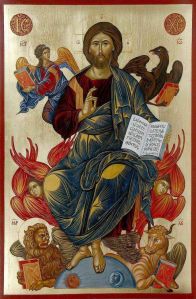 This coming Sunday marks our journey in Ordinary Time, the
 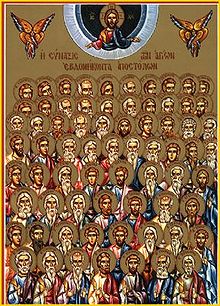 On the evening of that first day of the week, when the doors were locked, where the disciples were, for fear of the Jews, Jesus came and stood in their midst and said to them, “Peace be with you.” (John 20:19)
 friarmusings