
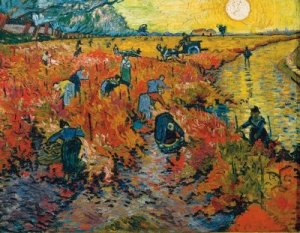
Vineyard workers: more context

Long (Matthew, Westminster Bible Companion) writes concerning the rich man story, which also applies to our text: “… we must realize that, when the young man encounters Jesus, two very different worlds collide: this world, with all its prevailing customs and values, and the radical new way of life called for in the kingdom of heaven.” [p. 220]

This radical life comes at a price. Peter understands that and so he asks, “what about us who have already given up everything,” Jesus points to the life within the kingdom and then concludes that the called-for reversal will also be evident in the order of blessing on entering the kingdom: “But many who are first will be last, and the last will be first.” (Mt 19:30) Continue reading →

Vineyard Workers: context

1 “The kingdom of heaven is like a landowner who went out at dawn to hire laborers for his vineyard.  2 After agreeing with them for the usual daily wage, he sent them into his vineyard….

In the Matthean narrative we are firmly ensconced in the midst of Jesus’ instructions, not of the crowds, but of the disciples, preparing them for not only his death and resurrection, but also for their mission to world. In other words Jesus is preparing them to be disciples – and preparing them to serve the new People of God being formed. Continue reading →

Given to a People

laborers-in-the-field-11thcentbyzantine As mentioned in a previous post, this expression ethnos might point to new people of God arising out of Jesus’ ministry and characterized by faith in him. We previously saw such a motif outlined in 8:11–12 and in the rabble of tax-collectors and prostitutes who “go ahead of” the chief priests and elders into the kingdom of God (vv. 31–32). The term ethnos, “nation,” calls for some such understanding, takes us beyond a change of leadership to a reconstruction of the people of God whom the current leaders have represented. Continue reading →

The One Rejected

laborers-in-the-field-11thcentbyzantineThe Traditional Interpretation. This interpretation holds that the parable is a symbolic account of the history of Israel, whose leadership (tenants of v.34) has rejected God’s earlier prophetic messengers (cf. Jer 7:25–27 seen in servants of vv.34-35). In v.37 the parable leaves Israel’s past and intuits the events of the Passion and Crucifixion that lay in the days to come. Indeed, the leaders of Jerusalem will seize Jesus and crucify him outside Jerusalem (cf. v.39). Where the traditional interpretation begins to waver starts in v.43 taking on a different direction from its OT parallel in Is 5:1-7: Continue reading →

When vintage time draws near

laborers-in-the-field-11thcentbyzantineCommentary. This parable begins much like Isaiah 5:1-2 (the reading from the OT accompanying our gospel). It is the third parable in Matthew with a vineyard setting (20:1-16, the workers in the vineyard; 21:28-32, the two sons). What does the vineyard represent? In Isaiah it represents Israel and many have assumed that is its meaning in the parable, e.g., the vineyard = Israel; the tenants = religious leaders; landowner’s slaves = prophets whom they rejected. With this interpretation, we note that the vineyard is not destroyed, but turned over to new tenants. To use another biblical metaphor, the unfaithful, greedy shepherds are removed (Mt 9:36; Ezekiel 34) and new shepherds are installed to care for the sheep. Continue reading →

The Vineyard: context

laborers-in-the-field-11thcentbyzantineMatthew 21:33–43 33 “Hear another parable. There was a landowner who planted a vineyard, put a hedge around it, dug a wine press in it, and built a tower. Then he leased it to tenants and went on a journey. 34 When vintage time drew near, he sent his servants to the tenants to obtain his produce. 35 But the tenants seized the servants and one they beat, another they killed, and a third they stoned. 36 Again he sent other servants, more numerous than the first ones, but they treated them in the same way. 37 Finally, he sent his son to them, thinking, ‘They will respect my son.’ 38 But when the tenants saw the son, they said to one another, ‘This is the heir. Come, let us kill him and acquire his inheritance.’ 39 They seized him, threw him out of the vineyard, and killed him. 40 What will the owner of the vineyard do to those tenants when he comes?” 41 They answered him, “He will put those wretched men to a wretched death and lease his vineyard to other tenants who will give him the produce at the proper times.” 42 Jesus said to them, “Did you never read in the scriptures: ‘The stone that the builders rejected has become the cornerstone; by the Lord has this been done, and it is wonderful in our eyes’? 43 Therefore, I say to you, the kingdom of God will be taken away from you and given to a people that will produce its fruit. Continue reading →