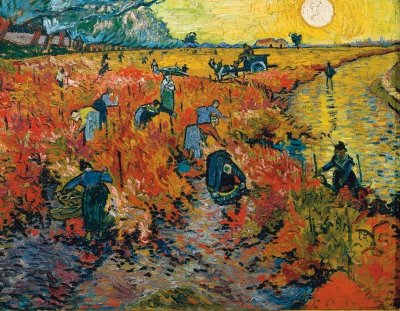
This coming Sunday is the 25th Sunday in Ordinary Time. This is the second post of the day. Both posts are about some element of the Kingdom of Heaven. While the earlier post tried to make the point that the “household of God” will not be the same as the households of our own times and cultures. This posts looks at the way we view blessings in our life – or rather what we assume are blessings which can be confused with human success. Continue reading
Tag Archives: Vineyard
Thoughts on what we pass over
This coming Sunday is the 25th Sunday in Ordinary Time, Lectionary Cycle A. In St. Matthew’s narrative we are firmly ensconced in the midst of Jesus’ instructions, not of the crowds, but of the disciples, preparing them for not only his death and resurrection, but also for their mission to the world. In other words Jesus is preparing them to be apostles, the ones sent – and preparing them to serve the new People of God being formed. Continue reading
Decisions

Talk about your basic horrible decisions. What were the vineyard tenants thinking? When the owner of vineyard sends his servants to collect what is rightfully his, the tenants beat one, kill another and stone the third. When the next set of servants arrive, they continue with the basic trajectory of decisions that they somehow think will turn out well. When the landowner’s son arrives, they murder him. How is it they think this is going to work out for them? As I said, talk about your basic horrible decisions.Jesus is speaking to the chief priest, elders and scribes about horrible decisions they are making as they are not reflective about what folks like the prophet Isaiah have warned them about. Their predecessors corrupted true worship, thought they were the owners of the vineyard and became obsessed with their position, privilege and powers – forgetting they were just the current stewards of the covenant between God and the people. They killed the messengers the prophets who warned them and the covenant people ended up exiled in Babylon, Jerusalem destroyed. Talk about your basic horrible decisions.
Continue readingWhat’s fair?
“So when the first came, they thought that they would receive more, but each of them also got the usual wage. And on receiving it they grumbled against the landowner.” If we are honest about it, we empathize with those folks who worked hard all day. At one level we agree that they received what they were promised, but…there is that voice within that says, “it isn’t fair.” The workers’ notion of what is fair gets challenged pretty quickly when the landowner asks them: “Are you envious because I am generous?” Continue reading
Our Hope
Gardens are a necessity. Vineyards are a sign of abundance beyond the necessary. As terrible a gardener as I am, I can get a crop of vegetables in several weeks’ time. Not so with a vineyard. Vineyards take a long time and hard work to develop. Try googling “starting a vineyard;” the results might surprise you. After you buy the land (and not just any location will do), it costs $20,000 a year per acre to cultivate a vineyard, and there is no cash flow for 3 to 5 years while you wait for the grapes to be good enough for the harvest. There is a lot of patient, intensive work and commitment. Vegetable gardens are near-term cash crop; you can change it up every year. Vineyards are a long-term investment with one fruit produced for one’s lifetime. Continue reading
Bearing good fruit
Today there is an optional memorial: St. Cyril of Jerusalem. You can find the readings here. Along with Athanasius of Alexandria, Cyril was a great defender of the Faith. St. Cyril’s is also noted for the twenty-three lectures given to catechumens in Jerusalem being prepared for, and after, baptism. Quite appropriate for this Lenten season.
Given my middle name is Cyril. I thought it good to celebrate this memorial, especially here in Lent. And given that I suspect this will be my last public Mass before our Bishop suspends all public masses because of the Covid-19 virus – I thought it good to offer some advice about being deeply rooted in Christ and still bearing fruit, even as the world around us sequesters in place. Continue reading
Your Vineyard: sign of Hope?
Gardens are a necessity. Vineyards are a sign of abundance beyond the necessary. As terrible a gardener as I am, I can get a crop of vegetables in several weeks’ time. Not so with a vineyard. Vineyards take a long time and hard work to develop. Try googling “starting a vineyard;” the results might surprise you. After you buy the land (and not just any location will do), it costs $20,000 a year per acre to cultivate a vineyard, and there is no cash flow for 3 to 5 years while you wait for the grapes to be good enough for the harvest. There is a lot of patient, intensive work and commitment. Vegetable gardens are near-term cash crop; you can change it up every year. Vineyards are a long-term investment with one fruit produced for one’s lifetime. Continue reading
The Stone Rejected: the people
As mentioned in a previous post, this expression ethnos might point to new people of God arising out of Jesus’ ministry and characterized by faith in him. We previously saw such a motif outlined in 8:11–12 and in the rabble of tax-collectors and prostitutes who “go ahead of” the chief priests and elders into the kingdom of God (vv. 31–32). The term ethnos, “nation,” calls for some such understanding, takes us beyond a change of leadership to a reconstruction of the people of God whom the current leaders have represented. Continue reading
A Stone Rejected: the One
The Traditional Interpretation. This interpretation holds that the parable is a symbolic account of the history of Israel, whose leadership (tenants of v.34) has rejected God’s earlier prophetic messengers (cf. Jer 7:25–27 seen in servants of vv.34-35). In v.37 the parable leaves Israel’s past and intuits the events of the Passion and Crucifixion that lay in the days to come. Indeed, the leaders of Jerusalem will seize Jesus and crucify him outside Jerusalem (cf. v.39). Where the traditional interpretation begins to waver starts in v.43 taking on a different direction from its OT parallel in Is 5:1-7: Continue reading
A Stone Rejected: vintage time
Commentary. This parable begins much like Isaiah 5:1-2 (the reading from the OT accompanying our gospel). It is the third parable in Matthew with a vineyard setting (20:1-16, the workers in the vineyard; 21:28-32, the two sons). What does the vineyard represent? In Isaiah it represents Israel and many have assumed that is its meaning in the parable, e.g., the vineyard = Israel; the tenants = religious leaders; landowner’s slaves = prophets whom they rejected. With this interpretation, we note that the vineyard is not destroyed, but turned over to new tenants. To use another biblical metaphor, the unfaithful, greedy shepherds are removed (Mt 9:36; Ezekiel 34) and new shepherds are installed to care for the sheep. Continue reading