
 This coming Sunday is the 4th Sunday in Advent. The gospel reading is the well known “Annunciation” from Luke’s gospel. You can read a complete commentary on the gospel here.
26 In the sixth month, the angel Gabriel was sent from God to a town of Galilee called Nazareth, 27 to a virgin betrothed to a man named Joseph, of the house of David, and the virgin’s name was Mary. 28 And coming to her, he said, “Hail, favored one! The Lord is with you.” 29 But she was greatly troubled at what was said and pondered what sort of greeting this might be. 30 Then the angel said to her, “Do not be afraid, Mary, for you have found favor with God. 31 Behold, you will conceive in your womb and bear a son, and you shall name him Jesus. 32 He will be great and will be called Son of the Most High, and the Lord God will give him the throne of David his father, 33 and he will rule over the house of Jacob forever, and of his kingdom there will be no end.” 34 But Mary said to the angel, “How can this be, since I have no relations with a man?” 35 And the angel said to her in reply, “The holy Spirit will come upon you, and the power of the Most High will overshadow you. Therefore the child to be born will be called holy, the Son of God. 36 And behold, Elizabeth, your relative, has also conceived a son in her old age, and this is the sixth month for her who was called barren; 37 for nothing will be impossible for God.” 38 Mary said, “Behold, I am the handmaid of the Lord. May it be done to me according to your word.” Then the angel departed from her. (Luke 1:36-38)
 Recently wrote about forgiveness. I started out the column as a reflection on the readings for Advent sometime do not seem to fit the mood of Christmas coming. But then Advent is a time of waiting and reflecting; and to think about gift giving. Forgiveness is one of the great gifts you can give. The end of the post I mused: “What ‘Christmas gift’ comes along with this life of forgiveness? Lower blood pressure, restful night, sweet dreams, peace, no longer being a victim, uninterrupted prayer, a new experience of God’s love… and so much more. Your gift is waiting right there under the tree, the cross of Christ. Go ahead, open your gift. `Tis always the season.’”
 Yesterday’s psalm refrain was “The Lord is gracious and merciful; slow to anger, and of great kindness.” From that I asked the personal question, “Do you ever wonder if people think you are gracious, merciful, slow to anger and of great kindness?”
 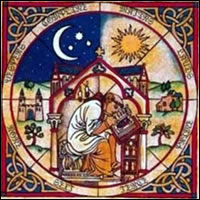 One of my morning rituals for some time now has been, in the wee hours of the morning before dawn, to pray the morning prayer (lauds) of Office of the Dead. It is one of the prayer cycles for the repose of a soul found in the Divine Office of the Catholic Church, also called the “Liturgy of the Hours.” You can find versions online. The morning prayer consists of Psalm 51;

 friarmusings