
 I have always been interested in the stories of the Kings of Judah and Israel as accounted in the Bible’s books of 1st/2nd Kings and 1st/2nd Chronicles. When the topic is raised among most Christian people, I would suggest that people recall the reign of King David and the stories of his son, King Solomon – and conclude that the era of the Kings was a good thing. They easily forget that Saul was the first king and his reign did not end well. Nor did Solomon’s. And David had his own spectacular moral failures. Apart from King Josiah, the rest of the Kings of Judah and Israel are judged harshly by Scripture, failing to do their duty to God and the covenant people, falling prey to the corruption of power.
It not just kings of all place and times; it applies to Popes and Franciscans. Francesco della Rovere was a Franciscan and Minister General of the Order. He was noted for his humility and commitment to the values of the Franciscan Order. In 1471 he was elected pope and took the name Sixtus VI. In his time as pope he was noted for nepotism, lavish spending, and involvement in the infamous Pazzi conspiracy.
King, Popes, Franciscans: the English Catholic historian, politician, and writer, Lord Acton would have well understood their corruption.
 Today’s
  This originally posted in early December 2020 amidst all the “stop the steal” chatter – which has reached a crescendo not imagined. I thought the post worth repeating. We are morally bound to our words.
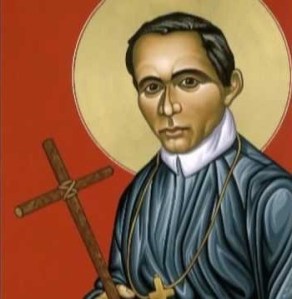 When asked how they could possibly feed so many people, Jesus said to disciples “in reply, ‘Give them some food yourselves.’” I often think of this as the scriptural equivalent of “how do you eat an elephant?” One bite at the time. How are we to minister to the overwhelming number of needs in our life and communities? One person at a time… always knowing the we do so we the grace of God, the love of Christ, and community of the Holy Spirit.
 For those of you that were players committed to the Facebook app “Farmville” back in 2010 or 2011 (…or so), we are sad to report that FarmVille shut down last week. Daniel Victor (NYT, 12/31) commented that many technique FarmVille popularized – nagging notifications to friends and encouragements to check back daily to tend to your crops – are now being imitated by everything from Instagram to QAnon. Where FarmVille was the time-eating destination of friends and family – there are many social media apps that are as demanding, nagging, and lead one down the “rabbit hole” of lost time. Where FarmVille feared not to tread, everyone else followed. Alas and aloha.
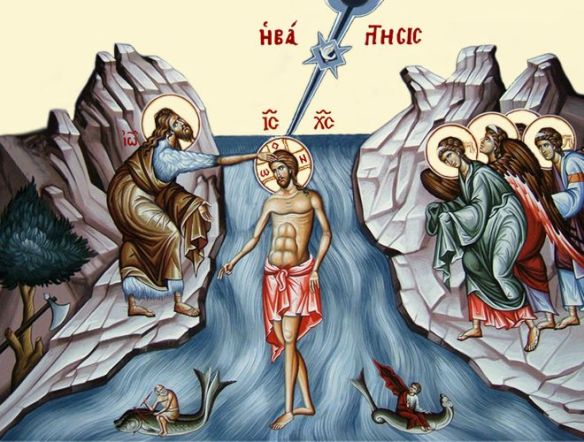 Next Sunday, we celebrate the
  “…the people who sit in darkness have seen a great light, on those dwelling in a land overshadowed by death light has arisen.”
 Last century (literally) I was researching for my master’s thesis on early Franciscan Missions. One of the really interesting aspects of the early Franciscan missions was the one to China. The friars arrived in China in 1292 and John of Montecorvino was the first bishop of Beijing. But all that is beside the point. In the course of my research, I ran across The Travels of Marco Polo in which he describes his travels in the far east. I was scanning the text to see if he had any mention of contact with the friars or the Christian monasteries that dotted the silk road in those days. While he had no mention of either – he did recount a most interesting rendition of the account of the Three Magi. Marco Polo wrote that he encountered this version in Persia (modern-day Iran). In that account there are three magi – but they are not traveling together. Each is on his own journey following the star to Bethlehem. Melchior is an older man, Balthazar is an adult in his middle years, and Gaspar is a young man just reaching adulthood.
 friarmusings