From the prophet Isaiah: “All you who are thirsty, come to the water! You who have no money, come, receive grain and eat; come, without paying and without cost.” Sounds good, perhaps too good to be true? So…what’s the catch? I mean nobody gets something for nothing. There is always a string attached, a debt incurred, or something in the small print. Such are the thoughts of a person who is ensconced in a transactional worldview.
A transactional worldview is not simply about money. It is a way of seeing all of life through the lens of exchange: I give in order to get. It can become so ingrained that people begin to relate to God, other people, and even themselves in transactional terms. It crops up in so many subtle ways, e.g. when we catch ourselves thinking about relationships as a type of calculation. Instead of asking: “How can I love this person?” the question becomes: “What am I getting out of this relationship?” It is rarely as draconian as that, but do you “keep score” in your marriage? Do you discover that friendships are maintained only while they are useful? Helping others is a gateway to gain approval, influence or to “bank” a future favor? Or maybe you feel cheated whenever your kindness is not returned.
Christian love gives without any guarantee of return.
And about others…have you ever caught yourself thinking, “Can this person advance my career? Can this friendship benefit me? Is this relationship worth the investment of my time?”
This is very different from the Gospel’s view of persons as ends in themselves, loved simply because they are children of God.
Ok, maybe the whole transactional approach to people was a little cold and Machiavellian. But in what way do you think about achievement? A transactional mindset often operates with an inner voice whispering: “My worth depends on what I accomplish.” Perhaps you are driven to always be productive; constantly comparing yourself with others. Do you find it difficult to rest because you haven’t earned it? Is failure evidence of personal worthlessness?
Grace says something radically different: your dignity precedes your performance.
Do you find it easier to give than to receive? Uncomfortable with compliments? Struggle to accept forgiveness? Reluctant to accept help? Feel guilty receiving generosity from another? All the while there is the whisper: “Nothing valuable should come free.”
Makes God’s grace difficult to receive and embrace.
Is your forgiveness conditional? “I’ll forgive them after they apologize.” or “I’ll reconcile after they change.”
I guess we should be thankful that God doesn’t operate that way.
How about your life of faith? Some may work the “checklist”: I fulfilled my Sunday obligation – check. Said my prayers – check. Is this just a busy life keeping on track or without realizing it, did worship become payment rather than encounter?
“All you who are thirsty, come to the water! You who have no money, come, receive grain and eat; come, without paying and without cost.”
Why can we sometimes be this way? What makes this way of being attractive or at least seductive? Because transactional thinking gives us a sense of control. If life is an exchange, then we imagine: “If I do A, I’ll get B.”
Grace is unsettling because it cannot be controlled. It must be received.
Throughout Scripture, God invites us to move from transaction to covenant. Where a transaction asks: “What is the minimum required?” A covenant asks: “How can I be faithful?” A transaction says: “I’ll love you if…” A covenant says: “”I have chosen to love you.” A transaction keeps accounts. A covenant remembers persons as gifts from God.
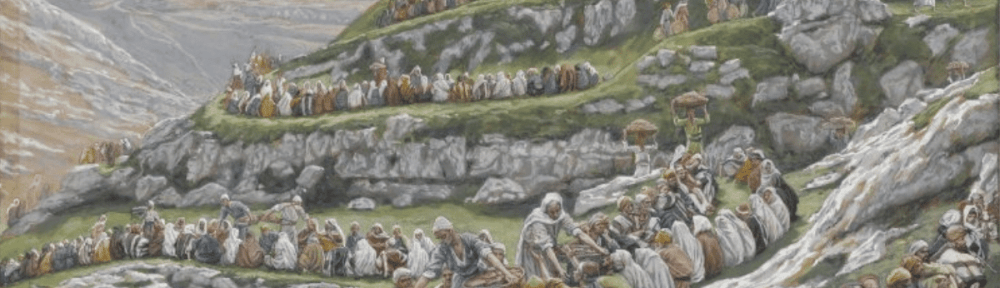
Recall the disciples at the feeding of the five thousand. Their first instinct is transactional: “Send the crowds away so they can buy food.” Jesus, the source and foundation of the Covenant, comes at it completely differently. He does not ask: “Who has enough money?” He asks: “What do you have? What will you contribute?” Turns out it’s not a lot, only five loaves and two fish. But it is enough.
The miracle begins when the disciples stop calculating and start trusting. That is the movement Isaiah is inviting us to make. God says: “Come, without paying and without cost.” The Kingdom begins where transactions end and gift begins.
A transactional view of life often produces anxiety, because everything depends on our ability to earn, prove, achieve, or maintain. A covenantal view produces gratitude, because we begin each day already possessing the greatest gift: we are loved by God before we have accomplished anything.
An abiding attitude of gratitude determines your altitude. And it costs nothing. No catch. No string attached. No fine print. Just eternal life.
Image credit: James J. Tissot, ‘Miracle of the Loaves and Fishes’ (1886-94), Brooklyn Museum, NYC | PD-US
Discover more from friarmusings
Subscribe to get the latest posts sent to your email.

