
 Jesus answered and said to [Nicodemus], “Amen, amen, I say to you, no one can see the kingdom of God without being born from above.” (John 2:3)
Certainly in the lexicon of American religious language, “being born again” has loomed large in many circles. Growing up in the South I was often asked “Have you been born again.” Today’s gospel is the text that provides the basis for the question. There within the Greek is the expression gennēthē anōthen. It can validly be translated as “born again” or “born from above.” Some bibles opt for the “again” (TLW), some opt for “again” with a footnote to explain there is an alternative (RSV, NIV, TEV, NASB, ESV, KJV). Other opt for “from above” without explanation (NAB, NJB) or with explanation as to the alternative (NSRV, CEV). Does it make a difference? Continue reading
 As a liturgical season, Lent is rather straightforward. It is kinda’ easy to write about. There is Ash Wednesday to dramatically mark its beginning, and we all know we are moving relentlessly towards Easter. We count the days even as we mark Lent’s beginning. The Ashes make a visible mark upon us, reminding us that we are dust and to dust we shall return – but that is not the end of the story. We are reminded to repent and believe in the Gospel – but that is not the end goal. We are encouraged to pray, fast, and give alms – but those practices are meant to make room in our lives for God that we too may rise to the newness of life at Eastertide.
 Forgiveness is one of those fundamental lessons we try to teach our kids from an early age: when siblings bicker or hurt each other, or if friends break a toy. And at the same time, we should ever be aware that we have not exactly mastered the art of forgiveness. The ability to forgive is a learning experience that often takes a lifetime. It’s not easy, but perhaps it’s not meant to be easy. Showing compassion and understanding in a world through which we cautiously pass takes an open heart instead of the guarded one we often carry.
 12 Then I turned to see whose voice it was that spoke to me, and when I turned, I saw seven gold lampstands 13 and in the midst of the lampstands one like a son of man, wearing an ankle-length robe, with a gold sash around his chest. (Rev 1:12-13)

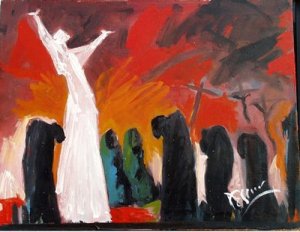 “Death, be not proud, though some have called thee Mighty and dreadful, for thou are not so; For those whom thou think’st thou dost overthrow Die not, poor Death…. One short sleep past, we wake eternally, And death shall be no more, Death, thou shalt die.” So wrote the 17th century poet John Donne about the freedom from the seemingly unsurpassable power of death and the promise of new life, eternal life at the core of our Easter celebrations.
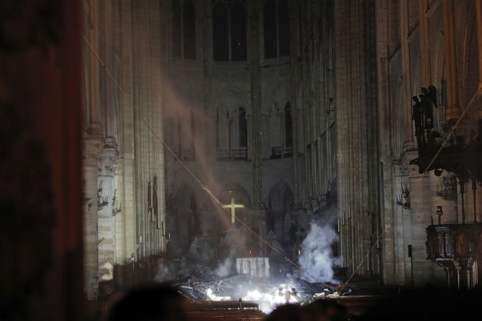
 Every year Christians commemorate the week before Easter Sunday with special traditions and devotions that help them enter into the Passion, death and resurrection of Jesus Christ. It is a special time of the year, culminating in the biggest feast of the Church’s calendar – Easter. Here are the basics of what Catholics look forward to during the week that precedes Easter Sunday.

