
 Salt is important. It has its own Wiki page and even has a history book (Mark Kurlansky: Salt: A World History.) Yup, you heard it correctly. A whole history of the world written in the context of salt. As the author writes, “from the beginning of civilization until about one hundred years ago, salt was one of the most sought-after commodities in human history.” And you took salt for granted. Continue reading
Christian saltiness
Reply
 The
The 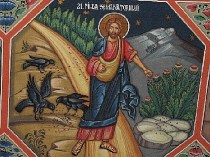 This coming Sunday the Church returns to “Ordinary Time” – not ordinary as regular and everyday, but from the Latin meaning to count. We celebrate the
  The
The 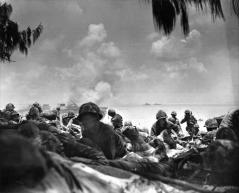 At the end of the movie “Tora! Tora! Tora” (1970 film about the Dec 7, 1941 Japanese attack on Pearl Harbor), Admiral Isoroku Yamamato comments, “I fear all we have done is to awaken a sleeping giant and fill him with a terrible resolve.” It is a great line, prescient in nature, but… Although the quotation may well have encapsulated many of his real feelings about the attack, there is no printed evidence to prove Yamamoto made this statement or wrote it down. William Safire traces its origins to the phrase dubiously attributed to Napoleon, “China is a sickly, sleeping giant. But when she awakes the world will tremble”. But the metaphor of the awakened sleeping giant was apt – and may well have been in Yamamoto’s mind. The admiral had studied, served and traveled in the United States and was well aware of its extensive industrial capability – as were a number of key Japanese military leaders of the day.
  My favorite comic strip is “Calvin and Hobbes.” If you are not familiar, it features Calvin, a preternaturally bright six year-old, and Hobbes, his imaginary tiger friend. The comic strip manages to infuse wondering (and wandering) on a cosmic scale into an ageless world of lazy Sunday afternoons, space adventures, and tales of befuddled babysitters, teachers, and parents. What I most enjoy about Calvin and Hobbes is that it reminds me of our capacity to be surprised, to imagine, and enter into mystery and wonderment. Calvin’s openness to the mystery of it all allowed him entry to even the theological arts where he mused about the combination of predestination with procrastination, finally concluding, “God put me on this earth to accomplish a certain number of things. Right now I am so far behind that I will never die.”
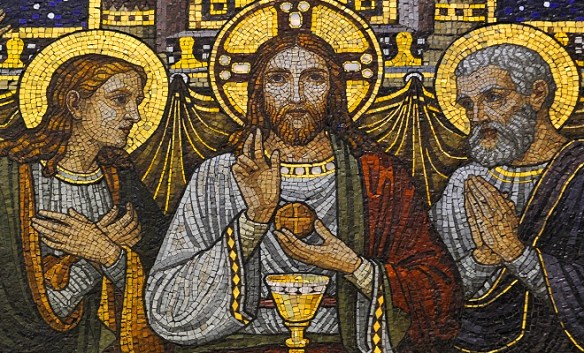
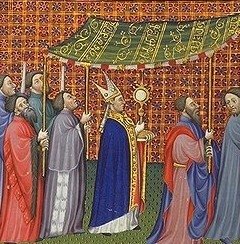 This weekend the Church celebrates the Solemnity of the Body and Blood of Christ, a feast perhaps better known by the Latin Corpus Christi. At its core, the solemnity is a celebration of the Tradition and belief in the Eucharist as the Real Presence of the Body and Blood of Jesus Christ. Many folks wonder why this celebration is not integral with Holy Thursday. It was, mixed in with other themes, e.g., institution of the priesthood. And, all this occurs in the shadow of Good Friday. The placement of the celebration was not one that necessarily lends itself to a joyful celebration.
 Too many irons in the fire, so to speak. I have a whole folder of work-in-progress articles, posts, studies, musings, and a “digital attic” of things in the folder “Interesting ideas.” One of the items in the attic was an introduction to St. Paul’s letters to the Corinthians – or rather his on-going somewhat rocky relationship with the community at Corinth.
 friarmusings