 Next Sunday is the celebration of the 17th Sunday in Ordinary Time. You can read a complete commentary on the Gospel here.
44 “The kingdom of heaven is like a treasure buried in a field, which a person finds and hides again, and out of joy goes and sells all that he has and buys that field. 45 Again, the kingdom of heaven is like a merchant searching for fine pearls. 46 When he finds a pearl of great price, he goes and sells all that he has and buys it. 47 Again, the kingdom of heaven is like a net thrown into the sea, which collects fish of every kind. 48 When it is full they haul it ashore and sit down to put what is good into buckets. What is bad they throw away. 49 Thus it will be at the end of the age. The angels will go out and separate the wicked from the righteous 50 and throw them into the fiery furnace, where there will be wailing and grinding of teeth. 51 “Do you understand all these things?” They answered, “Yes.” 52 And he replied, “Then every scribe who has been instructed in the kingdom of heaven is like the head of a household who brings from his storeroom both the new and the old.” (Matthew 13:44-52) Continue reading
 This morning’s

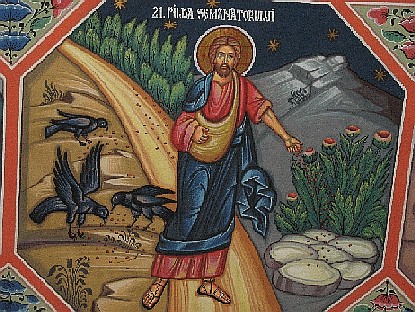
 In the weeks to come we will hear a number of parables as part of the Gospel. So, what is a “Parable”? Definition: “At its simplest a parable is a metaphor or simile drawn from nature or common life, arresting the hearer by its vividness or strangeness, and leaving the mind in sufficient doubt about its precise application to tease it into active thought.” (C. H. Dodd, The Parables of the Kingdom, New York: Charles Scribner’s Sons, 1961, p. 5) Less accurate, but perhaps more to the point – when heard, a parable should give you pause and turn your world upside down.