Holding back

When I was a midshipman at the United States Naval Academy (last century!) I encountered a new phrase: “if the minimum weren’t good enough, it wouldn’t be the minimum.” There a bit of logic to it, but…. can’t say it is the most inspiring bit of prose ever recorded. Yet, there was a sense in which tradition enshrined the saying. The person who graduated with the lowest GPA (2.5 was the minimum) was referred as the “Anchor Man.”  At the end of the graduation he was paraded around on his classmates shoulders and we were all expected to give him a dollar.  Strange tradition, that. He had done the minimum – and who knows he may have worked twice as hard as the rest of us…. Continue reading

The Bread of Life: other thoughts

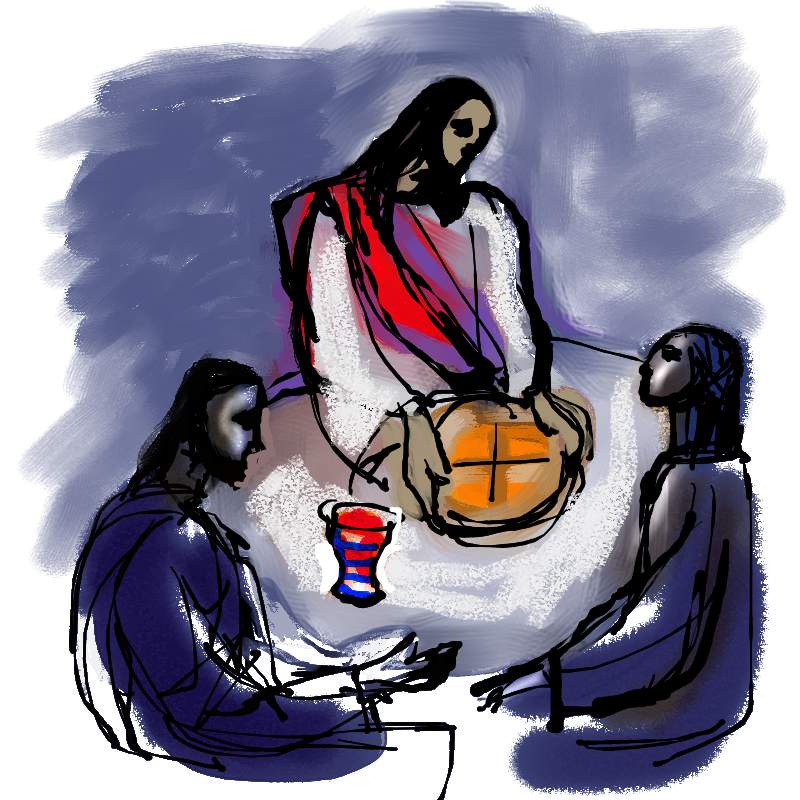
emaus02Where the principal focus of the previous section is the bread of life as the divine revelation given to men by and in Jesus, John 6:51 adds a clearly Eucharistic theme – ‘I am the living bread come down from heaven; whoever eats this bread will live forever; and the bread that I will give is my flesh for the life of the world.’ While some argue the words are metaphor, the Jews clearly understand. Jesus is referring to eating of his flesh. He recounts this action verb several other times between vv. 51-58, while adding the drinking of his blood to the command. This is no metaphor for accepting his revelation, already adequately expressed. Continue reading

Corpus Christi – metaphor and Eucharist

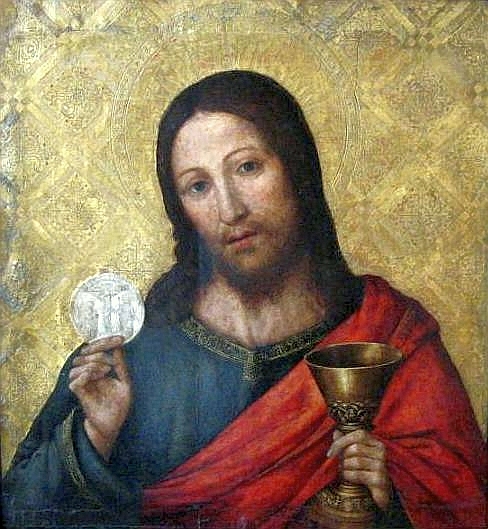
Christ_with_the_HostThe Eucharist. This section is written at two levels. At one level it is an on-going commentary on the verb “to eat” (cf. v. 31) summoning up a rich tradition of Eucharistic language: “bread,” “food,” “flesh,” “blood,” “to eat,” “to drink,” “will give,” “for your sakes.” The discourse, from v. 25 down to v. 59, presents Jesus as the true bread from heaven, replacing the former bread from heaven, the manna of the Law. The believer must accept the revelation of God that will take place in broken flesh and spilled blood (vv. 53-54), a never-failing nourishment (v. 35) that the Son of Man will give (v. 27). Continue reading

Bread of Life: the world

synagogue-fresco-exodus

His Life for the Life of the World. 51 I am the living bread that came down from heaven; whoever eats this bread will live forever; and the bread that I will give is my flesh for the life of the world.”

Jesus now associates the separation of flesh and blood in a violent death as the moment of total giving of himself. Jesus, the Son of Man, will give of his whole self for the life of the world (6:51c) by means of a violent encounter between himself and his enemies (1:5, 11; 2:18-20; 3:14; 5:16-18) in which his body will be broken and his blood will be poured out (6:53-54). This is the ongoing presence of Jesus in the gathered klasmata (vv. 12-13), the enduring gift that the Son of Man will give, the food that will not perish (v. 27) but will forever satisfy all hunger and thirst (v. 35). Continue reading

St. Anthony of Padua – part 4

anthony-padua2Miracles and Traditions of St. Anthony. St. Anthony Bread is a term used for offerings made in thanksgiving to God for blessings received through the prayers of St. Anthony. Sometimes the alms are given for the education of priests. In some places parents also make a gift for the poor after placing a newborn child under the protection of St. Anthony. It is a practice in some churches to bless small loaves of bread on the feast of St. Anthony and give them to those who want them.

Different legends or stories account for the donation of what is called St. Anthony Bread. By at least one account it goes back to 1263, when it is said a child drowned near the Basilica of St. Anthony, which was still being built. His mother promised that if the child was restored to her she would give for the poor an amount of corn equal to the child’s weight. Her prayer and promise were rewarded with the boy’s return to life. Continue reading

St. Anthony of Padua – part 3

tn_anthony-padua1Public Preacher, Franciscan Teacher. Anthony’s superior, St. Francis, was cautious about education such as his protégé possessed. He had seen too many theologians taking pride in their sophisticated knowledge leading to an abandonment of their commitment to a life of real poverty. In Anthony, however, he found a kindred spirit for his vision, who was also able to provide the teaching needed by young members of the order who might seek ordination. Francis wrote in 1224, “It pleases me that you should teach the friars sacred theology, provided that in such studies they do not destroy the spirit of holy prayer and devotedness, as contained in the Rule.” He thereby entrusted the pursuit of studies for any of his friars to the care of Brother Anthony. From then on his skills were used to the utmost by the Church. Occasionally he took another post, as a teacher, for instance, at the universities of Montpellier and Toulouse in southern France, but it was as a preacher that Anthony revealed his supreme gift. Continue reading

St. Anthony of Padua – part 2

tn_anthony-padua1Before He Was Anthony of Padua.  Anthony of Padua was born Fernando Martins de Bulhões on August 15, 1195 in Lisbon, Portugal. His was in a very rich family of the nobility who wanted him to become educated, and they arranged for him to be instructed at the local cathedral school. Against the wishes of his family, however, at the age of 15 he entered the community of Canons Regular at the Abbey of St. Vincent on the outskirts of Lisbon. Monastery life was hardly peaceful for young Fernando, nor conducive to prayer and study, as his old friends came to visit frequently and engaged in vehement political discussions. Continue reading

St. Anthony of Padua – part 1

tn_anthony-padua1For more than 100 years, Sacred Heart Catholic Church (in downtown Tampa, FL) had been under the pastoral guidance of the Jesuits. When we Franciscans arrived at Sacred Heart in 2005, we were quite surprised to find that one of the clerestory windows (the ones up high in the nave vault) was Saint Anthony of Padua, a Franciscan contemporary of St. Francis of Assisi.  In fact, we Franciscans still have a brief letter, in Francis’ own hand, written to Anthony. Most people know St. Anthony of Padua as the patron saint of lost and stolen articles, but have you ever wondered why he is that particular patron saint? Continue reading

Bread of Life: grumbling

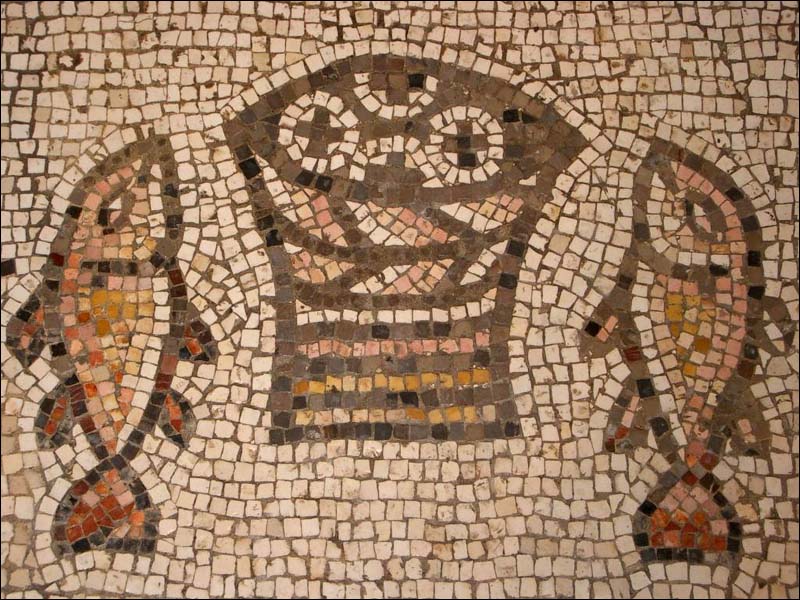
bread-fish-mosaic41 The Jews murmured about him because he said, “I am the bread that came down from heaven,” 42 and they said, “Is this not Jesus, the son of Joseph? Do we not know his father and mother? Then how can he say, ‘I have come down from heaven’?” 43 Jesus answered and said to them, “Stop murmuring among yourselves. 44 No one can come to me unless the Father who sent me draw him, and I will raise him on the last day. 45 It is written in the prophets: ‘They shall all be taught by God.’ Everyone who listens to my Father and learns from him comes to me. 46 Not that anyone has seen the Father except the one who is from God; he has seen the Father. 47Amen, amen, I say to you, whoever believes has eternal life. 48 I am the bread of life. 49 Your ancestors ate the manna in the desert, but they died; 50 this is the bread that comes down from heaven so that one may eat it and not die.

These verses precede the Gospel text and serve to remind the reader that Jesus’ discourse is controversial and has raised grumblings among the people.

Continue reading