 Over the years while leading Bible studies, participating in RCIA to help folks fully enter the Catholic Church, or just in the odd discussion, I try to make a point about the most basic purpose of Sacred Scripture. It is simply this: for God to reveal God’s self to us – an invitation to a personal and communal covenant relationship. God tells us about God’s self through stories, the people’s experience of God in the history of Israel, and most especially in his only begotten Son, Jesus Christ. Think about the stories of our ancestors in faith. Basically, they all begin with an invitation to begin, follow, and slowly learn about God. My reading of the stories of Abraham and Sarah, Moses, King David, the prophets, and more all began with an invitation. Their encounter with God led them to a journey of an ever-deepening relationship with God. Along the way there are plenty of questions – some as simple as Moses’ inquiry about the name of God: “if I go to the Israelites and say to them, ‘The God of your ancestors has sent me to you,’ and they ask me, ‘What is his name?’ what do I tell them?” (Ex 3:13) The same pattern is played out in Jesus’ calling the apostles from their fishing boats, tax collection stations, and other endeavors. Calling them to leave all behind and journey with him for three years: from Galilee to Calvary. Continue reading →

 I have always thought yesterday’s gospel was harsh. Likely, we all prefer the comforting, peaceful Jesus rather than the Jesus who proclaims: “Do not think that I have come to bring peace upon the earth. I have come to bring not peace but the sword.” And that is just the warm-up – here is what follows: “For I have come to set a man against his father, a daughter against her mother, and a daughter-in-law against her mother-in-law; and one’s enemies will be those of his household.” While I might think it harsh, perhaps a more important question is was it necessary. The Christian writer Flannery O’Connor has some insight about this: Continue reading
  This 15th Week of Ordinary Time (2020) the first readings in the daily Masses are from the Book of the Prophet Isaiah. With other prophetic works, to talk about the writings are to talk about the prophet themselves. Isaiah calls for more nuance in that the prophet was a person of the 8th century BCE who preached to Judah (the southern kingdom) and its capital Jerusalem. It was during a particularly turbulent era of three Judaean kings and four Assyrian kings. The later who sought to overrun the western Fertile Crescent that also included the Kingdoms of Israel (north) and Judea (south). Isaiah provides more than enough “markers” for us to know with certainty that he exercised his prophetic ministry from 740-701 BCE.
 Next Sunday is the celebration of the
  Four months ago, Florida announced its first coronavirus cases. On Sunday, it broke the US record for the number of cases reported in one day — 15,300 with positivity levels almost 20%. Reuters noted that if Florida were a country, “it would rank fourth in the world for the most new cases a day behind the United States, Brazil and India.”
  From time to time people tell me that “this year I am going to get into the Bible!” Music to my ears! Their declaration is quickly followed by something akin to “So, what should I do?” Maybe next week I will take a cut at answering that question, but for now let me explain how not to read the Bible! I would offer you five basic principles to keep in mind:
 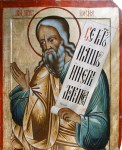 This week has been a week in which the first readings are from the
  Next Sunday is the celebration of the
  I used to camp and backpack in the wilds of Virginia and West Virginia. Generally, it was just for a weekend – maybe two or three days – along with a group of friends. We would carry everything in/out. I remember having fun, enjoying it all, but I always felt like I needed a day to recover. Perhaps it was the infrequency of carrying a load, the hiking, and all that goes with the adventure, but come Monday, there was always a stiffness about my neck, arms, shoulders, upper back and all the rest that is connected to those parts. I could still feel the aftereffects of the pack’s burden. “Come to me, all you who labor and are burdened, and I will give you rest.” It sounded like the perfect scripture for the post-camping Monday mornings.
  friarmusings